
After arranging grassroots-level administrative units and villages and residential groups, Lao Cai province is reorganizing the cultural house system in the direction of maximizing public assets, better meeting the cultural living needs of people, according to the Lao Cai Provincial e-Portal.
Before June 1, 2026, the whole province has 2,906 villages and residential groups. After arrangement, there are 1,609 villages and residential groups, a reduction of 1,297 units. The merger of many villages makes the "one village - one cultural house" model no longer suitable, replaced by a network of central cultural houses and community activity points.
According to the Lao Cai Department of Culture, Sports and Tourism, the whole province currently has 2,897 cultural houses. Of which, 1,576 cultural houses are identified as the centers of villages and residential groups after arrangement; 1,321 redundant works due to the merger of administrative units.
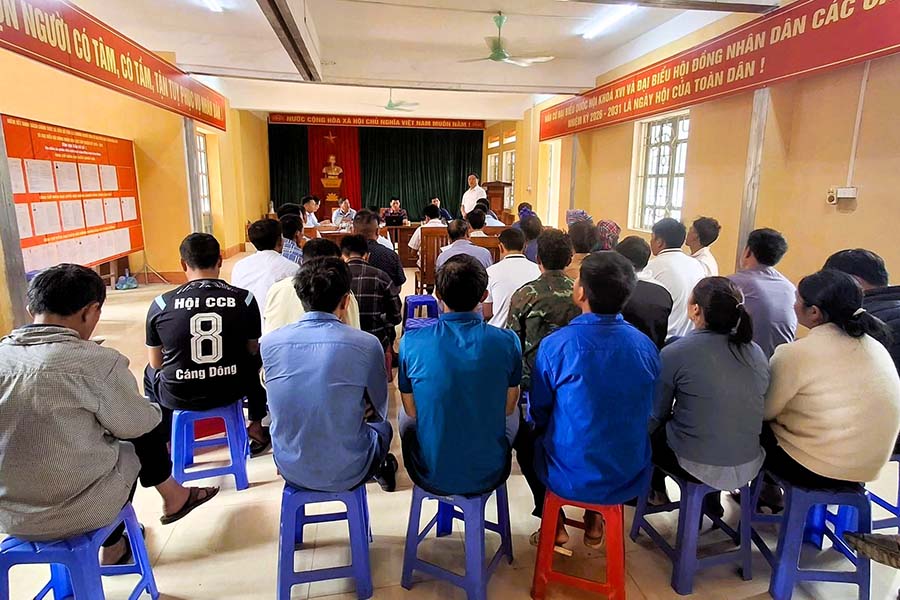
However, most of these projects continue to be effective. 1,161 cultural houses continue to be used as community activity points; 76 projects are proposed to convert functions; 72 projects that no longer need to be used will be handled according to the provisions of law on public asset management. 6 projects damaged by natural disasters and 6 projects converted land use purposes to serve resettlement.
Thus, 2,737/2,897 cultural houses, equivalent to 94.5%, continue to be exploited to serve the people. The arrangement helps reduce new investment needs, save budget, and improve the efficiency of public asset use.
The review results also showed that the number of villages and residential groups without cultural houses decreased from 77 to 35 units. In addition, the number of updated cultural houses increased from 2,747 buildings at the end of 2025 to 2,897 buildings in mid-July 2026, mainly due to a fuller review and addition of previously un-statisticed buildings.
According to the plan of the Department of Culture, Sports and Tourism, the cultural house system will be arranged based on population size, terrain conditions and actual needs instead of the number of administrative units.
The province prioritizes exploiting and renovating existing works before new investment, gradually overcoming the shortage of cultural houses in 35 villages that are still lacking, and at the same time completing the network of cultural houses according to the new model in the 2026-2030 period. The goal is to improve the quality of operation of grassroots cultural institutions, preserve cultural identity and better meet the community living needs of the people.


