
Familiar with the fields, but many farmers in Can Tho City are gradually changing their farming methods by boldly "going online" to learn farming techniques. These operations that were once unfamiliar to farmers have now become effective support tools, opening up more effective production directions.
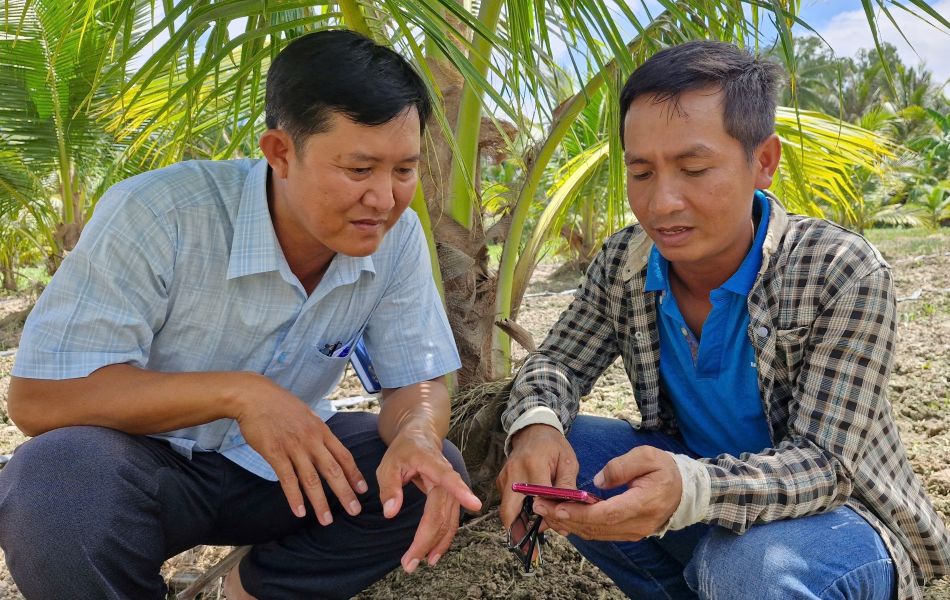
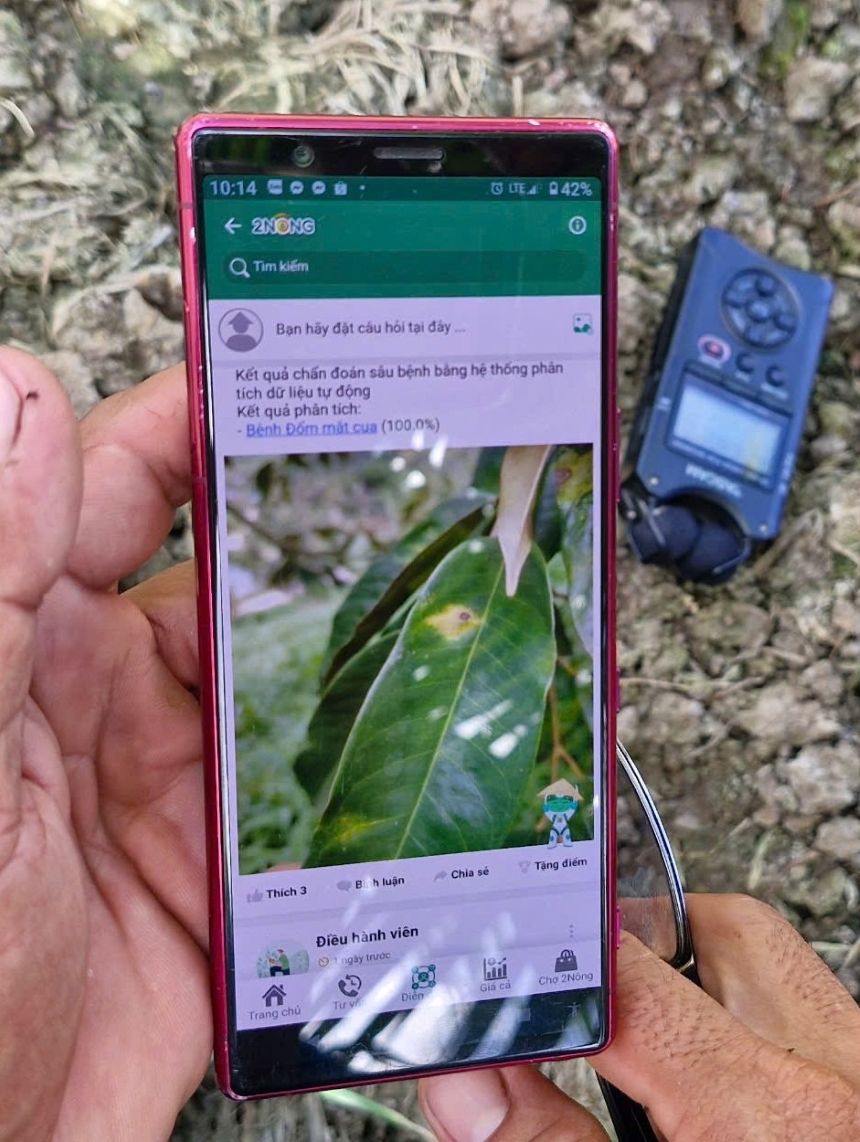
Mr. Tran Kim Luan in Tai Van commune (Can Tho City) cultivates more than 2 hectares of rice and a few hectares of crops. Through the introduction of friends, he downloaded the "2 Nong" application on his phone to support cultivation. Thanks to this application, he can identify pests and diseases on rice just by taking pictures and sending them to the system to get suggestions on how to handle them. Since using this application, his family's production costs have decreased by more than 30% compared to before, while the yield is still stable.
Just take pictures of pests or diseases on rice, the application will diagnose what kind of pest it is, how harmful it is and suggest specific treatments. Thanks to that, I fertilize and spray pesticides at the right time, the right type," Mr. Luan shared.
Mr. Trieu Hoang Huong, a farmer in Lam Tan commune (Can Tho City), said that if you want to do agriculture effectively, you must change your mindset, you cannot just rely on labor as before.
He said that previously, with 9 hectares of rice of his family, each time spraying pesticides took several days, hiring more workers, so the cost was quite high. Recognizing the effectiveness of the technology, he boldly invested in drones to spray pesticides.
“Previously, manual work was very time-consuming, but now it only takes about 2 hours to spray out the entire field, which is both fast and safe,” Mr. Huong said.
Initially, Mr. Huong bought the machine to serve his family's production, then expanded to provide services to people around. Currently, he owns 2 pesticide spraying aircraft, each crop serving 14,000 - 15,000 acres of land for farmers, creating jobs for 6 local workers with an income of about 6 - 7 million VND/month. After deducting expenses, service profit reaches about 50 - 70 million VND per crop.

Not only in each household, the application of science and technology is also being implemented on a larger scale.
Typically, at Nghia Thang Agricultural Cooperative (My Xuyen ward, Can Tho city), more than 100 hectares of ST24 and ST25 rice seedlings are mechanized from soil preparation, sowing, and spraying of pesticides by drones to harvesting. Farmers also apply interspersed flood-drying irrigation (AWD) techniques instead of the previous continuous water retention method.
Mr. Hua Thanh Nghia, Director of the Cooperative, said - in the Summer-Autumn 2025 crop, the Cooperative has 50 hectares of rice participating in the Project of 1 million hectares of high-quality, low-emission rice in the Mekong Delta region. According to the AWD process, rice fields are regulated with water according to each stage of rice plant growth, helping roots develop deeply, plants become strong and limit pests and diseases.
According to Mr. Nghia, thanks to the application of this method, production costs are significantly reduced, rice plants are healthy and fields always maintain base moisture. Rice plants take advantage of nutrients from straw and soil better, thereby reducing the amount of fertilizer and pesticides. If previously one crop had to spray pesticides about 7 times, now it is only about 5 times.
In addition to economic efficiency, the "interspersed flood-drying" irrigation technique also helps reduce greenhouse gas emissions in rice fields, contributing to environmental protection and towards a sustainable rice production model.
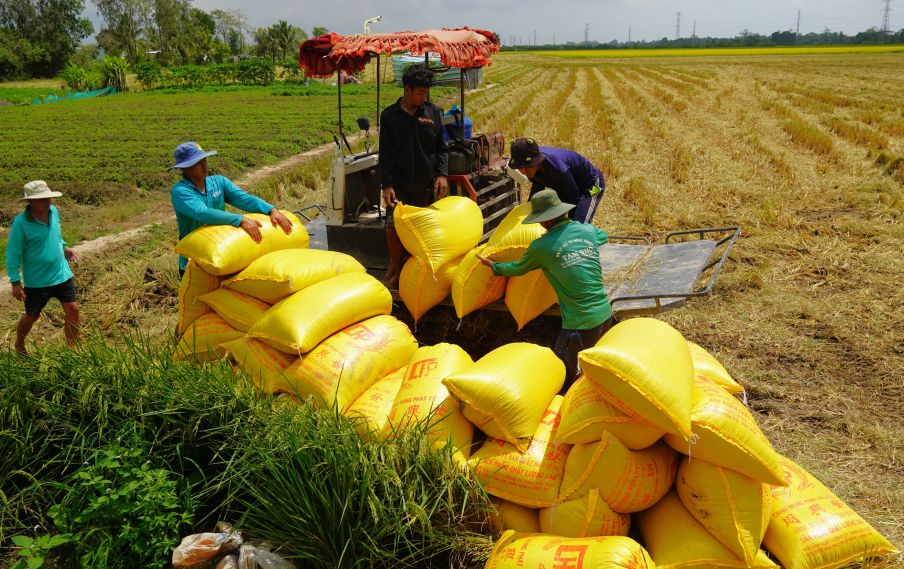
According to the Can Tho City Farmers' Association, in the past 2 years, each year there have been more than 189,000 households achieving the title of good production and business at all levels. The city has established 33 "Exemplary Billionaire Farmers" clubs and 78 "Good Production and Business Farmers" clubs, becoming a place to share experiences, replicate effective economic models, contributing to promoting sustainable agricultural development and solving local employment.


