
In remote and isolated areas of Quang Ngai province, suspension bridges have long been an important traffic route, helping ethnic minorities cross rivers and streams to produce and transport agricultural products. However, most bridges have wooden structures, so after a long period of use, they have deteriorated, posing potential safety risks.
Dak Pek commune currently has 26 civil suspension bridges across the Po Ko River and large streams. Among them, 10 bridges are invested by the state, 3 bridges are socialized and 13 bridges are self-made by people. Through surveys, there are 3 lightly damaged bridges, 2 heavily damaged bridges and 1 seriously degraded bridge that cannot be used, according to VNA.
Mr. Do Dang Du, Vice Chairman of Dak Pek Commune People's Committee, said that the hilly terrain is divided, making the suspension bridge an essential solution for travel and transportation. However, the degradation has greatly affected living and production, especially dangerous during the rainy and flood season.
The 72m long suspension bridge in Dak Poi village, built by people themselves, is the main road for dozens of households to the production area. Although the bridge deck is damaged in many places, people are still forced to use it because this is the shortest way to go. Ms. Y Nua, Dak Koi village, said that people cross the bridge many times a day, both walking, carrying supplies and herding livestock, posing many risks, especially for the elderly and young children.
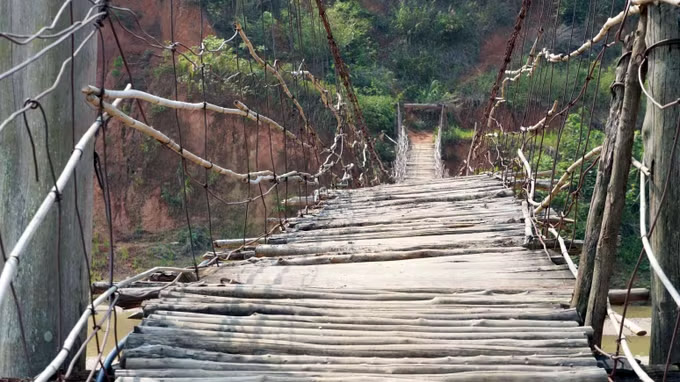
Similarly, the 80m long suspension bridge in Dak Ra village, built in 2004, was completely damaged after the 2023 rainy and flood season. Although there is a new bridge more than 1 km away, travel is still inconvenient. Mr. A Luong, head of Dak Ra village, said that without a convenient bridge, agricultural production and consumption will face many difficulties, and selling prices will be pushed down.
Faced with this situation, Dak Pek Commune People's Committee has strengthened propaganda to people not to gather crowded, not to go in groups or lead livestock across the bridge; and at the same time recommended not to use the bridge when it is not safe. The commune also proposed that the province allocate funds for maintenance and repair and proposed about 33 billion VND to upgrade bridges made by people themselves.
In Dak Khoi commune, the more than 50m long suspension bridge in Kon Vi Vang village across the Dak S Nghe river is also seriously degraded, with many broken planks. Despite being warned, people still have to cross every day because they have no other choice. Local authorities have set up barriers to heavily damaged bridges to prevent traffic, especially during the rainy and flood season.
Temporarily stopping the use of degraded bridges helps reduce immediate risks, but it is only a temporary solution. In the long term, it is necessary to soon have resources to invest in and repair people's suspension bridges, ensure travel safety, and create conditions for people to develop the economy and stabilize their lives.


