
Quang Ninh not only has strengths in marine economy and tourism but also owns a rich natural ecosystem with unique biodiversity values. In the sustainable development orientation, the province focuses on harmonizing economic potential exploitation with environmental protection, considering nature conservation as a foundation to promote green growth.
According to the Quang Ninh Electronic Information Portal (TTĐT), Quang Ninh currently has Ha Long Bay as a World Natural Heritage Site and 3 conservation areas including Bai Tu Long National Park, Yen Tu National Forest Nature Reserve and Dong Son - Ky Thuong Nature Reserve. These are areas that preserve valuable biological resources of the province.
According to statistics, Quang Ninh has more than 7,300 species, genera, and families belonging to 19 sectors of 3 zoos of animals, plants and fungi, along with 19 main ecosystems with many endemic and endangered species listed in the Vietnam Red Book.
Yen Tu National Forest currently preserves 206 species of vertebrates, more than 20 rare species and nearly 1,000 species of maculae. This area has 144 trees recognized as Vietnam Heritage Trees.
Meanwhile, Dong Son - Ky Thuong Nature Reserve has 485 species of maculae and 249 species of animals, of which more than 30 rare species are listed in the Vietnam Red Book. Bai Tu Long National Park owns more than 1,195 species of terrestrial flora and fauna and about 1,220 species of marine life.
On Minh Chau Island in Bai Tu Long National Park, the province is preserving an ancient trâm mốc forest population including 272 trees over 150 years old and more than 2,000 trees under 150 years old. Among these, 150 trees are recognized as Vietnam Heritage Trees. There are also many red-skinned trâm trees over 300 years old and trai lý trees about 500 years old.
To conserve natural ecosystems, Quang Ninh has implemented many solutions on planning and management. The province has moved aquaculture activities out of buffer zones and adjacent areas of protected areas; strengthened protection of ecosystems and species banned from exploitation in the absolute protection area of Ha Long Bay.
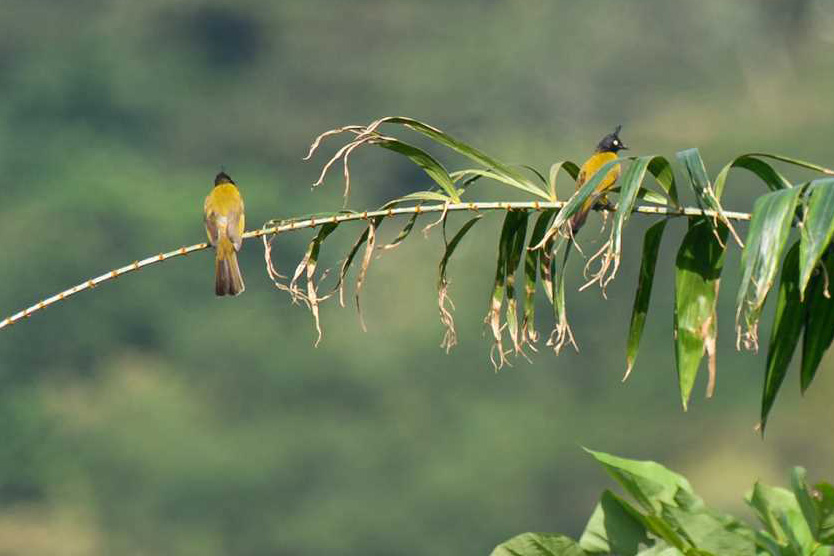
The province also approved a project to review the current status of resources of the special-use forest to protect the landscape of Ha Long Bay with about 2,500ha of natural forest and rocky mountains to serve biodiversity conservation and sustainable ecotourism development.
In the period 2021 - 2025, Quang Ninh implemented 19 tasks to preserve rare gene sources, including 7 forestry gene sources, 7 medicinal herb gene sources, 2 aquatic gene sources and 3 livestock gene sources serving agriculture such as Tien Yen chickens, Mong Cai pigs, and Huong pigs.
Mr. Nguyen Van Bong - Acting Head of the Provincial Forest Protection Department - said that functional sectors have inventoried and protected about 122,656ha of natural forest, 19,686ha of mangrove forest, 850ha of sea grass and 140 coral reefs. Thanks to that, the forest cover rate of the whole province increased from 38% in 2000 to 55.06% today.
According to Quang Ninh province, the results in biodiversity conservation are contributing to preserving unique ecosystems, while creating a foundation for sustainable development of ecotourism, marine economy and green economy.


