
Amidst the deep green space of Phat Tich Son mountain, Thanh Mai Pagoda appears with a quiet appearance, nestled under the shade of ancient trees hundreds of years old, creating a rare melancholy in nature.
The pagoda was built from the Tran Dynasty (XIV century), associated with Pháp Loa tôn giả - the second patriarch of the Truc Lam Zen sect. Through many historical periods, especially in the XVII - XVIII centuries, the pagoda was expanded in scale and gradually completed in architecture.
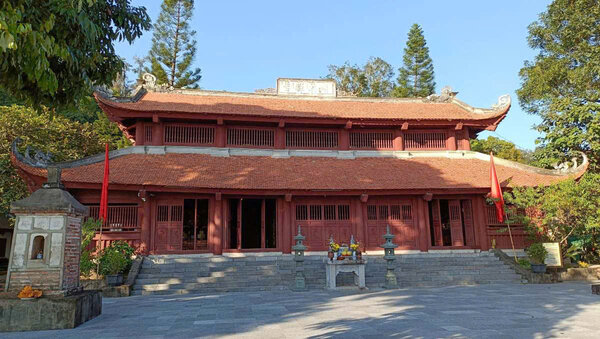
Currently, the relic area has an area of about 5 hectares, with main items arranged along a axis including three-entrance gate, stele house, Buddha hall, ancestral house and ancestral tower. Some works such as three-entrance gate, Buddha hall or road to the pagoda were restored in 2005, contributing to preserving the appearance of the relic.
Not only carrying architectural value, Thanh Mai Pagoda also preserves many precious artifacts. Prominent are 4 stone steles dating from the 14th to the 18th centuries. Among them, the stele "Thanh Mai Vien Thong tower" was erected in 1362, recording the life and career of Pháp Loa tôn giả and information related to the contemporary historical context. This artifact was recognized as a national treasure in 2016.
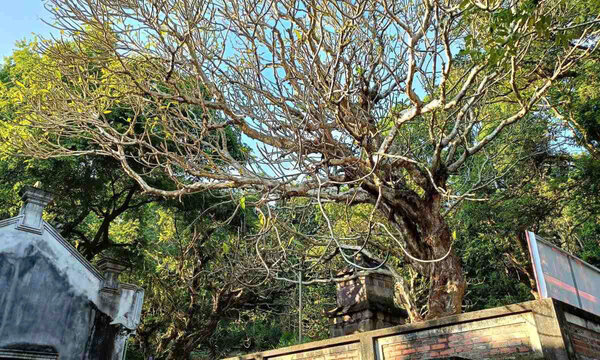
In addition, the system of 8 ancient towers in the pagoda grounds is also an important vestige, built from the 14th to the 18th centuries. Notably, Vien Thong Bao Thap, where the relics of Phap Loa Ton Gia are kept, is about 5m high, made of gray-brown stone, which was renovated in 1718 and 2005. In the pagoda, there are currently 26 jackfruit wood statues, lacquered in gold, dating back to the late 20th century.
Not only is it a historical relic, Thanh Mai Pagoda also impresses with its green space year-round. Long-standing ancient trees cast their shadows covering the entire campus, contributing to preserving the tranquility, antiquity and depth of time for this 700-year-old pagoda.


