
Red address" in the middle of That Son hamlet
In the last days of March 2026, we returned to the That Son region to visit Ta Miet Tren Pagoda (O Lam commune, An Giang province) - a place marking an important historical event of the revolutionary movement of An Giang province.
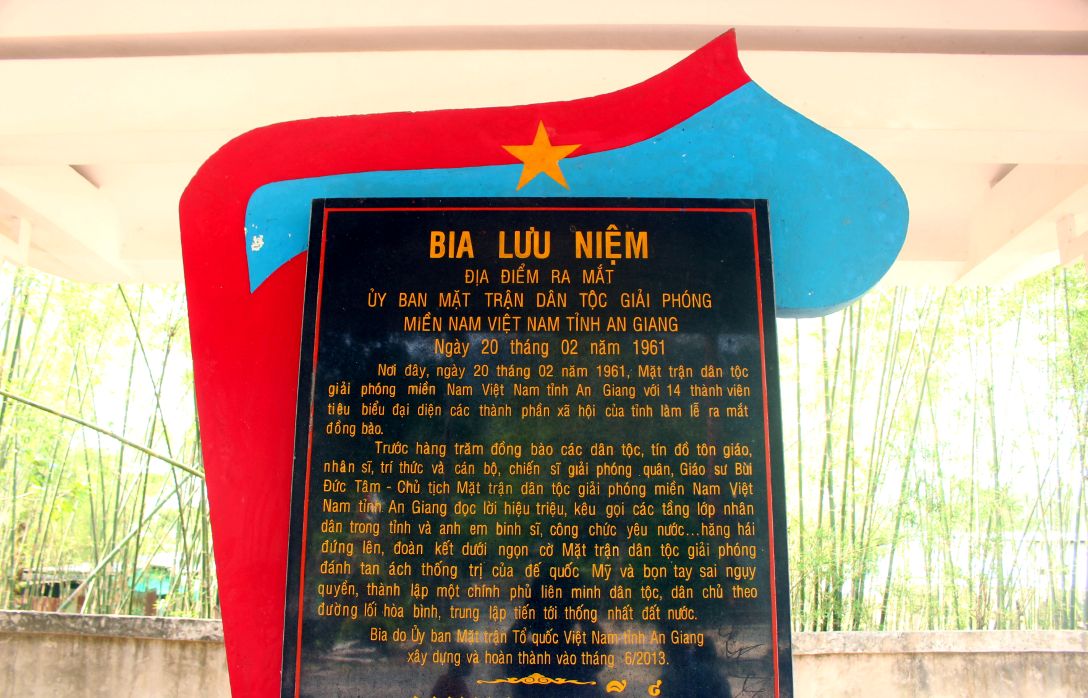
In the quiet space of the ancient Khmer pagoda, the Memorial Stele built in 2013 stands out as a highlight, recalling the heroic moment 65 years ago.
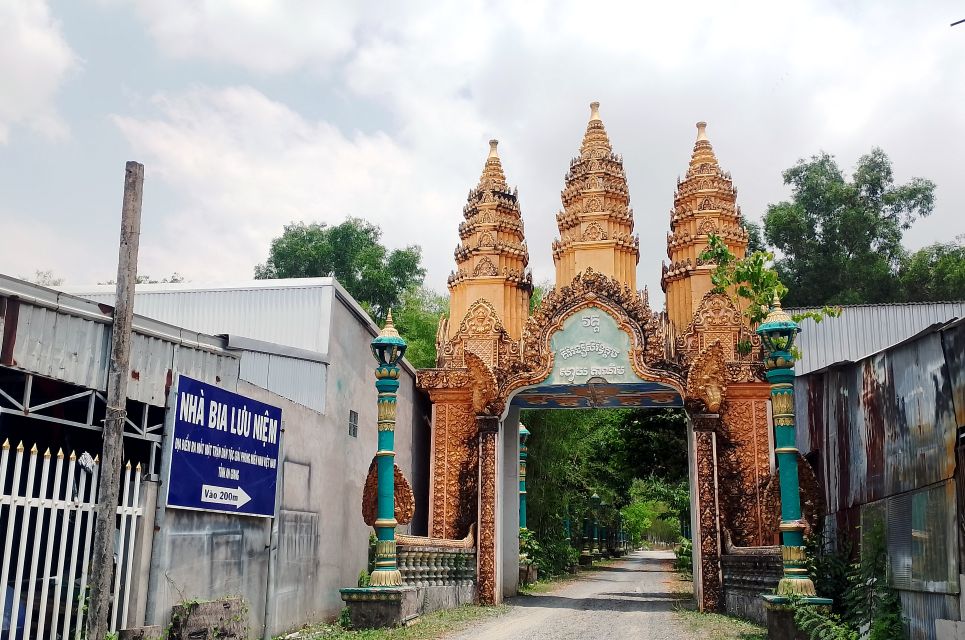
According to the history of the Provincial Party Committee, on February 20, 1961, right here, the Committee of the National Liberation Front of South Vietnam province of An Giang organized a launching ceremony in front of a large number of people. Hundreds of ethnic minorities, religious followers, intellectuals and cadres and soldiers gathered to listen to the call of Professor Bui Duc Tam - Chairman of the Provincial Front at that time.
From the pagoda at the foot of Dai mountain, the call for national unity, rising up to fight oppression, and gaining national independence spread strongly. This is not only a political event, but also an important starting point, affirming the role of the Front in gathering the strength of great national unity from the early years of the resistance war against the US.
Center for Religion and Revolution
The pagoda is located at the foot of Dai mountain, a famous mountain in the That Son list, and like many other Khmer pagodas, Ta Miet Tren pagoda is closely associated with the cultural and spiritual life of the pham and soc communities in the mountains and forests of That Son. In particular, the monks here also promote the spirit of Dharma and national independence, contributing labor and money to the revolutionary forces.
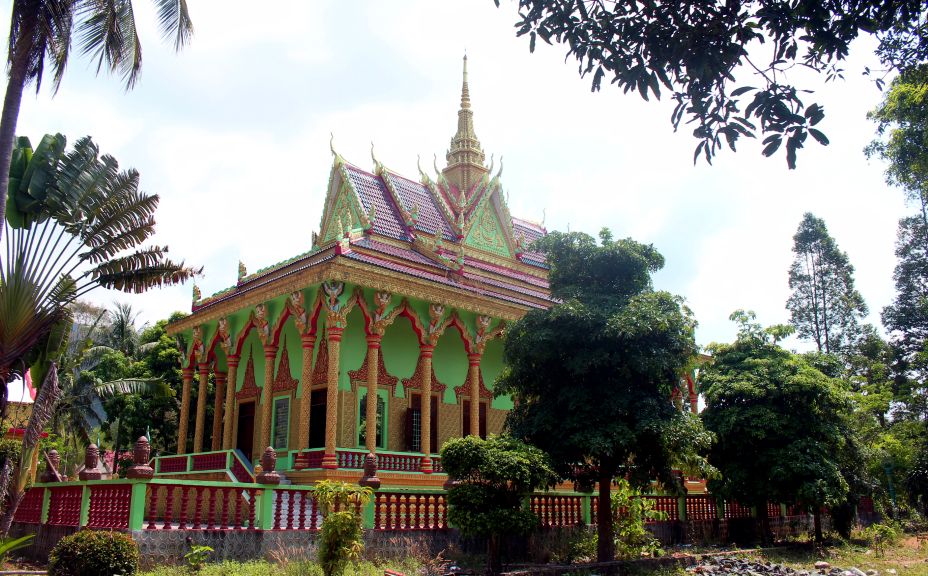
During the fierce war of the anti-American resistance war, Ta Miet Tren Pagoda became part of the revolutionary base area. That sacred space was once a meeting place, propaganda for policies, a spiritual support and a safe shelter for people in the face of sweeps and bombs.
Because of that special position and role, the pagoda has repeatedly become a target of destruction. War bombs and bullets destroyed many works, causing heavy losses to both cultural heritage and people's lives. However, in hardship, the spirit of solidarity of monks and Buddhists was further nurtured.
Not only contributing to nurturing the revolutionary movement, the Khmer people here also directly participate in the organization, becoming the core force in the activities of the Front. The event of Khmer monk Chau Soc participating in the Executive Committee of the Front at that time is a vivid proof of the spirit of attachment between religion and revolution, between nation and country.
Rebirth symbol
After the country's reunification on April 30, 1975, the land of Ta Miet continued to experience changes due to the Southwest border war. People had to leave their homeland many times, and the pagoda was damaged...
According to Khmer cultural researcher Chau Moni Sok Kha, in the early 80s, when the situation stabilized, people gradually returned and started the reconstruction process. From temporary bamboo and leaf pagodas, by 2005, the pagoda was built spaciously with the main hall, monks' quarters, salas... thanks to the joint efforts of the community and the support of the State.
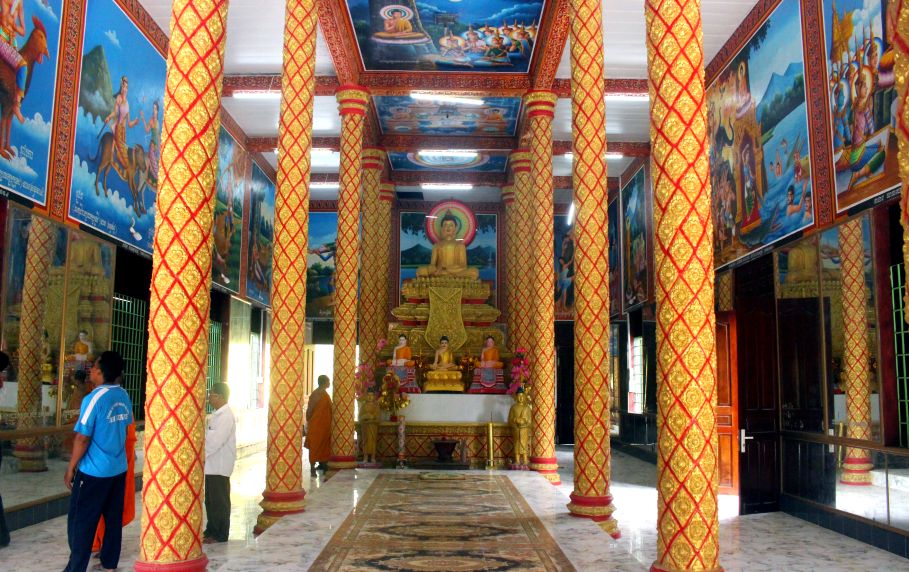
The revival of the pagoda is not only the restoration of a religious work, but also a symbol of the steadfast will, spirit of overcoming difficulties and persistent belief of the people here after many years of war.
Maintaining the fire of tradition, fostering great unity
Venerable Chau Ra Quit, a monk at Ta Miet Pagoda, shared that the pagoda regularly receives attention and investment from local and central functional agencies.
Especially in June 2013, after a period of construction, the Vietnam Fatherland Front Committee of An Giang province put into use the Memorial Stele. The launching location of the Committee of the National Liberation Front of South Vietnam with bilingual Vietnamese - Khmer engraving is as follows: "Here, on February 20, 1961, the National Liberation Front of South Vietnam of An Giang province with 14 typical members representing social components of the province held a launching ceremony for compatriots. In front of hundreds of compatriots of all ethnic groups, religious followers, intellectuals, and cadres and soldiers of the liberation army, Professor Bui Duc Tam - Chairman of the National Liberation Front of South Vietnam of An Giang province read the call, calling on all classes of people in the province and patriotic soldiers and civil servants... enthusiastically stand up, unite under the banner of the National Liberation Front to break the domination of the US imperialists and their puppet government henchmen, establish a national, democratic coalition government following the path of peace, neutrality towards national reunification".
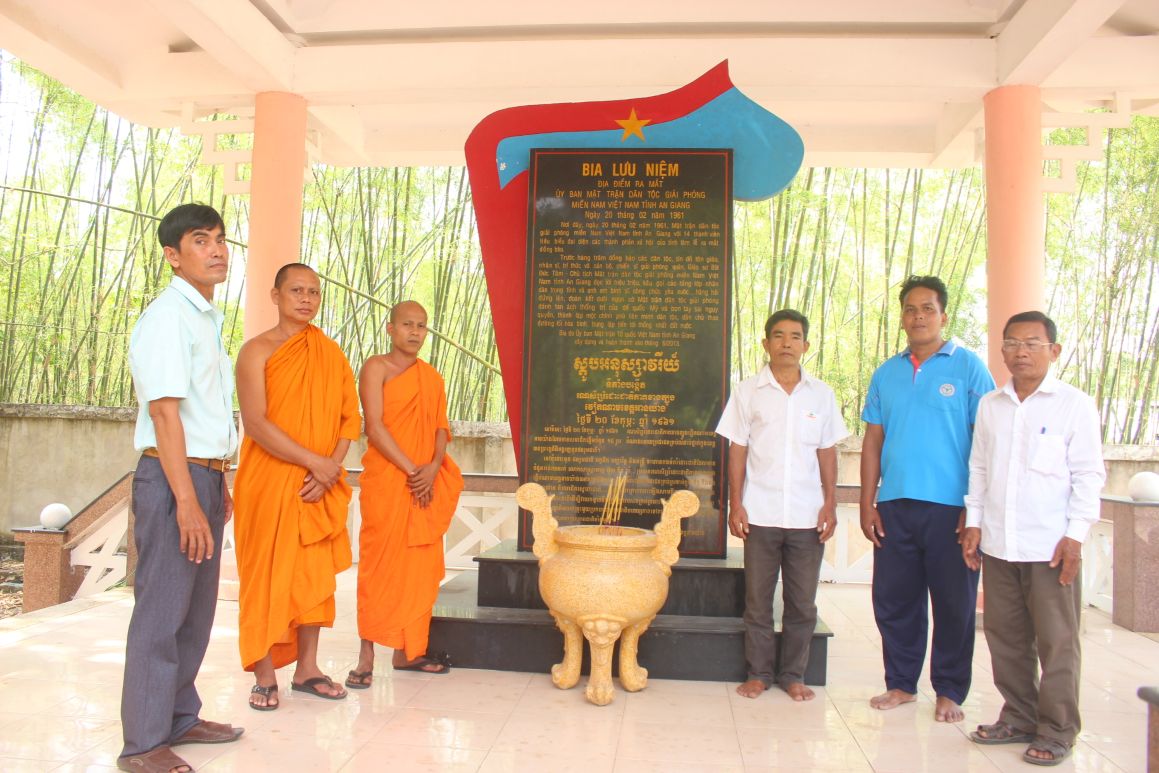
Since its completion, the stele house has become a "red address", a place where every citizen, especially youth and students, come to better understand history and the strength of the great national unity bloc.
Promoting that achievement, monks also integrate many contents of economic development, building civilized families... into sermons, helping many Buddhists have more foundations to transform livestock and crops in an effective and practical direction, improving the lives of families and homeland...
Towards the milestone of 65 years since the launch of the An Giang Provincial Front, the value of Ta Miet Tren pagoda is further affirmed. It is a convergence place of three elements: religion - history - national unity. From an ancient Khmer pagoda, this place has become a symbol of the bond between ethnic groups, between religion and life, between the past and the present.
In today's development flow, Ta Miet Tren Pagoda is not only a place to preserve memories, but also a valuable spiritual resource, contributing to fostering the great national unity - a solid foundation for the sustainable development of An Giang in particular and the country in general.


