
Located in Trung Lap village, Xuan Lap commune (Thanh Hoa), Le Hoan Temple is not only a special national relic but also a place that preserves many imprints associated with the Tien Le Dynasty.
The project was erected to commemorate Le Hoan - a king who played an important role in the period of transformation at the end of the 10th century, along with members of the royal family. From a general assisting Dinh Tien Hoang in suppressing the rebellion of 12 warlords, he ascended the throne in 980, opening up the Tien Le dynasty and implementing many measures to help stabilize and develop the country. After 24 years of reign, he died in 1005 in Hoa Lu.
Initially, it was just a small temple built by the people on the land associated with the king's childhood to commemorate his merits, the project gradually expanded and renovated through dynasties, especially during the Ly Thai To period and the Hong Duc period, to have the appearance it has today.
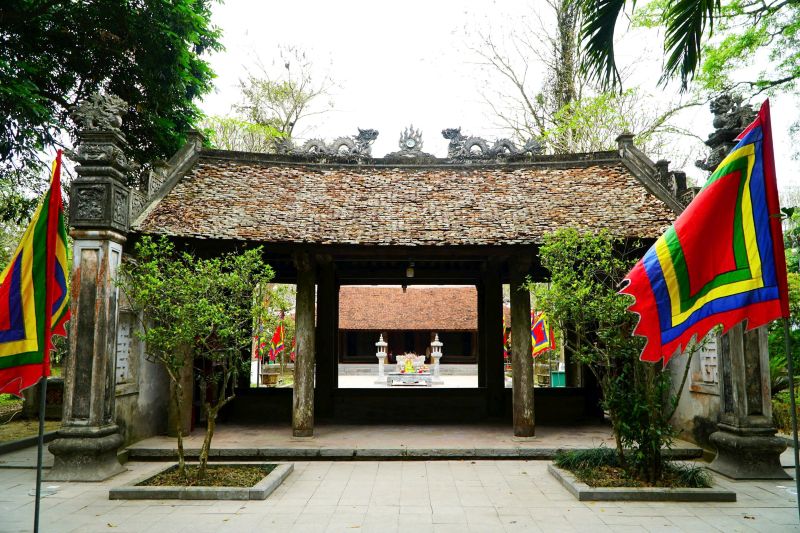
The temple is imbued with traditional architectural style with "domestic and foreign" structures, solid ironwood frames, ancient tiled roofs and many sophisticated carved details. The interior space still preserves many valuable artifacts such as imperial decrees, incense tables, parallel sentences, great characters...
Notably, among the artifacts being preserved are also a stone plate called "jade plate" and ancient alloy chopsticks. According to researchers, the jade plate dates back to about 981 to 1005, while the chopsticks are said to have been used to test poison in the ancient royal court - a detail that makes many people curious. Currently, these precious artifacts are strictly preserved to preserve long-term historical and cultural values.


