
Located in Thanh An commune, Dien Bien province, the Thanh Ban Phu relic (also known by the people as Hoang Cong Chat Temple) has long become a destination imbued with historical value and patriotic tradition education for generations.
About 10km south of the provincial center, the project was built under the command of General Hoang Cong Chat and the joint efforts of local ethnic minorities.
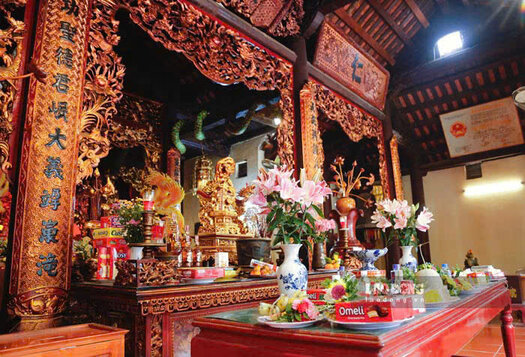
According to the Thanh An commune government, General Hoang Cong Chat's real name is Hoang Cong Thu, originally from the ancient Thai Binh region (now Hung Yen).
In 1739, he launched an uprising in the Son Nam region, stretching across areas such as Nam Dinh, Thai Binh and Hung Yen. In 1748, the insurgents advanced to the upland area of Thanh Hoa, then along the mountainous road towards the Northwest region.
Typically, in May 1754, Hoang Cong Chat and 2 Thai leaders Lo Ngai and Lo Khanh led the army to defeat the Fe invaders and liberate the Muong Thanh region (present-day Dien Bien). This was an important turning point, opening a period of stability for the border land.
To build a long-term base, from 1758 to 1762, he and the people built Ban Phu Citadel. Throughout 3 decades (1739 - 1769), the fire of uprising was always maintained, gathering the solidarity of the community of ethnic groups in Hung Hoa region in the effort to protect the border.
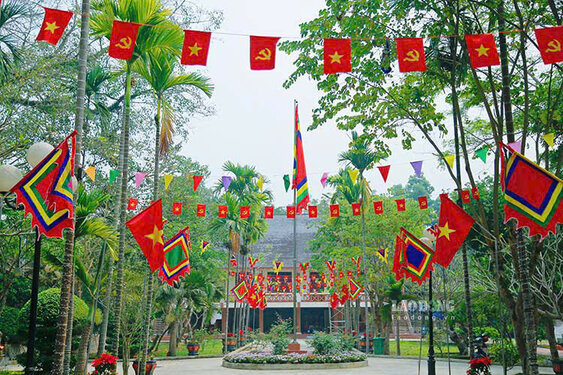
Over 270 years, the merits of General Hoang Cong Chat and his generals are still remembered by the people of Dien Bien and the Northwest region. Every year, many commemorative activities are organized to show gratitude for his great contributions and the insurgents.
According to leaders of Thanh An commune, on the occasion of the 272nd anniversary of the Muong Thanh Liberation Victory (1754 - 2026) and the 257th anniversary of Hoang Cong Chat's death, the locality will organize the Hoang Cong Chat Temple Festival on February 11-12 at the relic site.
The festival is expected to include many rich activities such as incense offering in commemoration, traditional rituals, opening programs and mass art festivals... contributing to recreating the unique cultural space of highland ethnic groups.
Today, when coming to Dien Bien, besides visiting the relics associated with the Dien Bien Phu Campaign, visitors can also return to Ban Phu Citadel to burn incense and explore the historical depth of this land.
The relic has been ranked as a national historical and cultural relic since 1981. In June 2015, the Ban Phu Citadel Festival continued to be recognized as a National Intangible Cultural Heritage, affirming the sustainable value of the heritage in community life.


