
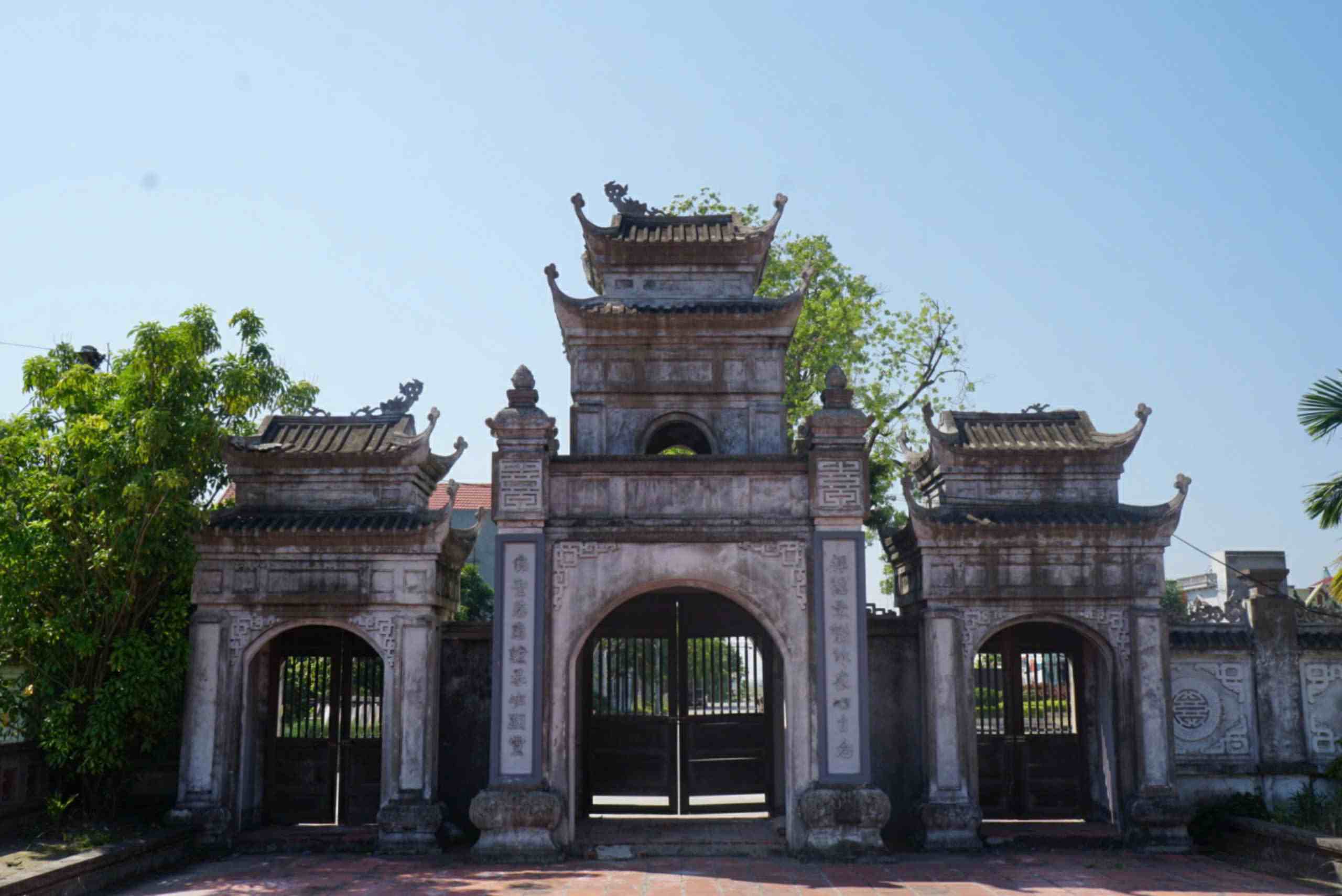
Located in Hop Tien commune, Hai Phong city, Dinh Dau has long been a cultural and religious activity center for people. The building was built from the Later Le Dynasty to worship Princess Phat Minh of the Tran Dynasty and was overhauled on a large scale in the 2nd year of Khai Dinh (1917).
The communal house has a Dinh-shaped structure including 5 front halls and 3 rear halls. The entire architectural system is imbued with Nguyen Dynasty art style with many elaborate carved details.
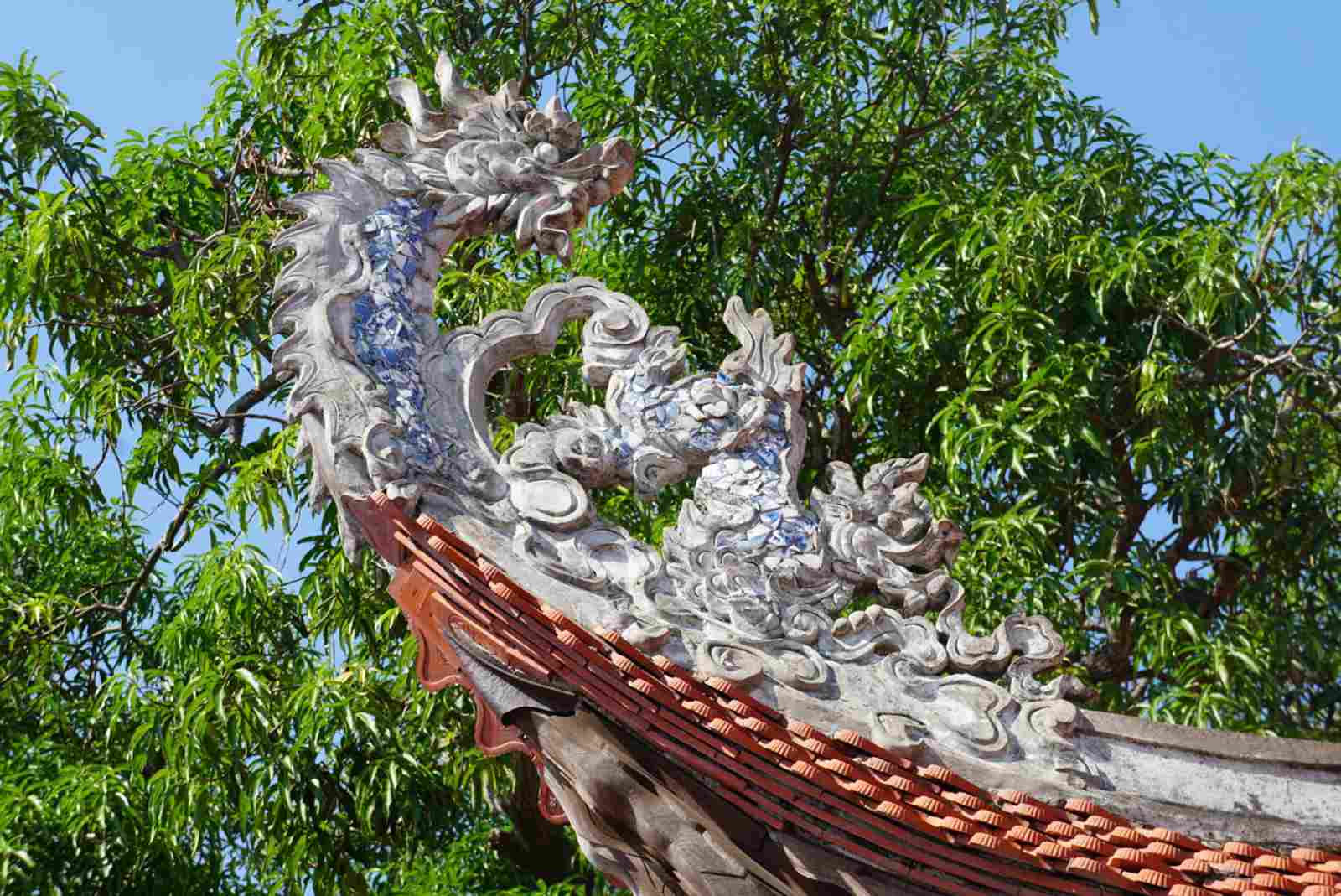
The roof of the communal house has long and wide porches, decorated with architecture transforming into dragons, carp transforming into dragons, and delicate chrysanthemum and apricot blossom motifs. Rows stacked together form raised horizontal lacquered panels with the shapes of the four sacred animals and the four precious animals full of form.
Not only valuable in architectural art, Dinh Dau also marks many important events in the revolutionary history of Hai Phong.
In August 1940, the Ta Xa Party cell held a conference at the communal house with the participation of comrade Nguyen Manh Hoan - then Secretary of the Provincial Party Committee. Here, the Ta Xa Combat Self-Defense Team, consisting of more than 40 people, was established to protect the Party base, becoming the predecessor of the armed forces of Hai Phong province.
In the years 1941 - 1942, although the French colonialists intensified the suppression of the revolutionary movement, the Ta Xa facility was still maintained. The floor area of the communal house was used to hide weapons to serve the long-term resistance war.
On August 22, 1945, under the leadership of the Party, the Ta Xa Combat Self-Defense Team and the people held a large rally in the communal house yard, declaring the abolition of the colonial-feudal government in the locality and establishing the Provisional Revolutionary Committee. Since then, Dinh Dau has become the headquarters of the commune revolutionary government.
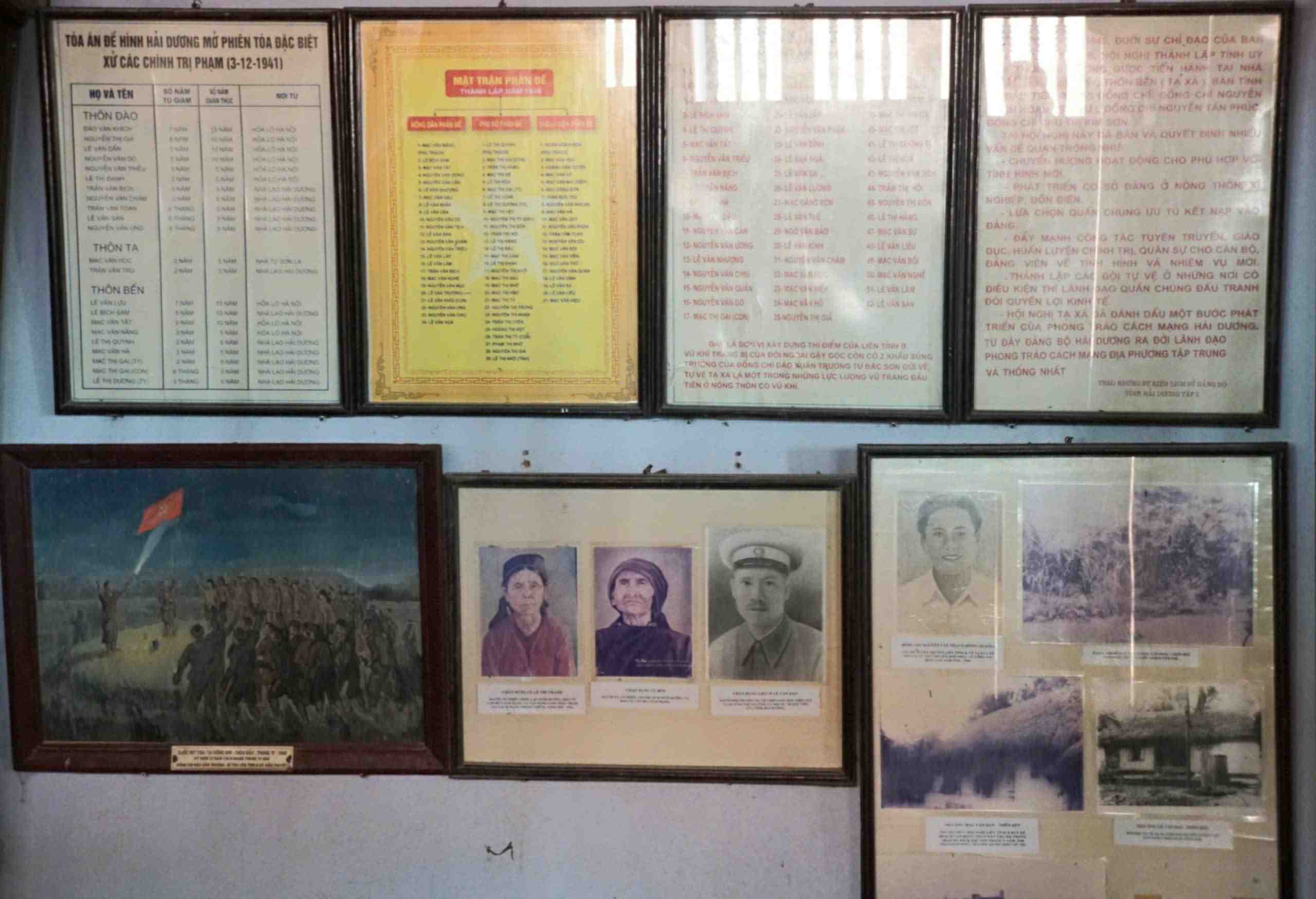
Currently, in the communal house campus, there is also a traditional house storing many documents and artifacts about the revolutionary struggle period of the army and people of Hop Tien commune.
With typical historical and cultural values, on January 21, 1992, Dinh Dau was ranked as a National historical and cultural relic.
Every year on February 12th of the lunar calendar, local people organize a traditional festival at the communal house with many unique cultural activities, attracting a large number of tourists and Buddhists to visit and worship.


