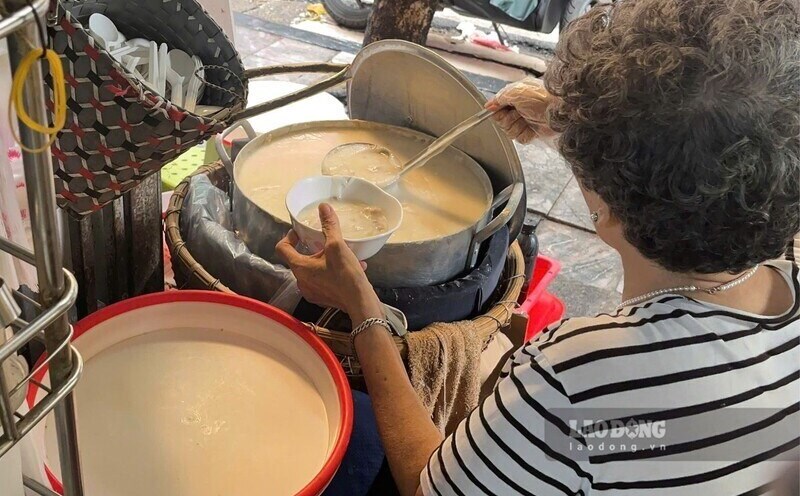
Ha Mo porridge is famous for hundreds of years
Leaving the city center to the West, visiting O Dien (Me Linh commune), visitors cannot help but be surprised by the system of relics that still exist: Van Xuan communal house, Ham Rong temple, Chinh Khi temple.
Contrary to history, the land of O Dien was once the headquarters of Ly Nam De and Ly Phat Tu, playing the role of the political and military center of the capital Van Xuan.
This place is also an important link in the capital chain from Phong Chau - Co Loa - O Dien - Thang Long. This fertile alluvial land was once a gathering place for Hai Ba Trung and later the court of Prince Ly Bat Lang, son of King Ly Phat Tu.
According to legend, the people of Ha Mo village in O Dien have a historical story associated with Prince Ly Bat Lang. According to legend, after the victorious battles against the Northern invaders, he often held military ceremonies in the land of O Dien.
Starting from the heart of pitying the soldiers for their hard work, he immediately ordered his captain to prepare another dish from the pork bones and rice available for the army. From a dish for soldiers, porridge has gradually become a community dish, symbolizing the spirit of solidarity and sharing of the people here.
Today, porridge is a traditional dish present on important occasions of the village such as January 12, August 12 to commemorate the village's royal cities, village festivals, holidays...

Rural areas connect the community
In the flow of thousands of years of history, porridge is still preserved by the people, showing sophistication in processing. At first glance, the ingredients are very simple, including rice and pork bones. However, to create a standard bowl of porridge, the cook must process many stages and have his own technique.
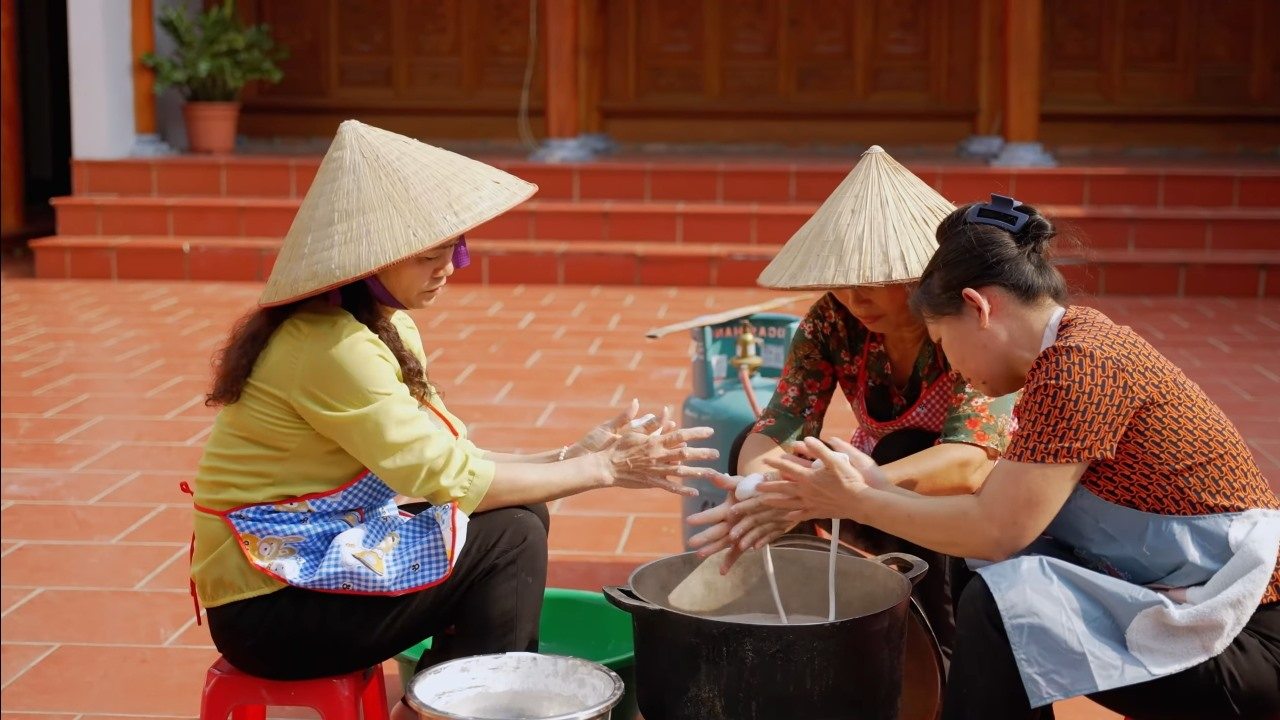
The name porridge comes from the characteristic movement when processing. When the broth from the pig's tail is boiling and fragrant, the cook takes a large handful of flour, stews it over a few steps and begins the stewing technique, forming flows of flour flowing down the broth.
Ms. Dinh Thi Thanh (50 years old, Ha Mo village, Tien Thang commune), a person with many years of experience in cooking porridge - said: "If the flour on the hand is just enough, if too light, the flour will hardly flow into the stream, it will not be even".
According to her, porridge must be cooked over a wood stove, kept on medium heat so that the porridge is cooked evenly, without frying the pot. In addition to the "con se" part, the broth is also a deciding factor in the flavor of the porridge. Pork bones can be used in many different parts, but the best part is still the tail, simmered carefully for about two to three hours to create a natural sweet taste. The meat is filtered from bones, chopped, stir-fried with dried onions and then put into the porridge pot in the final step, creating a suitable thickness.
To make standard crossboards, the cook must choose delicious rice, when cooking rice to a certain drought level. The rice is thoroughly washed, soaked in cold water for about 12 hours, then ground into a fine powder. The flour is further carefully filtered to achieve flexibility, smoothness, and enough moisture for the emulsion stage.
When making flour, your right hand is very skillful, because it is too light for the flour to flow. The various long and short "se" were interrupted by chopsticks, floating in the pot of stewed water.
The chopped, stir-fried meat with fragrant dried onions is added to the end of each bowl of porridge, creating harmony between the richness of the rice and the richness of the meat.
Many diners especially like the porridge burning layer at the bottom of the pot. The portion is light yellow, sticky and fragrant, often considered a "food", making many people eagerly wait for the porridge pot to gradually decrease to enjoy.
According to Ms. Thanh, porridge is not only a dish but is also associated with the cultural life of Ha Mo - O Dien. Whether it is a boat racing festival, catching bustling ducks on the Nhue River, or village festivals, festivals, harvest celebrations... there is always porridge.
The image of people gathering around a pot of porridge suspected to be smoking shows the solidarity of the people here. It is these values that have made porridge lasting for many generations
The village's specialties go everywhere
From Ha Mo village, porridge follows people to the inner city neighborhoods, becoming a rustic but unique rustic gift in the midst of urban life. Among the myriad of town dishes, the bowl of porridge still retains its original flavor, not fussy in processing, but contains the historical depth of the land that once played the role of the ancient capital.
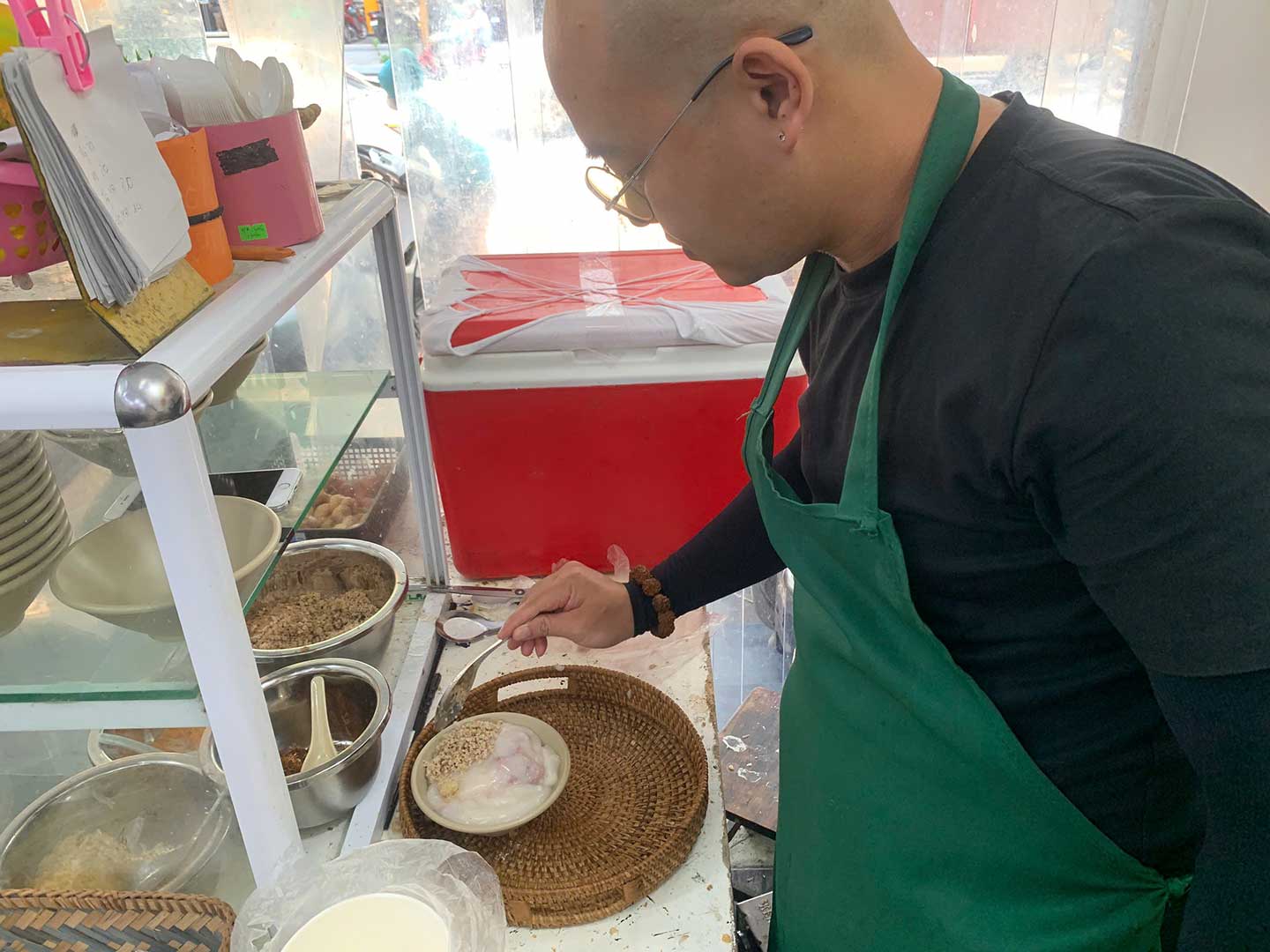
From a dish associated with community activities in Ha Mo, porridge has gradually appeared in the culinary life of Hanoi. On Thai Ha Street (Dong Da Ward, Hanoi), a porridge shop that has only been open for more than two months has quickly attracted diners thanks to its unique way of enjoying and rustic flavors. The owner is Mr. Luu Van Don, who had the opportunity to enjoy porridge on his trip to Ha Mo commune and always wished to bring this dish closer to the people of the inner city.
"It took me 4 months from planning, learning until successfully making this porridge. I want the people of the capital to know more about this dish, Mr. Don shared. To keep the traditional dish spirit, he carefully researched each stage, from choosing the right rice, washing it, soaking it in water, pureeing it into flour, to filtering the flour through a cloth bag to achieve the ideal moisture for the fibers.
"I have to time the dough to have the right moisture level, and it can be thickened into strands. If the flour is too moist, it will stick and break, but if the flour is dry, the threads will break, said Mr. Don. When the flour meets the standards, the cook stews the pot of broth simmered from pork bones for many hours, the meat is specially filtered to serve with porridge.
In addition to the traditional version that only includes porridge, noodles and ribs, the restaurant adds many side dish options such as cartilage ribs, salmon shrimp, minced meat to meet the diverse tastes of diners. Each full bowl of porridge costs 55,000 VND, on average the restaurant sells about 200 - 250 bowls per day.
Not only appearing at local events, porridge has participated in many major festivals such as Hanoi Food Culture Festival, Hanoi Tourism Festival from 2023 to 2025, Dan Phuong District Food Festival in 2023...
The porridge stalls at each fair attract a large number of diners because of their unique preparation method and rustic delicious taste. Promoting porridge at major festivals is not only a story about the tourism economy but also contributes to spreading the cultural and historical values of the land of O Dien, contributing to thiening the culinary cultural sediment layer of the thousand-year-old capital.
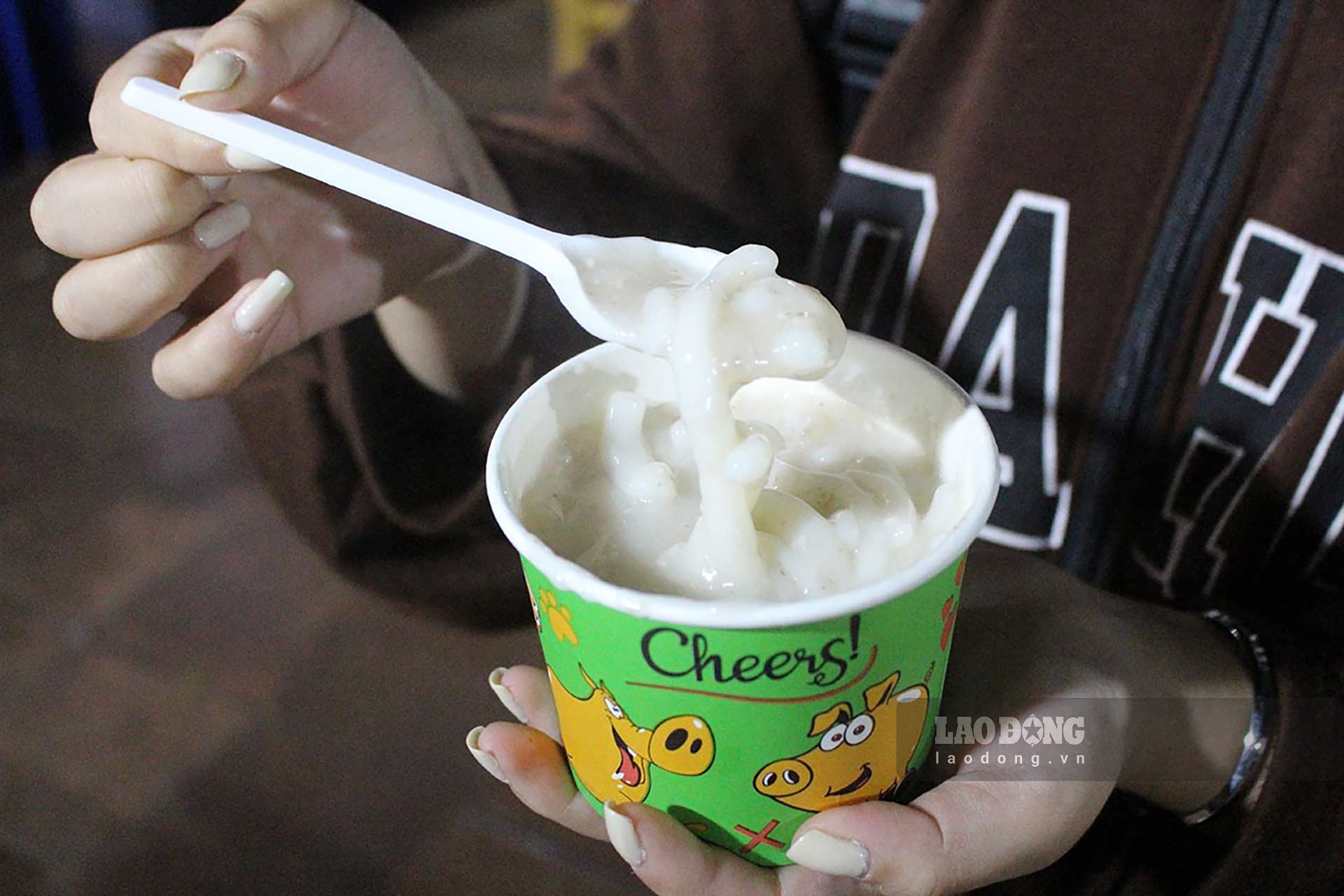
The land of O Dien is today changing day by day with the general development of the capital. However, between high-rise houses and bustling vibrations, there are historical traces of the scent of porridge that are preserved and passed down by local people every day.
Eating a bowl of hot porridge, diners not only feel the sticky taste of rice, the sweetness of bones but also learn more about the land that has gone down in the history of the nation. From rustic, simple dishes, Ha Mo people - with skillful hands, pride in dishes associated with long history and culture - have preserved the attractive local cuisine on the culinary map of the capital.