In the space of a warm fire stilt house, amidst the sound of gongs resounding at the beginning of Spring, a tray of leaves is solemnly displayed in the main house, becoming a gathering point for the culinary quintessence and cultural depth of Muong land.
Arrange offerings on leaves, preserve old customs
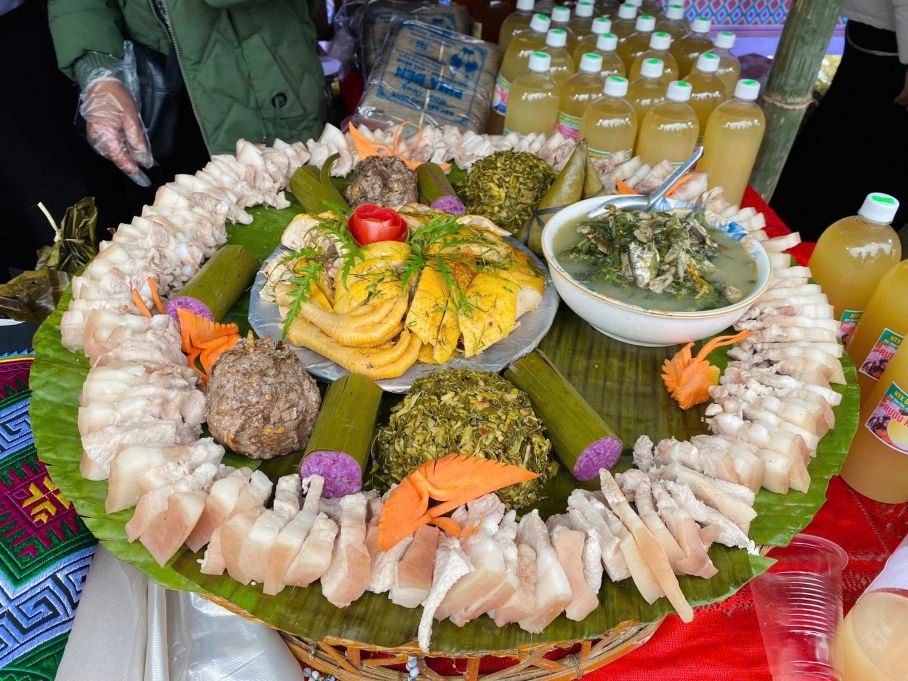
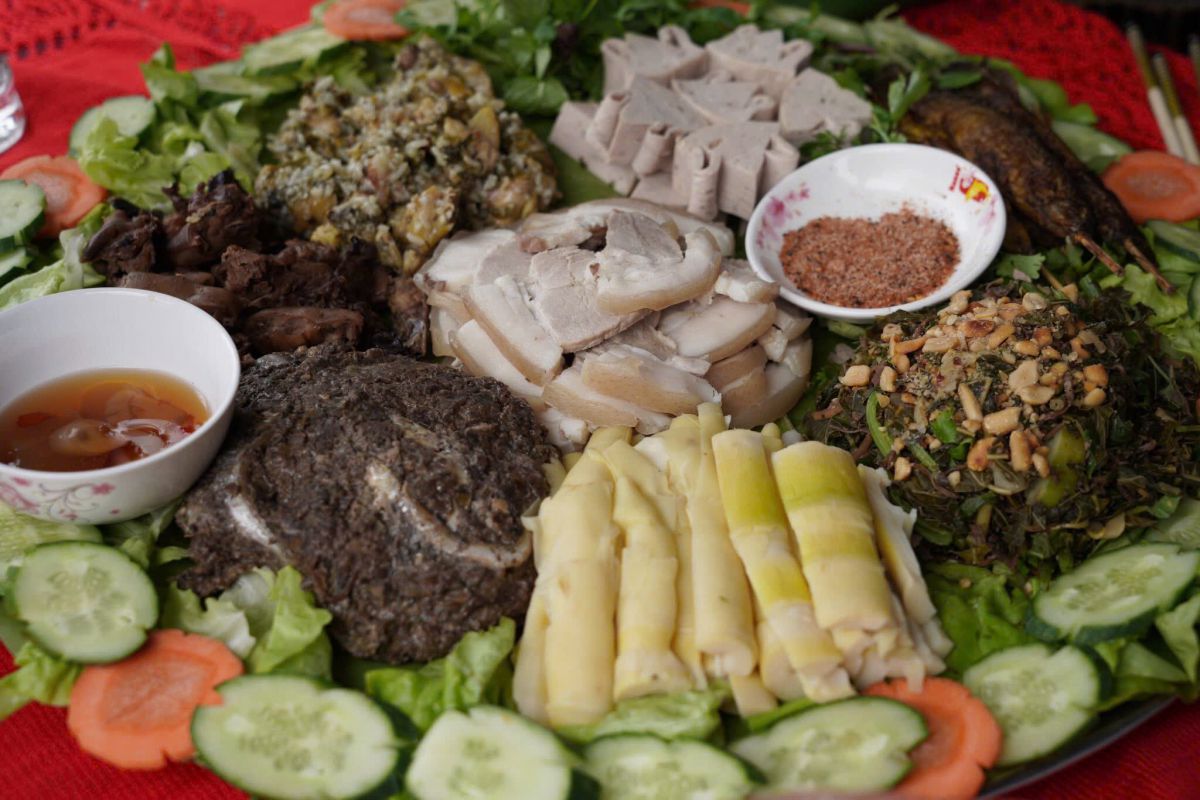
Unlike the familiar way of arranging with bowls and plates, the Muong people have for generations maintained the custom of arranging feasts on green banana leaves. Leaves are carefully selected, heated over fire to soften, become flexible, and emit a gentle fragrance, then spread flat to make a tray.
According to folk beliefs, the Tet leaves tray is usually arranged in a circle, suggesting fulfillment and fullness. Using banana leaves as a tray is both convenient when eating crowded meals and reflects the lifestyle associated with the mountains and forests of the Muong people.
In the center of the feast are dishes from local pork - a free-range pig breed raised on hills and mountains, giving firm, low-fat meat. Liver, heart, and liver are boiled, sliced into bite-sized pieces, neatly arranged in the middle of the tray. Surrounded by boiled meat, grilled meat, boiled chicken, grilled chicken, sticky rice, forest vegetables, vegetables and characteristic rolls. Indispensable spices are salt seeds - a spice with a very unique aroma of the Northwest mountains and forests, highlighting the natural sweetness of each dish.
Not fussy in form, but the leaf feast requires the dexterity and sophistication of the chef. From the stage of selecting ingredients, processing to arranging, everything follows age-old principles.
For the Muong people, the offering to ancestors must be the most quintessential, cleanest, expressing sincerity and gratitude to the roots. After the offering is completed, the offering tray is gathered by children and grandchildren to enjoy together, regardless of old or young, male or female, creating a very unique atmosphere of Tet in Muong land.
Not only carrying spiritual meaning, the leaves feast is also a "cultural language" for the Muong people to introduce themselves to friends and tourists. In recent years, along with the development of community tourism, Tet leaves feast has become an experience sought after by many tourists, especially those who love to explore indigenous culture.
Ms. Le Thanh Ha (Hanoi) said that during the New Year holiday in Kim Boi (Phu Tho province), for the first time she was able to sit and eat a truly meaningful leaf feast in the stilt house space of the Muong people.
Sitting around the tray of offerings spread with banana leaves, everyone is eating and chatting, the feeling is very different from familiar meals. The food is not fussy, but the taste is clear, especially the local pork and dishes, eating to where you feel the scent of the mountains and forests," Ms. Ha shared.
According to Ms. Ha, the memorable thing is not only the food, but also the way the Muong people eat together. There is no distinction between the top tray and the bottom tray, everyone can reach out to pick up their favorite dish, and the story also lengthens naturally.
For many tourists, the leaf feast is not only to enjoy the flavor of Tet, but also a way for the Muong people to tell about their lifestyle through their own family meal.
Preserving culinary identity in the cultural flow
As many old habits gradually give way to modern life, the Tet feast of the Muong people is still preserved by the persistence of those who are deeply concerned about traditional culture. In Phu Tho, Meritorious Artist Bui Thanh Binh - Director of the Muong Cultural Heritage Museum (Thong Nhat ward) is one of such people!
Speaking about the feast of leaves, Mr. Binh said that this is not only a culinary story, but also reflects many cultural values of the Muong people.
Leaf feast is not simply a Tet dish. In which there is history, beliefs, and the way the Muong people treat nature and the community. Each way of arranging, each dish has its own meaning, reflecting the way of thinking and living left by our ancestors," Mr. Binh shared.
At the Muong Cultural Heritage Museum, in addition to displaying artifacts, restoring the space of stilt houses, preserving Muong Mo, Muong gongs, Mr. Binh and his colleagues also focus on recreating the traditional culinary space. On holidays, Tet or cultural events, leaves feasts are introduced as an indispensable part, helping visitors not only see Muong culture, but also touch and taste it with vivid experiences.
In the flow of integration, the Tet feast of the Muong people still retains its core values: Family reunion, respect for ancestors and lifestyles that have persisted over the years.
From simple banana leaves, the Muong people entrust in them their way of dealing with nature, with people and with their own roots - what makes the long-lasting vitality of the leaf feast in today's cultural life.