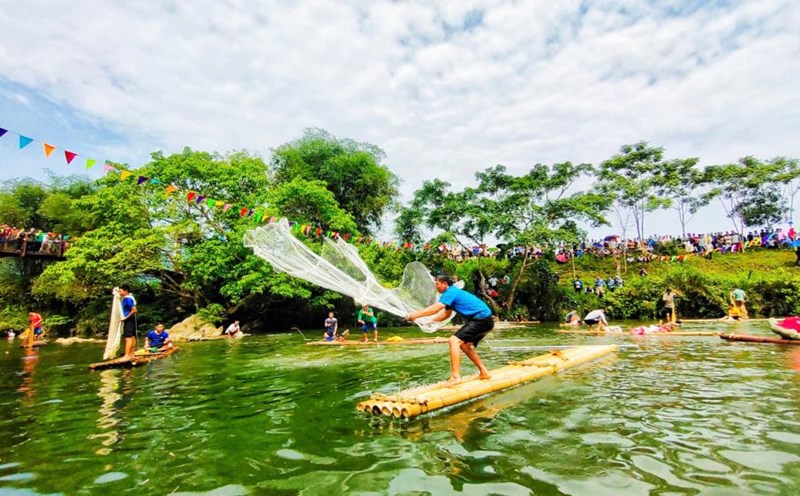
Passing through the rolling mountain slopes of Muong land, there are things that you can recognize without looking. They are the smell of kitchen smoke faintly in the early morning mist, the smell of sticky rice mixed with the smell of scorched bamboo, the sour taste of Lom leaves, the spiciness of Doi and Mac khen seeds.
In the unique cultural space of the mountains, in the Muong Bi, Vang, Thang Dong regions (belonging to the old Hoa Binh, now belonging to Phu Tho province), cuisine has become an important part of the Muong ethnic identity. From can wine, com lam to traditional leaf feasts, each dish is a story. Moreover, it is also a slice of life, reflecting how Muong people treat nature, the community and beliefs. It is not just a meal to fill their stomachs, but a memory, an invisible rope connecting the past with the present.
Banquet of leaves - a gathering place for Muong cultural souls
Muong cuisine is formed from a diverse ecological environment, where forests, mountains and fields harmonize. From what nature has bestowed, the Muong ethnic people have created up to 69 different dishes and drinks. Many dishes are not only delicious but also considered folk remedies to help relieve colds, relieve alcohol, and nourish health. All are encapsulated in simple but meaningful proverbs: "Rice, stalls, carrying water, pigs...", like a concise summary of the Muong people's lifestyle and culinary philosophy.
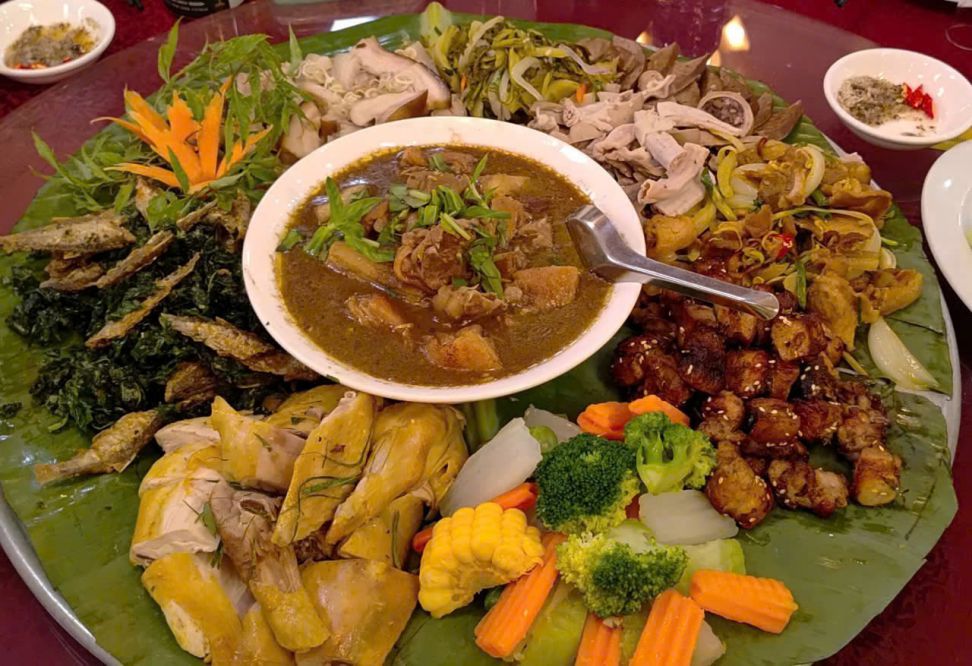
Meritorious Artisan Bui Thanh Binh - Director of the Muong Cultural Heritage Museum (Thong Nhat ward, now belonging to Phu Tho province), mentioning Muong cuisine is indispensable with can wine, lam rice, buffalo meat cooked with lom leaves, grilled stream fish and especially the leaf offering tray. In festivals, leaf offerings are always the highlight. Both solemn and close. The offering tray is displayed on green banana leaves that have been heated over fire, neatly arranged with chicken, pork, and cat food dishes in wood chips, forest vegetables, grapefruit leaf rolls...
No elaborate tables and chairs, no luxurious dishes. The feast tray of leaves and flowers expresses a simple but profound philosophy of life of the Muong people: People blend into nature, taking nature as the center of life. The feast tray of leaves and flowers often appears on important occasions such as weddings, celebrating new houses, funerals or traditional Tet. That is when the whole village and hamlet sit down together, eat at the same tray, pick up by hand, and dip in a bowl of fragrant salt seeds. To share joys, sorrows and community bonds with each other.
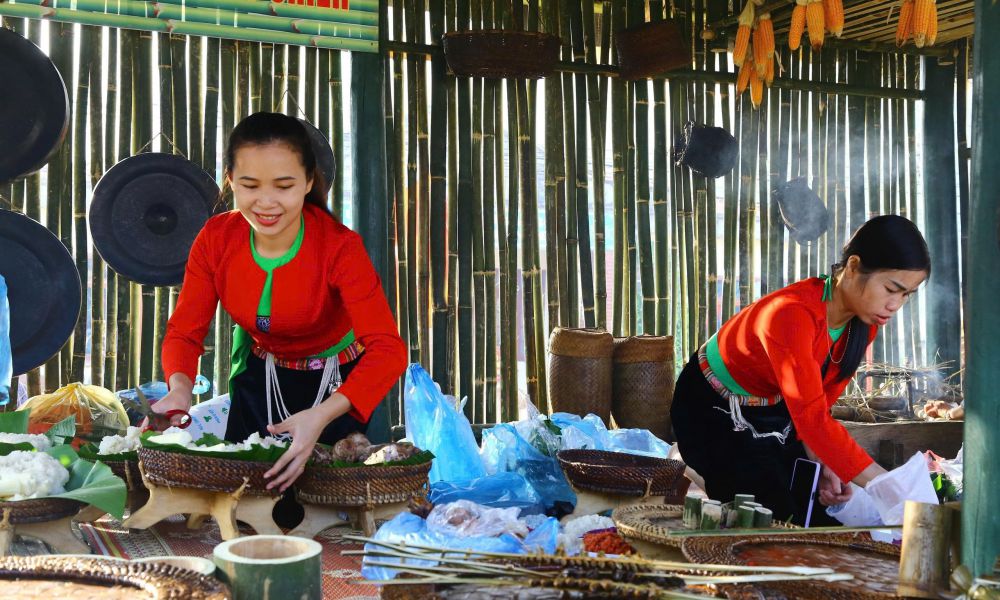
On the leaf offering tray, pork, liver, and intestines are steamed, boiled or grilled just as cooked, served with lemon salt crushed with doi seeds. Each dish is not only delicious but also harmoniously arranged in color and taste, showing the ingenuity and sophistication of Muong women's hands. There, the meal is not simply cuisine, but a cultural ritual, the way Muong people "told" stories about their roots.
Dishes that hold people's footsteps
Besides the leaf offering tray, rice lam with bamboo tubes is a dish that many tourists will always remember when coming to Muong land. Highland sticky rice is soaked overnight, mixed with shredded coconut flesh, stuffed into bamboo tubes, added coconut milk and grilled on a wood stove. When separating the burnt shell on the outside, the soft white rice inside emits a fragrant aroma. Eating with sesame salt, it is simple but full of flavor. Today, rice lam is no longer only in the family fireplace but has become a gift carrying the memories of the mountains and forests of tourists when coming to Muong land.
More elaborate is the buffalo meat cooked with kelp leaves - a dish with a very unique sour taste. The buffalo meat is thoroughly chopped, marinated, and then simmered with kelp leaves and chili until soft. This dish can be used with rice, vermicelli, or add sticky rice to make thin porridge to relieve feelings, relieve alcohol after long parties with rice wine.
In many Muong areas in the south of Phu Tho province now, fermented bamboo shoots cooked with chicken are an indispensable dish on holidays and visiting days. Free-range chicken is firm, cooked with fermented bamboo shoots on a wood stove for hours, before being put down, add roasted and ground goi seeds to create a characteristic aroma. In addition, wild vegetable dishes including ambarella, banana flowers, male papaya flowers... are rustic dishes but contain the full flavor of the mountains and forests. Wild vegetable dishes and dipping sauce made from fish meat and stir-fried fish fat will retain the bitter, pungent, sweet, and buttery taste, creating a full feeling in the throat.
During a community tour in Van Son highland commune, Ms. Nguyen Thi Vui (a tourist from Hanoi) still remembers the feeling of sitting around the traditional leaf offering tray. “Picking up food by hand, dipping salt and doi seeds, listening to villagers tell stories about each dish. I feel like I am not just a tourist but also living in the cultural space of the Muong people. Just like people in the house are sharing with each other,” Ms. Vui shared.
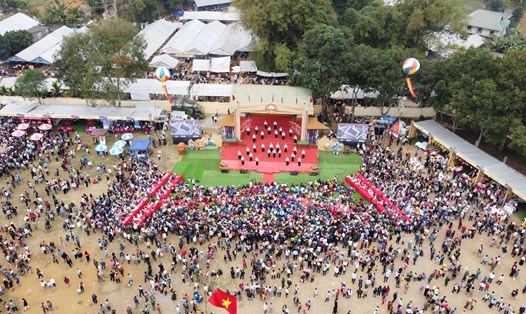
Today, many Muong villages have become attractive destinations, with cultural festivals regularly organizing cooking contests to promote ethnic cuisine. However, due to the scarcity of natural ingredients and the sophistication in processing, many traditional dishes are facing the risk of fading.
In the context of merging 3 provinces Hoa Binh, Vinh Phuc, Phu Tho into Phu Tho province, it has opened up more widespread promotion opportunities, making Muong cuisine a highlight on the tourism map of the midland mountainous region of the North. From village fireplaces, today's leaf feast has gone beyond the scope of meals, becoming a "cultural ambassador", bringing the image of the Muong ethnic group to tourists from near and far.
It's a bit of a bit of a bit of a bit of a bit of a bit.
It's a bit of a bit of a bit of a bit of a bit of a bit.