
According to the latest storm news from the Joint Typhoon Warning Center (JTWC), storm Cristina has officially formed in the Pacific Ocean, off the coast of Central America.
On the morning of June 9, storm Cristina moved very slowly in the North direction at a speed of about 4 km/h. The strongest wind near the storm center reached 75 km/h.
According to forecasts, storm Cristina will continue to move slowly in the next 24 hours before gradually moving northwest. It is likely that the storm will approach or make landfall along the coast of El Salvador in the next 36 to 48 hours.
If it goes deep inland, storm Cristina is forecast to weaken rapidly and dissipate in the second half of the week.
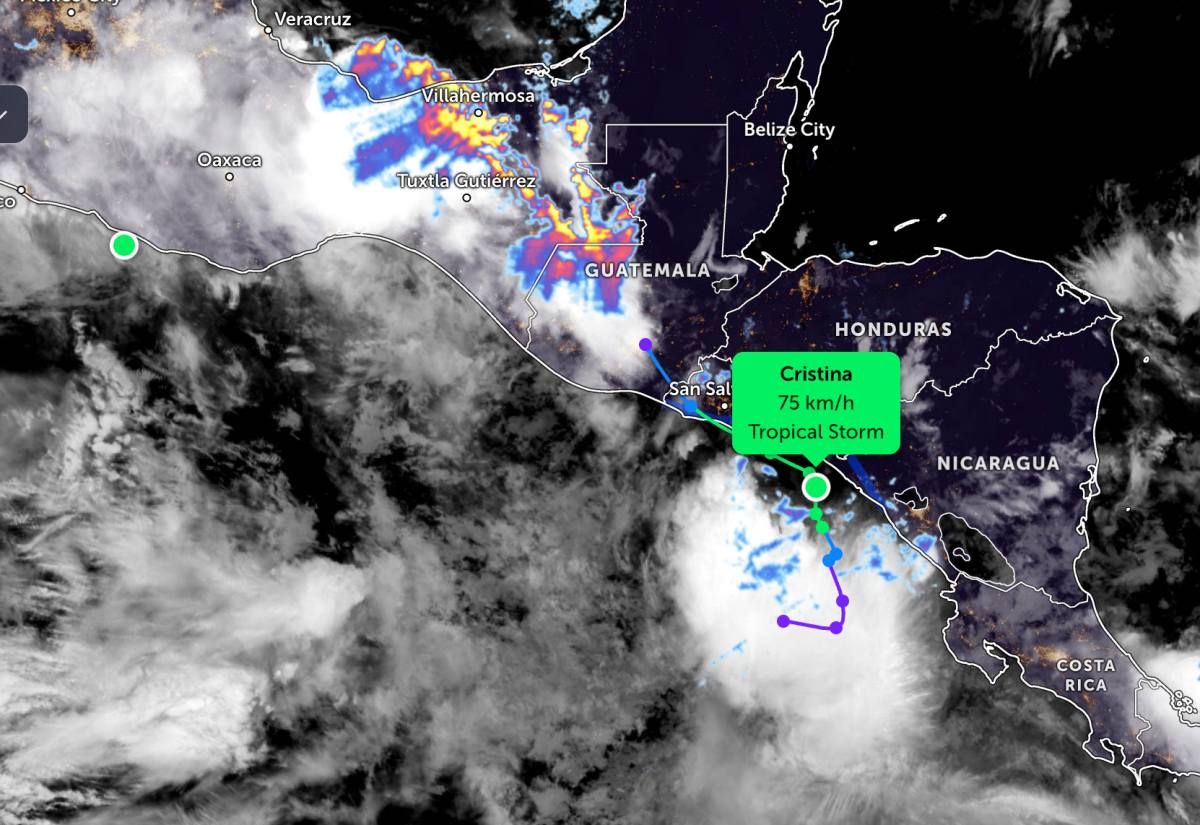
Regarding impacts, heavy rain related to storm Cristina will continue to affect the coastal areas of Central America until the end of June 11. Tropical storm conditions are forecast to affect Nicaragua, El Salvador and Honduras on June 9. Heavy rain may cause flash floods and dangerous landslides, especially in hilly areas with steep terrain.
Meanwhile, tropical storm Boris is operating off the southern coast of Mexico with maximum sustained winds of about 75 km/h.
Forecasters predict that the intensity of Boris will change little before making landfall. On June 9, the storm is forecast to gradually move northwest under the impact of a central high pressure area formed over the western Gulf of Mexico. After making landfall, Storm Boris will weaken rapidly due to the influence of high mountain terrain and is likely to completely dissipate in the middle of the week.
Heavy rain from Hurricane Boris's circulation is affecting many areas in southern Mexico. The meteorological agency warns that heavy rain from Hurricane Boris could cause flash floods and landslides that threaten lives, especially in steep hilly areas in southern Mexico.
People and tourists planning to travel to the southern Mexico and Central America during this time should pay attention to weather forecasts. Check flight schedules regularly and follow local instructions to avoid dangerous storms throughout the journey.


