
According to the latest storm news from the Joint Typhoon Warning Center (JTWC), this afternoon March 27, Super Typhoon Narelle officially made landfall in Australia. The super typhoon degrades to a fierce tropical storm when entering the mainland.
Hurricane Narelle is currently located 52 km southwest of Learmonth, Australia. In the past 6 hours, the storm has moved south-southwest at a speed of 26 km/h. The strongest wind near the storm center reached 185 km/h. The maximum wave height reached 12.2 m.
Hurricane Narelle is still continuing to devastate the Northwest of Western Australia even after weakening into a severe tropical storm. However, authorities warn that severe weather is not over yet.
The coastal area of northern Western Australia received heavy rainfall from 150 to nearly 200mm in some places, strong winds up to 260 km/h when Hurricane Narelle made landfall near Coral Bay.
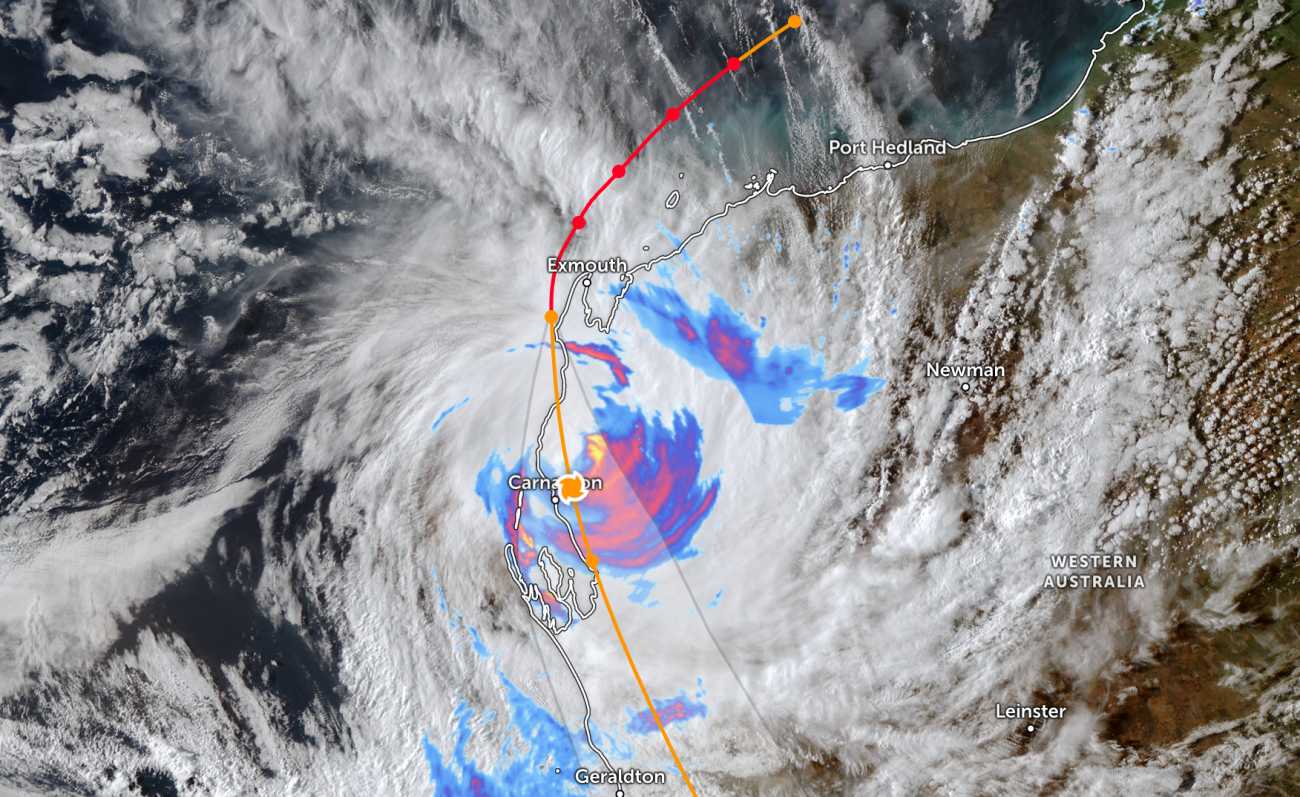
The storm has caused widespread damage in Exmouth and is currently moving deep inland towards the state's Midwestern region.
Many large areas of Gascoyne and the coast of Central Western Australia are currently on emergency alert. The Australian Bureau of Meteorology (BOM) forecasts that southern towns such as Denham will be severely affected by the storm.
Previously, the storm passed through the North West Cape area in Exmouth early this morning March 27 with gusts of up to 250 km/h. Many houses had their roofs blown off and widespread heavy rain. 40 people had to go to shelters overnight, and the town lost power and water during the storm.
Further north in Onslow, the main streets were flooded, local people reported many houses were flooded. Mr. Darren Klemm, a member of DFES, said that so far there have been no reports of injuries.
Roads throughout the area were blocked, flights were canceled, schools were closed and miners were allowed to go home.
Tourists planning to visit the coastal area of Western Australia, especially places like Exmouth and Coral Bay, need to closely monitor the developments of Hurricane Narelle and proactively adjust their schedules. Authorities recommend limiting travel, staying away from coastal areas and complying with evacuation instructions to ensure safety against the risk of strong winds, big waves and extreme weather.


