
In the heart of Ne Chau village, Vu Thu commune, Hung Yen province, there is Ne Pagoda - a pure spiritual space, firmly associated with the spiritual life of local people. Not only is it a place to worship every Tet holiday, Ne Pagoda is also the origin of a special cultural beauty: Ne Market, a market that only meets once a year, on the morning of the 2nd day of Lunar New Year.
According to documents circulated in folklore and some remaining records, the origin of Cho Ne is associated with the spring of Ky Dau year 1789. When the army led by General Nguyen Kim Nho and Deputy General Tran Huyen marched along the Red River to pursue the Qing army, on the 30th day of Tet, they stopped in Bong Dien area to rest and recover. On the 1st day of Tet, the army continued down to Veu wharf, celebrating Tet with the people in the area, preparing food.
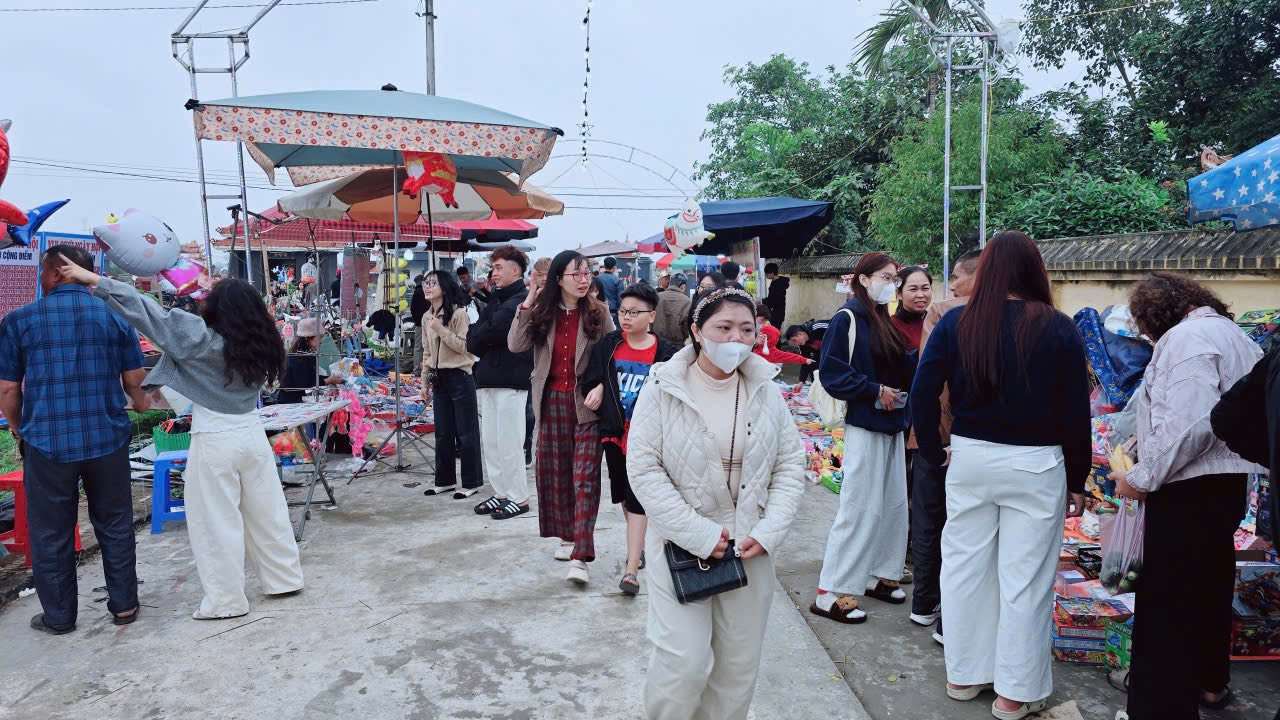
On the 2nd day of Tet, the purchase and donation of rice and salt is organized at Dong Cao hill to continue the march. From there, the first market of the year is formed - a place where people buy and sell rice and salt, both serving life and commemorating the merits of those who contributed to keeping the border peaceful. To show gratitude and preserve that memory, people built a pagoda, named Chua Ne after the village name, and maintained the 2nd day of Tet market for more than 235 years.
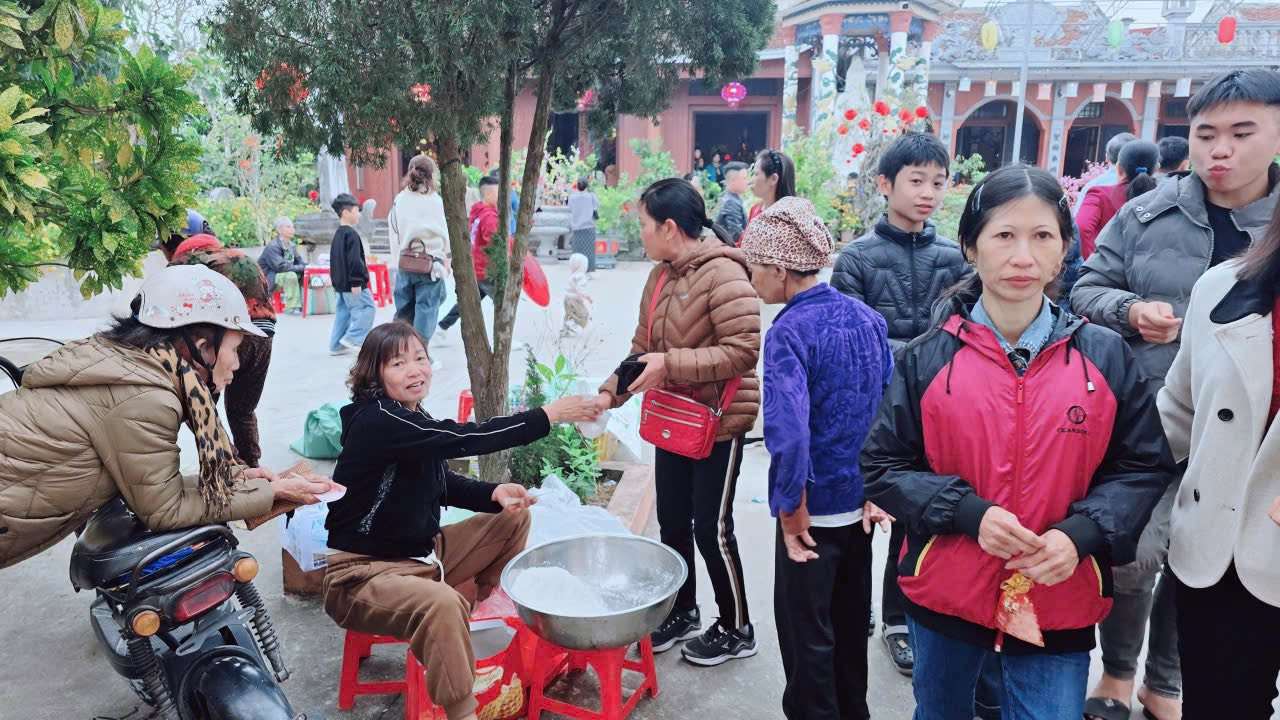
Today, Ne Market is no longer just confined to rice and salt as in the early days. The spring market becomes rich with agricultural products, products from neighboring regions, handicrafts of craft villages, and rustic village gifts such as banh duc, banh tai meo, banh khuc... The market atmosphere is more bustling with folk games such as traditional wrestling, cockfighting, and hat van singing, creating a cultural living space imbued with identity.
The market is a place for exchanging goods, but also a place to meet, pray for good luck, and sightseeing at the beginning of the year. The elderly go to worship Buddha, go to the market to pray for peace and prosperity; young people find spring joy, connect feelings. Through generations, Ne Market is not just a Tet market, but has become a vivid cultural memory, crystallizing the spirit of "drinking water, remembering the source" and the persistent community lifestyle of Vu Thu countryside.


