
Glorious coordinates of history
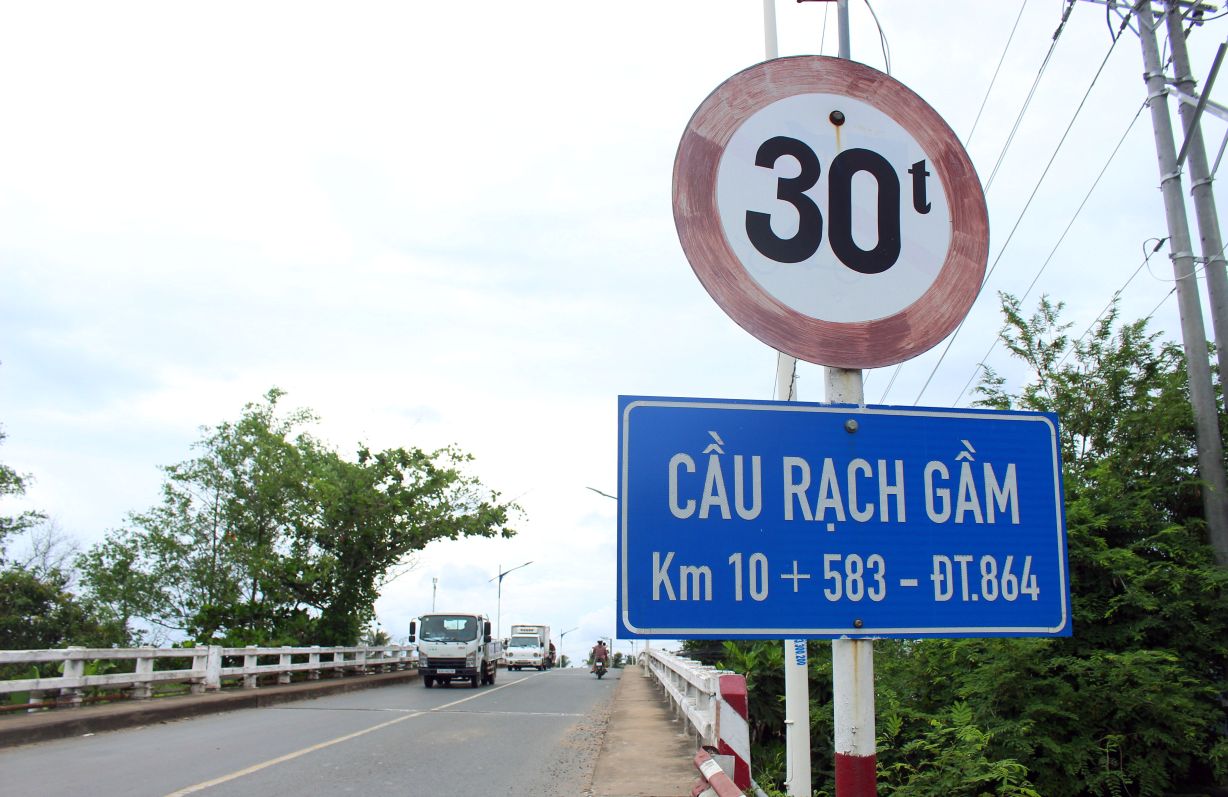
Located on the banks of Tien Giang, belonging to the waters of Kim Son commune, Dong Thap province, Rach Gam - Xoai Mut Relic Site is a place that marks one of the most glorious feats of arms in the history of the nation's resistance against foreign invaders in the South.
More than 240 years ago, in February of Giap Thin year (1784), in the context of the country falling into a state of division, Lord Nguyen Anh went to Siam to seek help. Seizing the opportunity, the Siamese king allowed his two grandsons, Chieu Tang and Chieu, to lead more than 20,000 naval soldiers and more than 300 warships to enter our country by waterway.
According to the work "Understanding Nguyen Hue's military genius" by Nguyen Luong Bich - Pham Ngoc Phung (People's Army Publishing House - 1977), in December of the Giap Thin year (January 1785), the Tay Son army, under the command of military genius Nguyen Hue, deployed ambushes on the Tien Giang River, the section from Rach Gam to Xoai Mut. After arranging, Nguyen Hue ordered troops to provoke the enemy to bring all troops and warships into the river section... When the Siamese army's warships entered the battlefield, artillery on the shore simultaneously opened fire, combined with naval and infantry to tighten the siege.
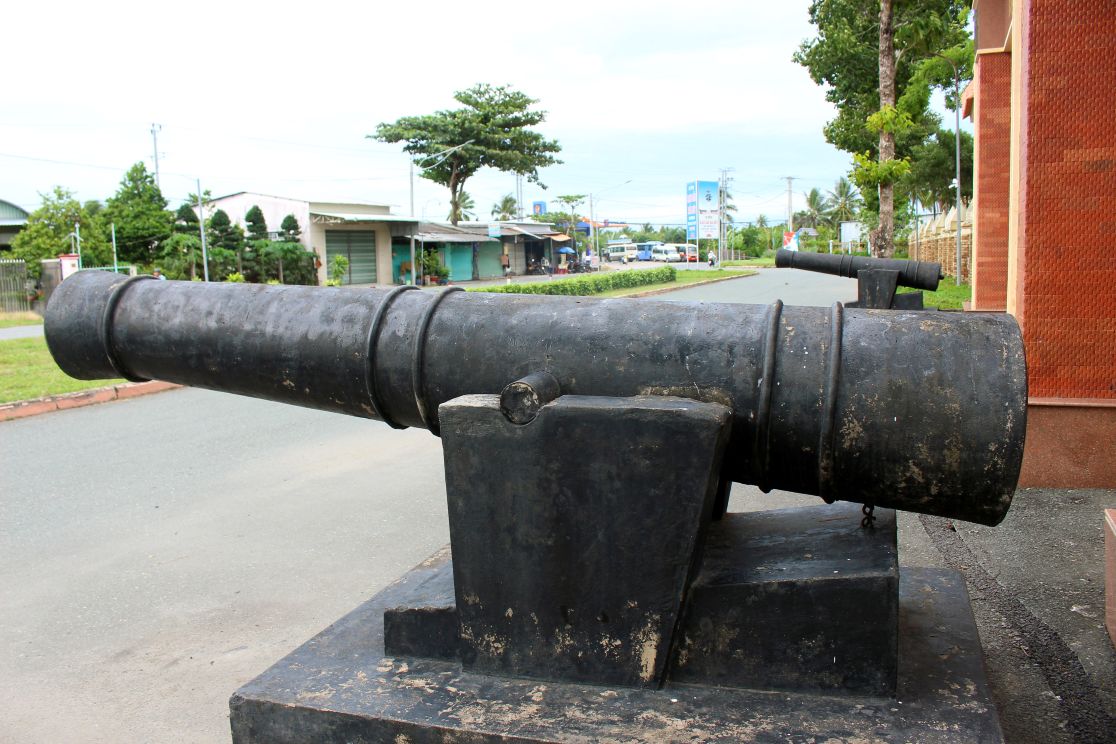
In a short time, more than 20,000 Siamese-Nguyen troops were defeated, and more than 300 warships were sunk.
According to military experts, the Rach Gam - Xoai Mut victory not only crushed the invasion plot of the Siamese army, but also affirmed Nguyen Hue's outstanding military talent, creating a premise for the great victory of Ngoc Hoi - Dong Da in the Spring of Ky Dau 1789.
Space preserving national heroism
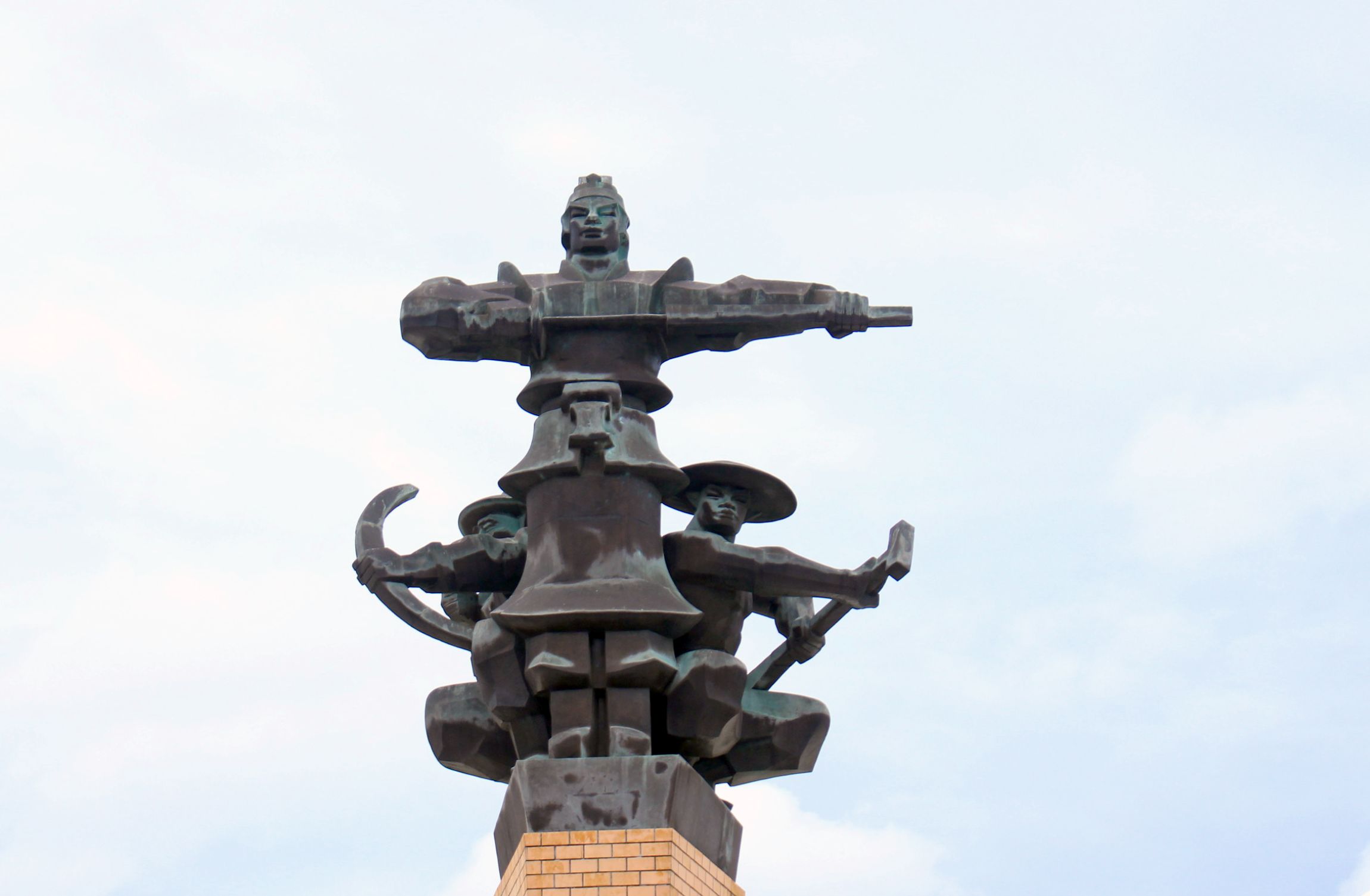
Today, on that historical land, the Relic Site is planned spaciously, harmonizing between commemorative values and traditional culture. Prominent in the central position is the Nguyen Hue bronze statue weighing 20 tons, 8m high, placed on a pedestal simulating ancient warships.
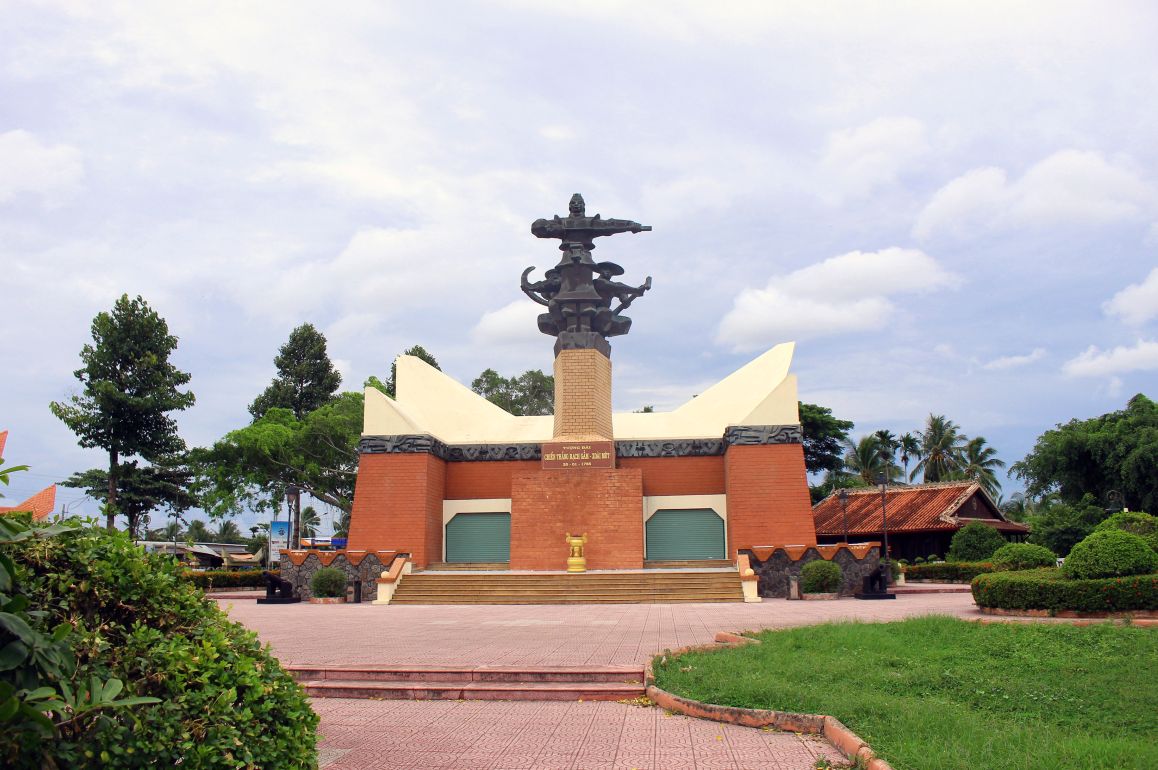
The image of a hero in a cloth shirt in a sword-wielding posture facing the Tien Giang River expresses the spirit of decisive battle to protect the country. Below the statue is the image of Tay Son soldiers and people rowing boats, symbolizing the strength of military-civilian solidarity.
Right at the foot of the monument is an exhibition room designed in the shape of a warship, highlighted by reliefs with Dong Son bronze drum motifs. Here are preserved many valuable artifacts, including a star wood anchor weighing more than 200kg salvaged from the area that used to be the anchorage of the Siamese army.
The next exhibition introduces sand tables and documents to help visitors visualize the diễn biến of the battle. In addition, the Southern Ancient House - a three-compartment house built in 1927 - vividly recreates the traditional living space of riverine residents.
From the exhibition area stepping out to the pier by the river, visitors can admire the gentle Tien Giang River, a place that witnessed a glorious naval battle that went down in the nation's history.
Red address for patriotic tradition education
Not only is it a tourist destination, the Relic Site is also invested in space to meet the needs of being a red address in patriotic tradition education. In January every year, the Rach Gam - Xoai Mut victory anniversary is held with many meaningful activities such as incense offering in commemoration, art performances, historical reenactment and unique folk games.
has attracted a large number of people and tourists to participate, contributing to spreading pride in the nation's tradition of building and defending the country.
At the end of 2014, the Rach Gam - Xoai Mut Victory Relic Site was ranked as a National Special Relic by the Prime Minister. Over time, the project still quietly reflects its shadow on the Tien Giang River, becoming a destination rich in historical and cultural values and a place connecting today's generations with the immortal heroic spirit of their ancestors on the southern land of the Fatherland.


