
Work of honor and responsibility
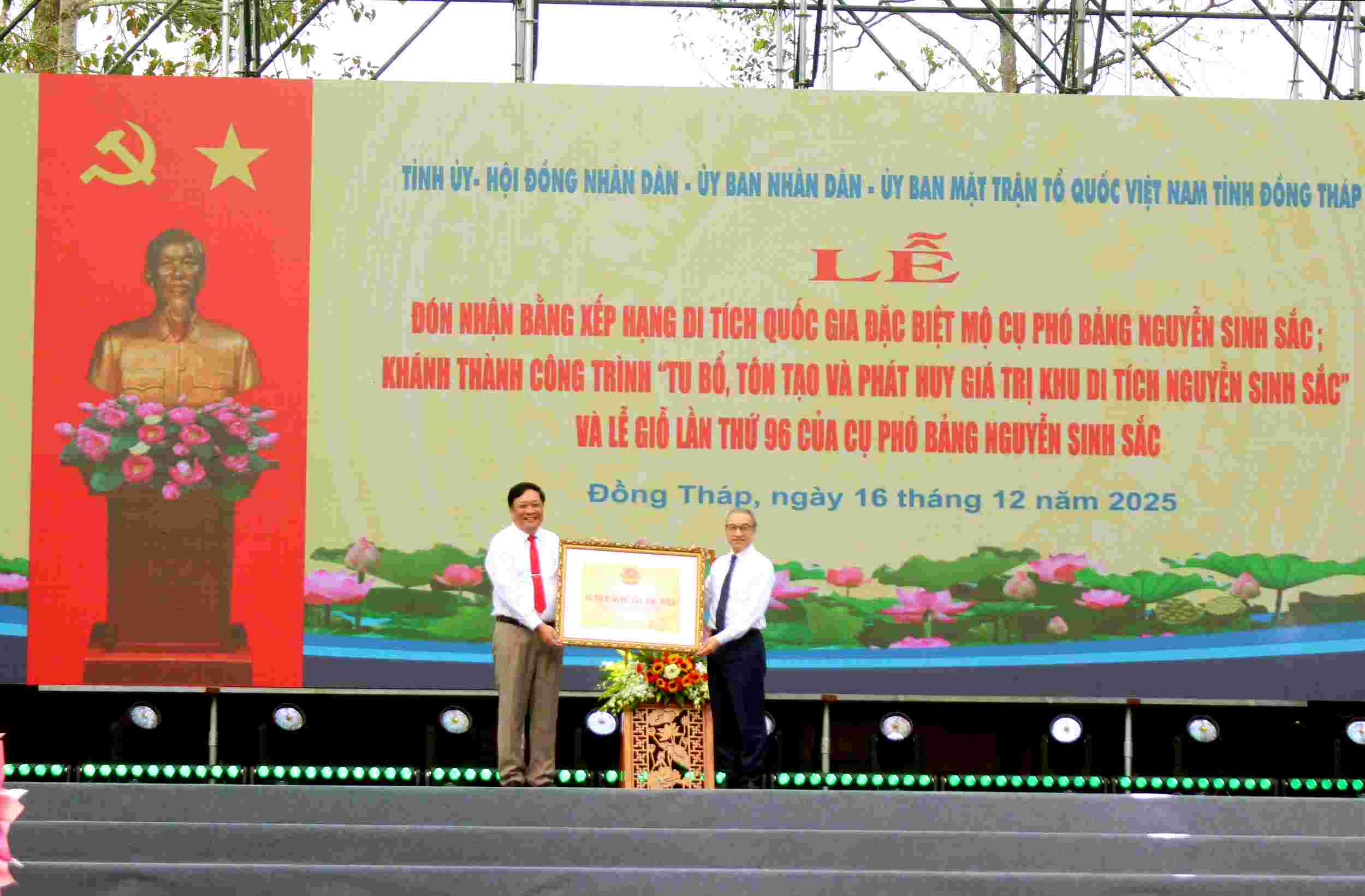
At the end of 2025, Dong Thap province solemnly held a ceremony to receive the Certificate of Special National Relic Ranking for the Nguyen Sinh Sac Tomb Relic Site.
Speaking at the ceremony, Ms. Nguyen Thi Uyen Trang - Director of the Department of Culture, Sports and Tourism of Dong Thap province affirmed that this is not only a recognition of the historical and cultural value of the relic, but also a sacred pride of the Party Committee, government and people of Dong Thap province when representing compatriots across the country and the Nguyen Sinh lineage to look after the tomb area, incense and worship Mr. Pho Bang Nguyen Sinh Sac (1862-1929) - a Confucian scholar who dedicated his life to the country and the people, the father of President Ho Chi Minh.
After retiring from office, Mr. Pho Bang Nguyen Sinh Sac went to the land of the South. In his journey of wandering for the people and the country, he stopped and became attached to Cao Lanh and Dong Thap regions. Here, besides treating diseases and saving people, he also taught morality and sowed patriotism according to new ideology...
Dr. Ngo Van Be - former Director of Dong Thap Muoi Research Institute (Dong Thap University) - once recorded this effect: "The places where Mr. Pho Bang went all had people or patriotic movements and the people he contacted, most of whom later became revolutionary and became members of the Communist Party.
On the night of October 26th to the morning of October 27th, 1929, he breathed his last breath in Cao Lanh land. The funeral ceremony took place simply according to his will before his death: The coffin was placed in the yard, after mourning, it was buried...". The earthen urn was simple, his tomb was located next to Hoa Long Pagoda (Cao Lanh). However, admiring his merits, the villagers voluntarily built a cement tomb.
But with the conspiracy to destroy all revolutionary seeds, the enemy always tried every way to sabotage. Not only prohibiting people from visiting, they also deployed many forces from spies and spies to forces equipped with guns and ammunition... day and night guarding, preventing and arresting people from repairing his tomb.
Mr. Pham Van Doan, one of the students who participated in protecting Mr. Pho Bang's tomb in the period after the Geneva Armistice Accords, recounted in his memoir "Cao Lanh students fighting to protect Mr. Pho Bang's tomb": To threaten and suppress students who organized towel sweeping of Mr. Pho Bang's tomb, in October 1957, Cao Lanh district chief Dang Nhu Tuyet entered the First Class of Le Quy Don School and said many threatening words, such as: If captured, we will not let it live for more than 6 hours... But we are not afraid, every Tet holiday we cleverly find every way to repair Mr. Pho Bang's tomb"...
Mr. Pham Thanh Ngai - Chairman of Dong Thap Provincial People's Committee - concluded: "Regardless of danger, bombs and bullets and enemy control, the people of Cao Lanh have persistently stuck to preserving his grave with all their respect and unwavering loyalty.
These responsible actions have laid the foundation for the resting place of President Ho Chi Minh's father to become a relic of great historical and cultural value for the nation: a special national relic.
The work of heart and creativity
Like lotus flowers of the Pink Lotus Land, from the young mud rising up pure and brilliant flowers, for nearly 90 years, the Tomb of Mr. Pho Bang has been a symbol of that miracle. Located right in the center of the provincial capital, the tomb has been frequently resisted by the enemy, especially after the Mau Than General Offensive (1968), they not only mined and bombed, collapsing fences, cracking the tomb of the old man, but also drilled all the letters on the tombstones... However, the Party and people of Cao Lanh, Dong Thap always found ways to promptly repair it. Thanks to that, the tomb was not only kept intact materially, but also cultivated in spiritual depth and became a spiritual symbol of the revolution on the Pink Lotus Land.
Especially, after the country's reunification, that heart rose even higher. Thousands of people felt the need to repair the tomb to be worthy of his great contribution, so they sent petitions to the Provincial Party Committee. Sympathizing with the people's hearts and also in line with the aspirations of the Provincial Party Committee, the Provincial Party Committee decided to build a new tomb for Mr. Pho Bang.
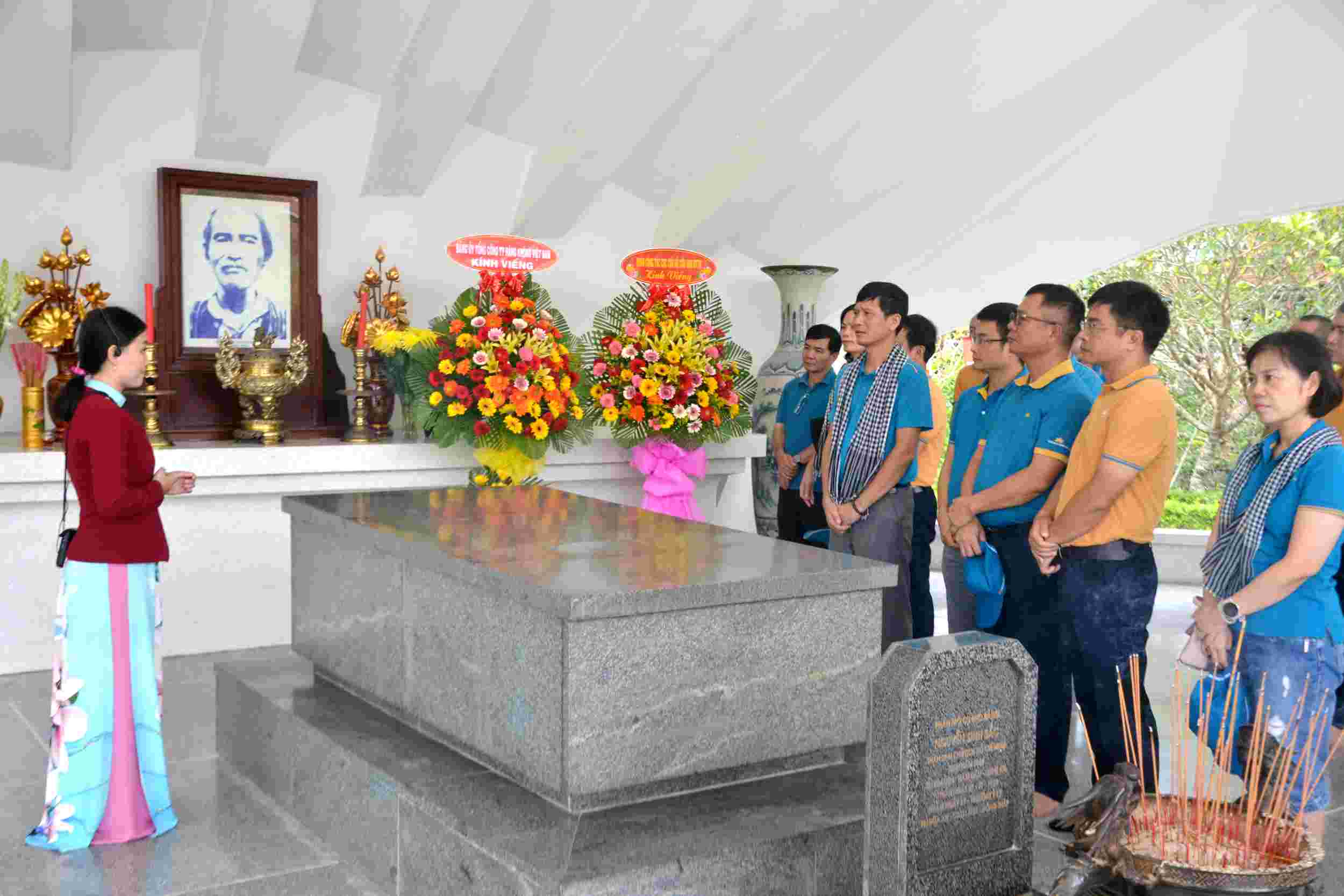
The architecture of the tomb relic is not simply a form of decoration, but also a language to tell people about the great personality of Nguyen Sinh Sac, in blocks and symbols. In particular, familiar symbols such as lotus, dragon, star are processed with stylized spirit, so each block and line reaches its own depth...
On May 19, 1990, to celebrate the 100th birthday of President Ho Chi Minh, Dong Thap continued to expand the area of the tomb to 22,000m2 and started construction of a very meaningful complex: Model of Ho Chi Minh Stilt House, Lotus Pond and recreation of ancient Hoa An Village. In which, the stilt house was built in a 1:1 ratio compared to the stilt house in Hanoi Capital; Ao Sen was designed in the shape of the administrative map of Dong Thap province (old).
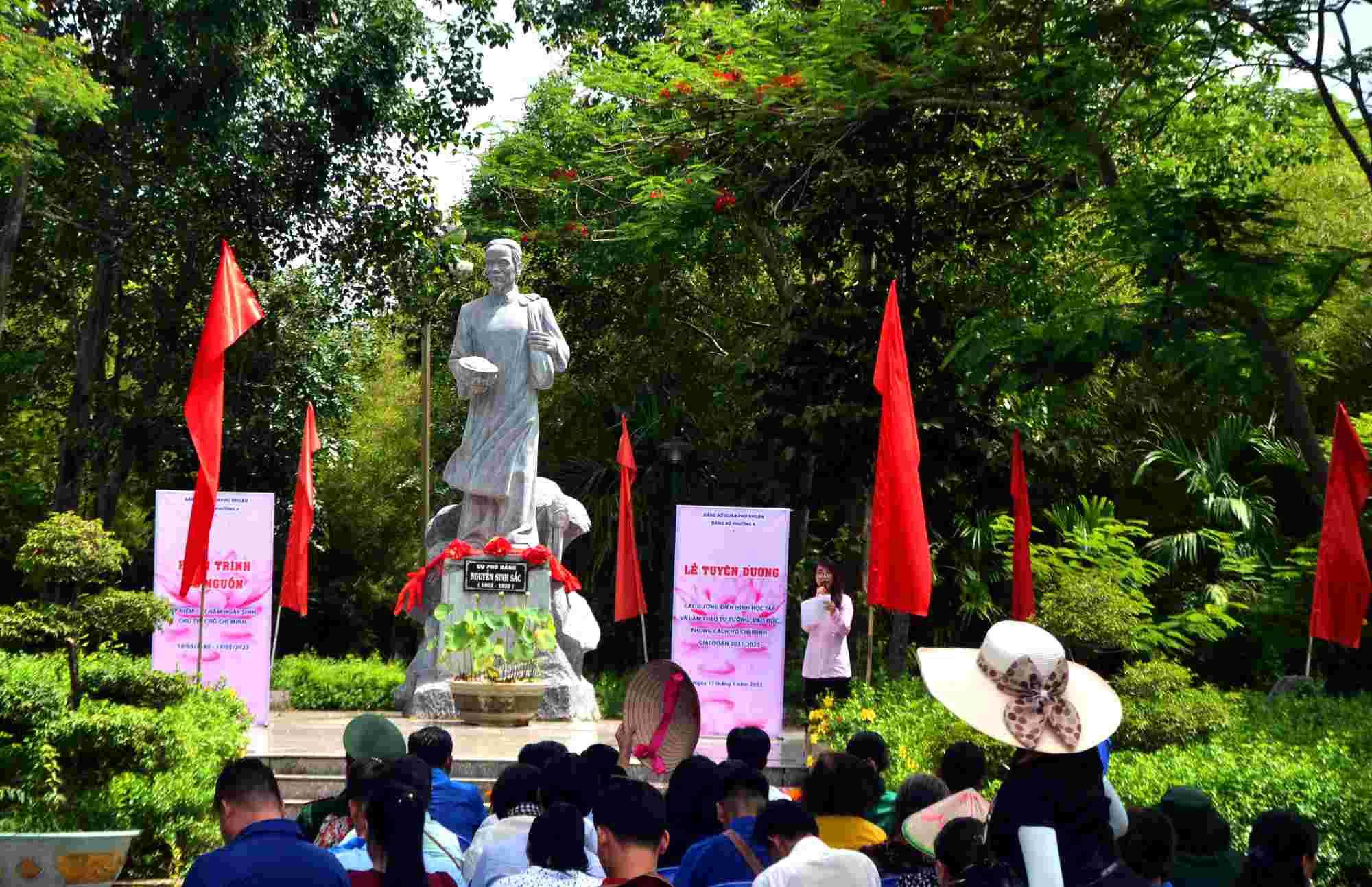
Now, the Relic Site of Mr. Pho Bang Nguyen Sinh Sac's Tomb has become a cultural - educational complex, where history is told in space, images and visual arts. Items such as the Exhibition House, Uncle Ho's Stilt House, Lotus Pond, and the recreation area of Hoa An ancient village help the relic become a "living museum", connecting past memories with current life.
Therefore, it is not an exaggeration to say that Red Lotus Land preserves the soul of the relic - not only with war memories, but with a carefully selected and thoughtful artistic language, so that each dome, each stylized image silently tells the story of a special person in the nation's history - Mr. Nguyen Sinh Sac, Deputy Head of the Party Committee.


