In the exhibition space of the Vietnam National Museum of History (Hanoi), two ancient steles - Vo Canh Stele and Nam Giao Palace Stele - quietly lead visitors through important sections of national history. No longer standing in their original positions, the steles enter contemporary life with a new role: original artifacts helping the public directly access authentic evidence of the past.
Vo Canh Beer
Vo Canh stele was discovered in Vo Canh village, near Nha Trang (Khanh Hoa) in the late 19th century and was brought to Hanoi for preservation from 1910. This is a large rock block made of sandstone, about 2.7 meters high, vertical cylindrical, on the stele is engraved Brahmi script continuously on the three sides of the stele, in which two verses are written in the style of Vasantatilaka poetry, the rest are verses.
The content of the engraving is estimated to be around the 3rd - 4th centuries AD. Vo Canh stele has become the oldest stele with engraving ever discovered on Vietnamese territory.
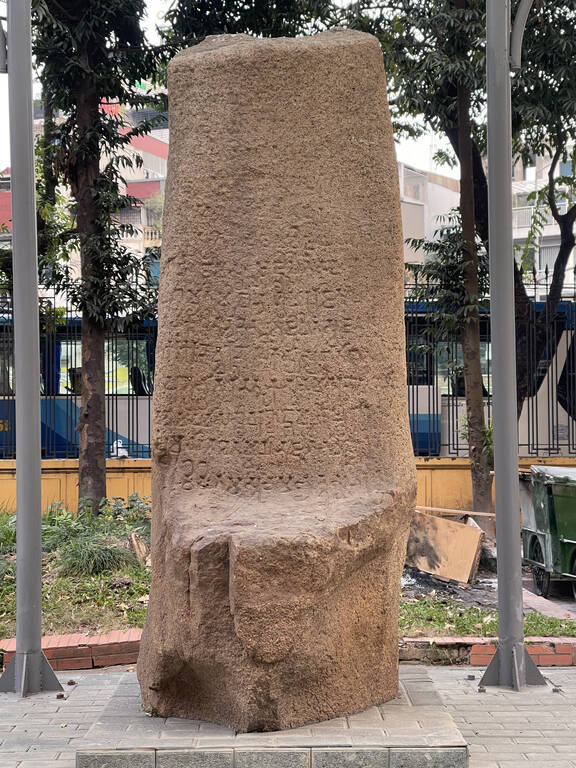
The inscription on the stele, although eroded by time, still clearly shows the imprint of early Buddhism and the strong influence of Indian culture on the ancient Central Vietnam region.
According to the National Museum of History, the engraving content contains valuable information about the history of the Kingdom of Champa. The engraving on the stele and there have been several translations with different contents and research perspectives.
However, many later researchers highly appreciated and agreed with the content of the translation and record of French archaeologist Louis Finot. Accordingly, the content of the autograph mentions the offering of a king of the Sri Mara clan - who founded the first dynasty of the Kingdom of Champa.
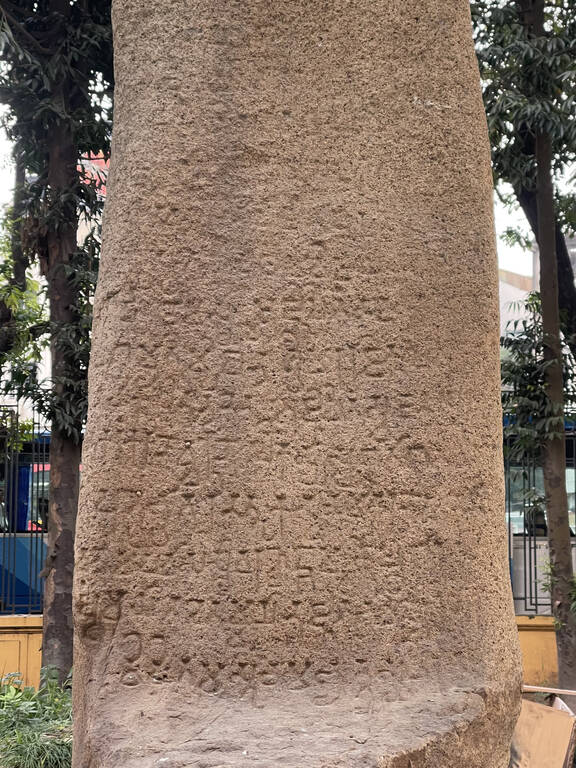
Not only possessing special archaeological value, Vo Canh Stele also opens the door to research on East-West exchanges, on the path of Buddhism and writing from India to Southeast Asia. With outstanding historical, cultural and scientific values, Vo Canh Stele was recognized by the Prime Minister as a National Treasure in 2013, affirming the unique and irreplaceable position of this artifact in the treasure of Vietnamese heritage.
Nam Giao Bell
If Vo Canh Stele marks the dawn of literary history, then Nam Giao Palace Stele is a typical proof of the Vietnamese feudal ritual system. The stele was erected in 1679 - the 4th year of the Vinh Tri reign, under the reign of King Le Hy Tong, in the area of Dan Nam Giao, where the most solemn Heaven-Land worship ceremony of the Dai Viet feudal nation took place.
The stele is large in size, including two parts: the stele and the stele pedestal. The stele part has a crescent-shaped forehead, embossed with a pair of dragons worshiping the sun. The body of the stele is rectangular, with 5 Han Nam Giao Dien characters embossed on the top. The two sides of the stele are embossed with dragon and phoenix figures, and the base of the stele is embossed with unicorns. The stele pedestal is rectangular, with unicorns, lions, and flowers and leaves embossed on the 4 sides.
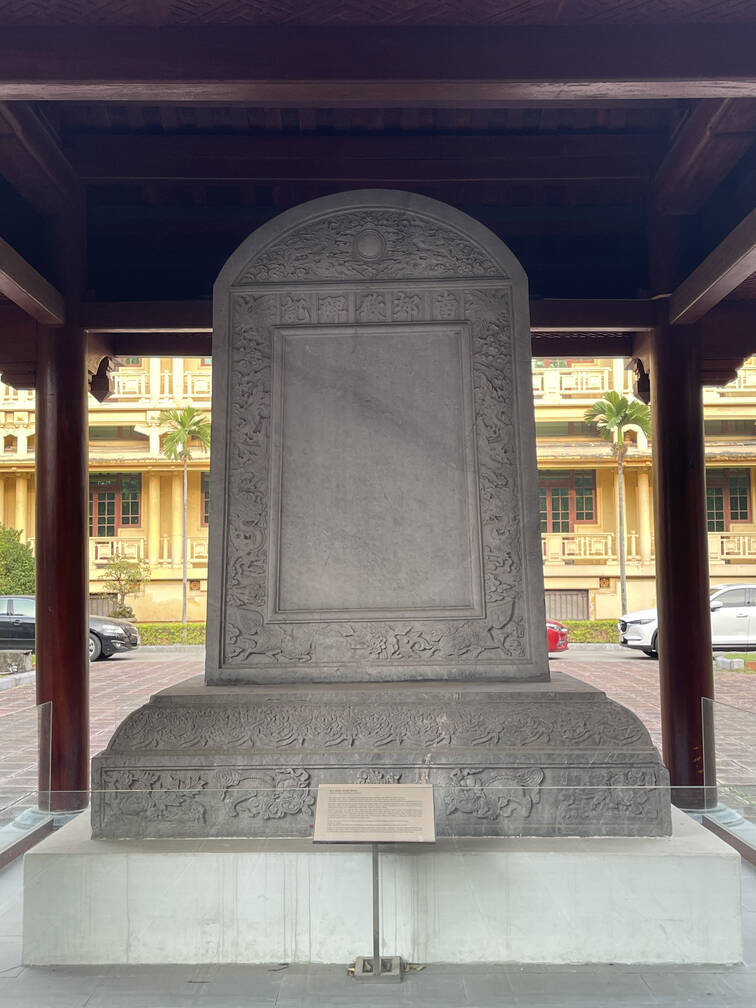
The stele is carved in Han characters, with detailed records of the construction of the altar, the organization of Nam Giao rituals and the role of the court in implementing the "heavenly destiny" - the core concept of Confucianism. The stele form is imbued with the medieval stele style, with the head decorated with two dragons worshiping the moon, the body of the stele square, the inscriptions tight and standard, reflecting the political and ritual thinking of the Le Trung Hung era.
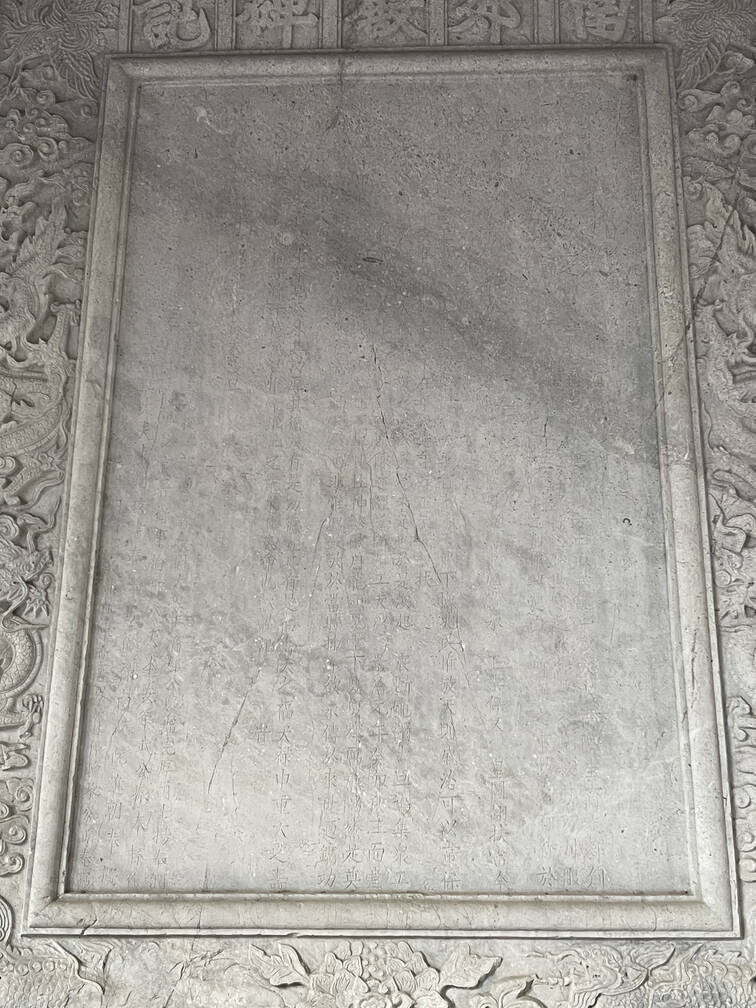
Nam Giao Palace stele is not only a valuable historical document about heaven worship rituals, but also a symbol of the relationship between the king - nature - society, where state power is closely linked to the cosmic order according to Confucian ideology. The tradition of Nam Giao worship has been maintained throughout from the Ly, Tran to Le, Nguyen dynasties, and this stele is one of the clearest proofs of that continuation in the capital Thang Long.
With outstanding historical, cultural and political ideological values, Nam Giao Palace Stele was recognized as a National Treasure in 2015, becoming one of the typical steles reflecting the ritual life and power of the Vietnamese feudal state.