
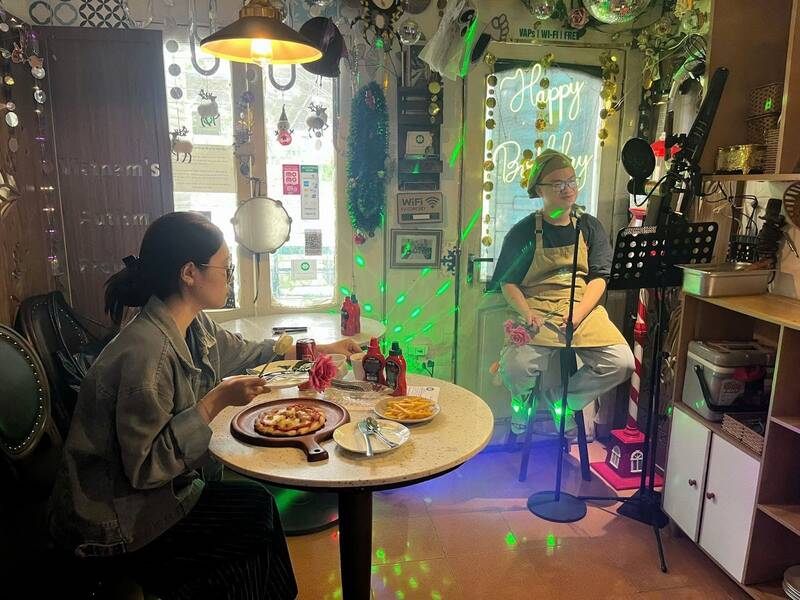
In a small three-story house number 254 on Mai Anh Tuan street, Dong Da, Hanoi, there is a special business called affectionately: "happily restaurant".
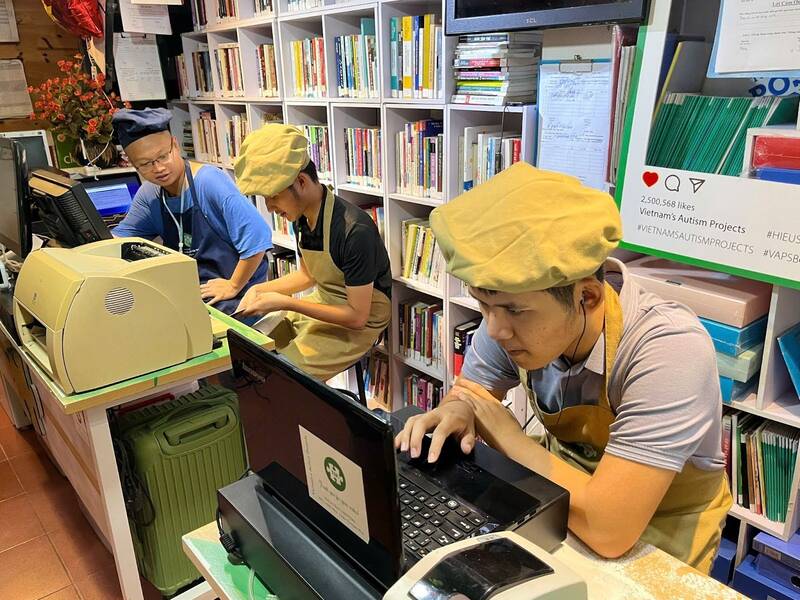
Vietnam’s Autism Projects (VAPs), founded by Mr. Nguyen Duc Trung in 2017, is considered a pioneering economic project for people with autism. Unlike traditional vocational training institutions, VAPs does not operate in a closed manner but creates conditions for students to both learn the profession and directly participate in daily work. Here, each person takes on a suitable position such as serving, cooking, bartender, sales or library management.
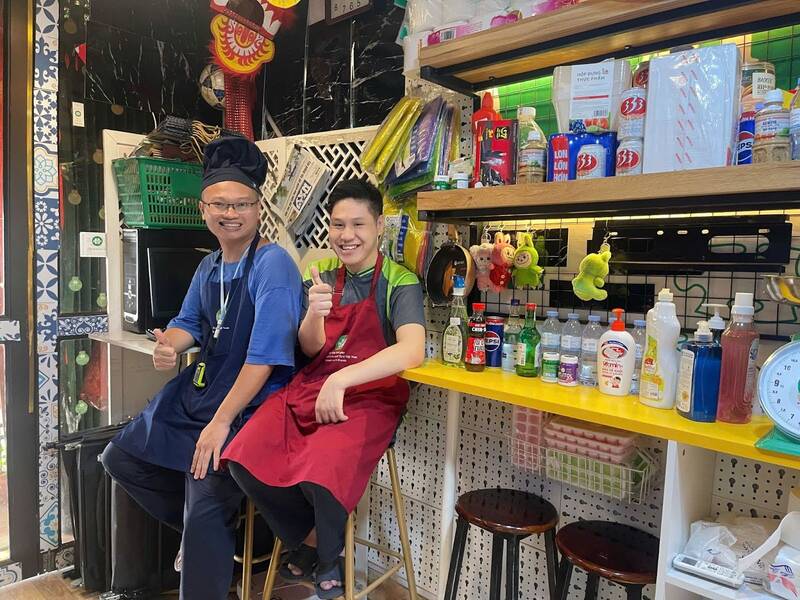
Originally from an economic background, and having spent many years learning about autistic children, Mr. Trung cherished and realized the dream of bringing friends closer to the community and affirming their self-worth through labor. Mr. Trung said that his biggest wish is that young people at VAPs will master all the skills of a normal employee.
Mr. Trung said that currently his project does not receive any funding or charitable donations. All income of the staff is paid from the profit generated during operation, calculated daily and directly linked to sales.
I started the project, the most important thing is to bring autistic people out of the world where they are alone, help them integrate into life, be proactive and take care of themselves, and help their parents feel more secure about their children's future," he said.
According to him, bringing models like VAPs to spread throughout localities across the country is still a big aspiration being cherished, because for a system to operate effectively, many parallel conditions are required, in which systematic and long-term training plays a key role.
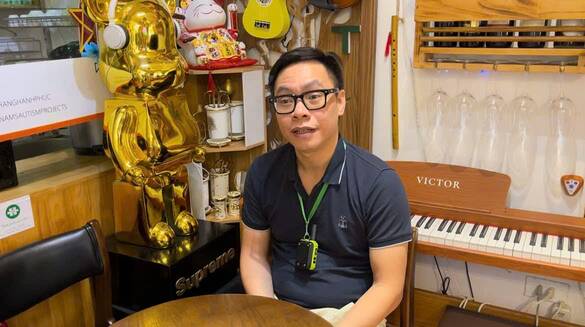
In the coming time, Mr. Trung cherishes the plan to expand the company's service chain, which could be laundry or car washing services. This is both a way to help people with autism master their lives, and contribute to raising awareness, understanding, and concern of society for people with autism.
All employees are trained from scratch, and training an autistic person to start working takes many years. Each employee recruited into the company is directly trained 1:1 by Mr. Trung until they become proficient.
To do this seemingly normal job, each employee is very diligent in learning, practicing many times as well as practicing how to communicate, introduce themselves, exchange and serve customers. Each employee has a story of overcoming fate and possessing unique abilities.
In the small kitchen of the Happy Restaurant, Tung (22 years old, suffering from autism spectrum disorder) carefully prepares each pizza. For many people, this job may just be familiar operations, but for Tung, it is a journey to overcome himself, step by step affirming his abilities and self-worth.
Tung shared: "When I make pizza and customers eat, I feel happy. I know I can do the job, I no longer feel scared. Before, I stayed at home a lot, didn't talk to anyone. Now when I go to work, I have friends, I have work to do. I feel happier".
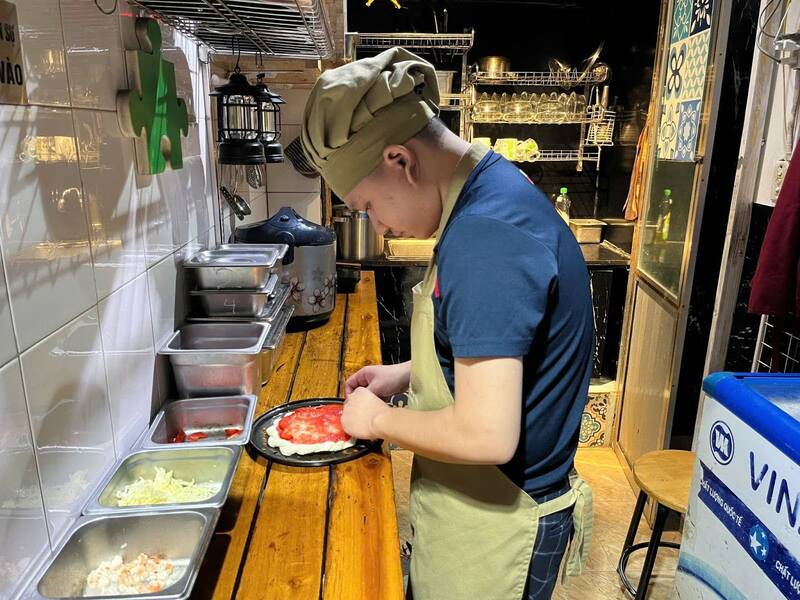
Each cake baked is not only the result of labor, but also joy, confidence and proof that autistic children can completely work, contribute and integrate when receiving sympathy and opportunities from the community.
Building spaces such as eateries, supermarkets or bookstores not only creates job opportunities and skills training for people with autism, but also opens a door connecting them with society.
Quynh Mai (a diner, 22 years old, in Cau Giay ward) said: "I have never had the opportunity to interact with autistic people, so participating in the experience at VAPs helps me understand more about autism. Here I feel everything is very cute and warm
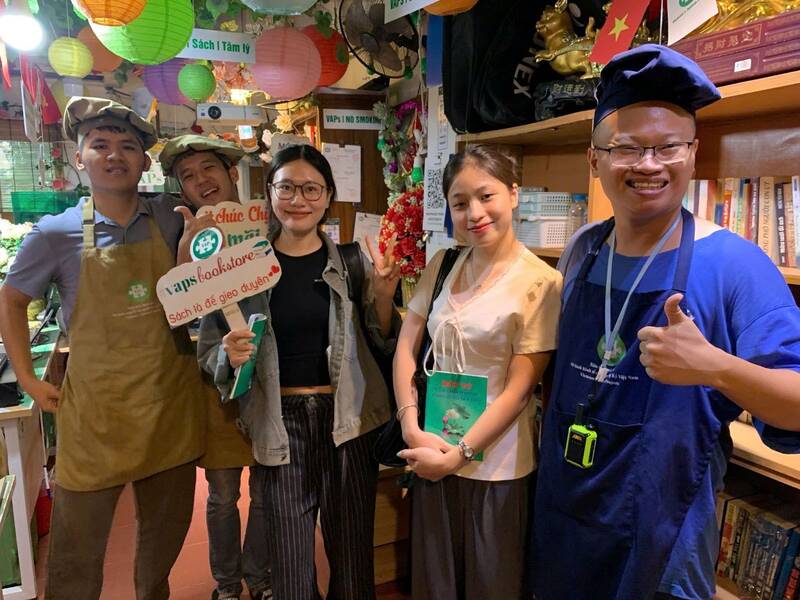
More importantly, respect and sharing from society will be the foundation for autistic people to firmly step on the path of integration, not feeling like they are "helpers" but "contributers" making common life more humane and sustainable.


