
Flying in the golden season of Muong Hoa
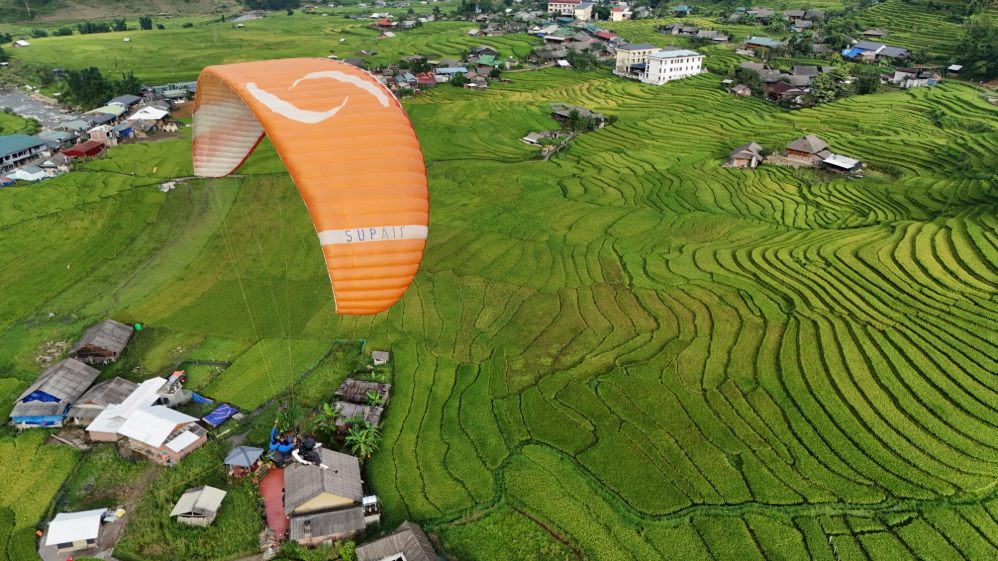
From the end of August to the beginning of September is a suitable time to combine paragliding with watching the golden season. Nearly 1,000 hectares of terraced fields stretching across Lao Chai, Ta Van and Hau Thao begin to turn yellow, forming continuous color patches between the mountain slopes.
The journey starts from Ban Hang Da, at an altitude of over 1,500m and ends at the Lao Chai bridge area. From the take-off point, the parachute wing follows Muong Hoa valley and then gradually descends towards Lao Chai.
On the flight path, tourists can observe Lao Chai - Ta Van - Hau Thao terraced fields, Lao Chai village of the Mong people, Ta Van village of the Giay people, Muong Hoa stream and Hoang Lien Son range. When the sky clears, Fansipan appears far away; in the autumn mornings, clouds can accumulate into a white layer at the bottom of the valley.
Schedule
The actual paragliding flight time is about 8-15 minutes, while the entire journey lasts about 90 minutes. The car can pick up tourists at a hotel in the center of Sa Pa from about 6:30 am, then move to the take-off point to check in, prepare equipment and wait for suitable weather conditions.
After landing in the Lao Chai bridge area, tourists are taken back by car according to the schedule. The convenient point is that they do not have to find transportation to move from the landing area themselves.
The time frame usually chosen is 7am-9:30pm, but the flight schedule depends on actual conditions. The weather in the highlands changes rapidly, so wind, rain, low clouds or poor visibility can cause the flight to be delayed or temporarily stopped.
Cost
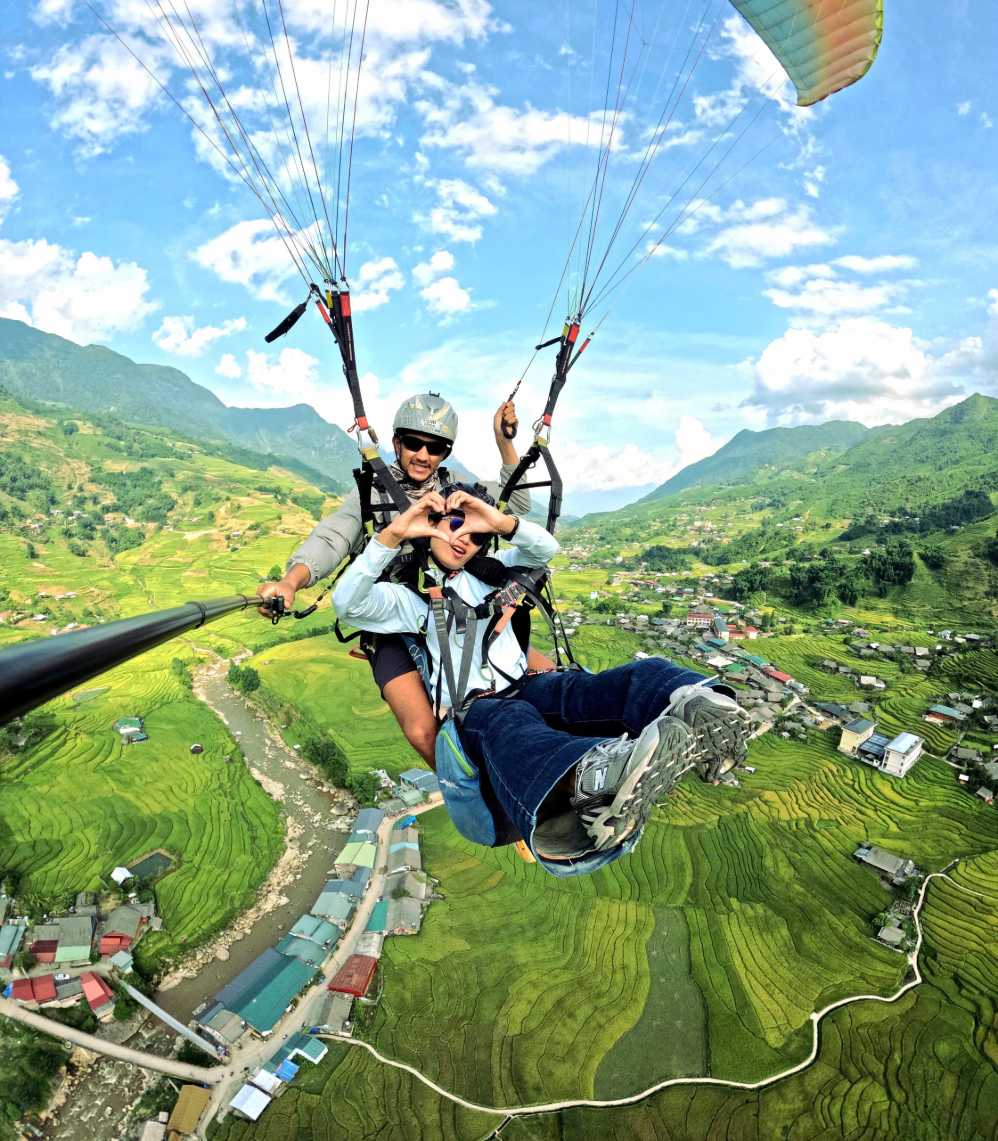
Current flight packages are priced from 2.09 million VND/passenger. The standard package of 2.19 million VND includes double flying with the pilot, two-way shuttle bus, English tour guide, insurance, GoPro photos and videos, drinks and flight completion certificate.
The Premium package is priced at 2.99 million VND, with a flycam and 360-degree camera.
This is a double-flight form, so tourists do not need to have parachute control experience. The pilot directly operates the entire flight. Guests only need to coordinate to run for a few seconds when taking off, then sit on the belt and admire the scenery.
When landing, the pilot guides tourists to stretch their legs and follow the momentum. Depending on the conditions, guests can choose a gentle flight to admire the scenery or perform some curves.
Notes
Visitors should prepare sneakers or closed-toe shoes with good grip, light jackets and tie their hair neatly if hair is long. Do not wear flip-flops, sandals or high heels.
No need to bring a backpack on the flight because belongings can be sent to the ground team. Images and videos have been recorded by specialized equipment, so tourists should limit the use of phones during the flight.
In the peak rice ripening season, tourists should book a flight 1-2 days in advance. Flights should be arranged in the early days of the Sa Pa schedule to have time to adjust if the weather causes the flight to be delayed.
Safety comes first
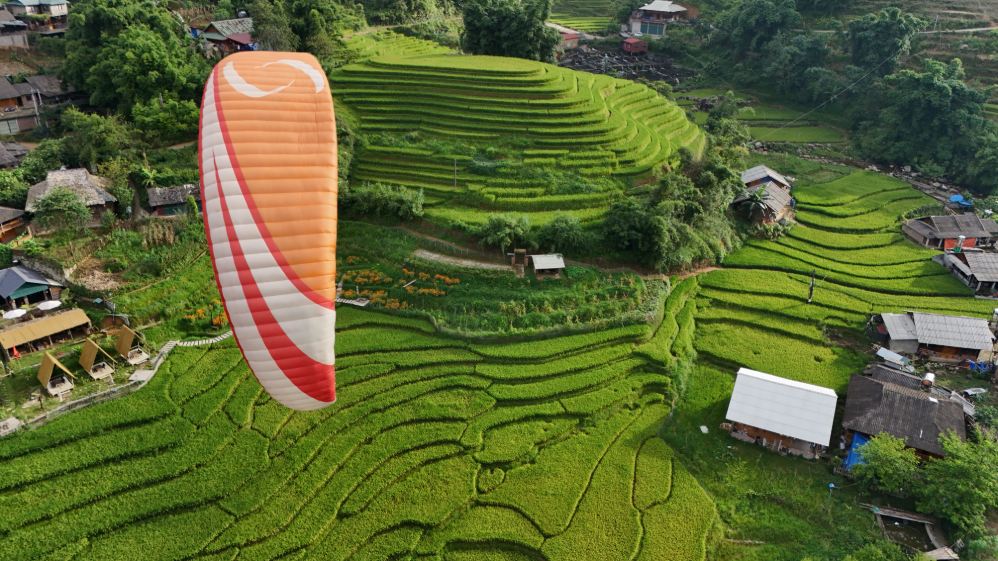
Paragliding is an aerial sport, so safety factors need to be prioritized. According to Mr. Dang Van My, Technical Director of Sapa Paragliding and Tourism Joint Stock Company, before each flight, equipment such as main parachute, auxiliary parachute, wire system, belt lock, walkie-talkie and helmet are checked. The ground team also monitors direction, wind speed and visibility.
The pilot is the one who decides the takeoff. If weather conditions are not guaranteed, the flight may have to wait or be delayed, even if the passenger is ready.
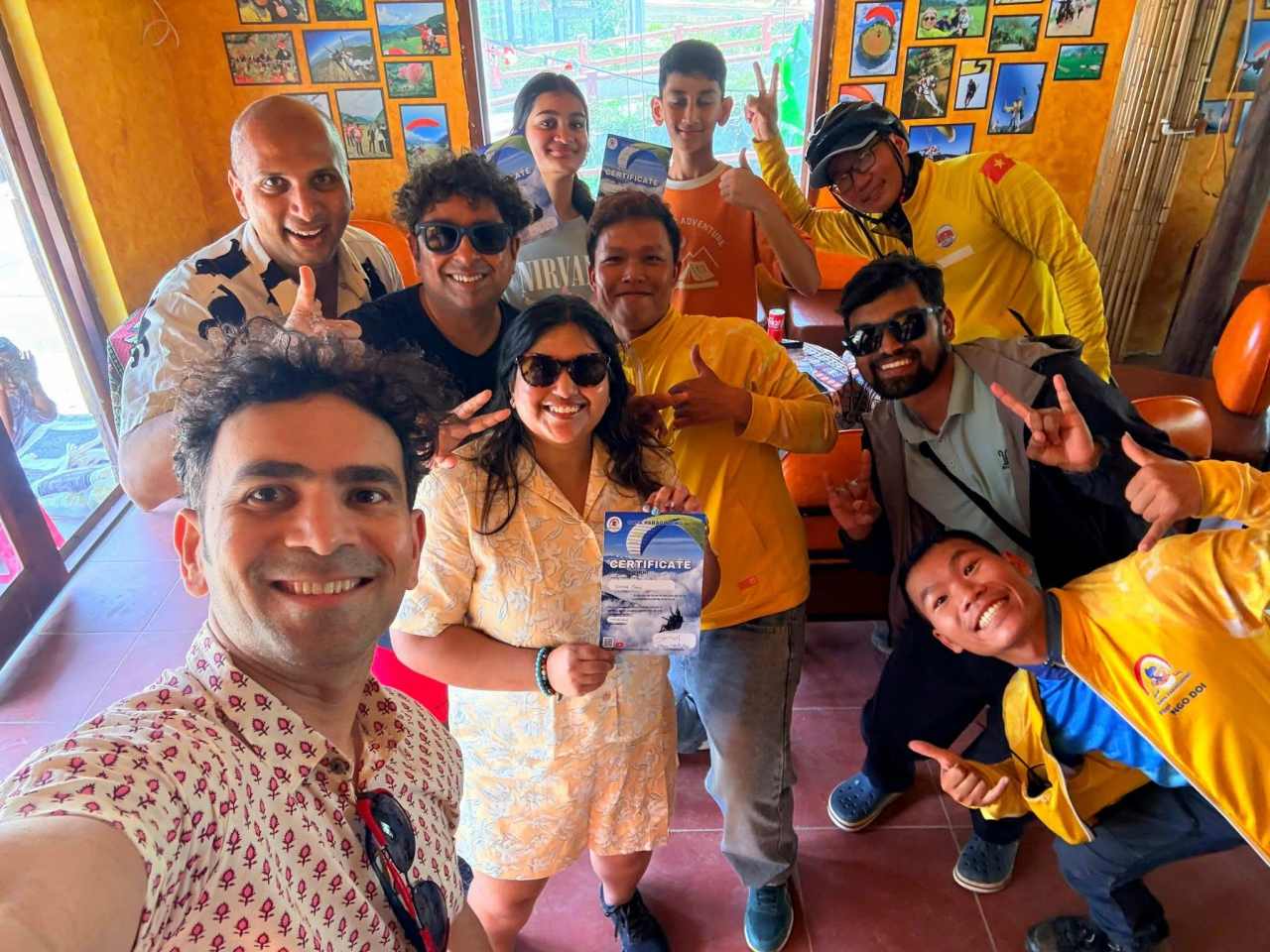
Tourists need to follow the pilot's instructions and notify in advance if there are health problems to note.
After the flight, visitors can continue to explore Lao Chai, Ta Van, terraced fields and villages in Muong Hoa valley. Combining sightseeing from above with ground experiences helps the golden season journey have a different perspective on Sa Pa.


