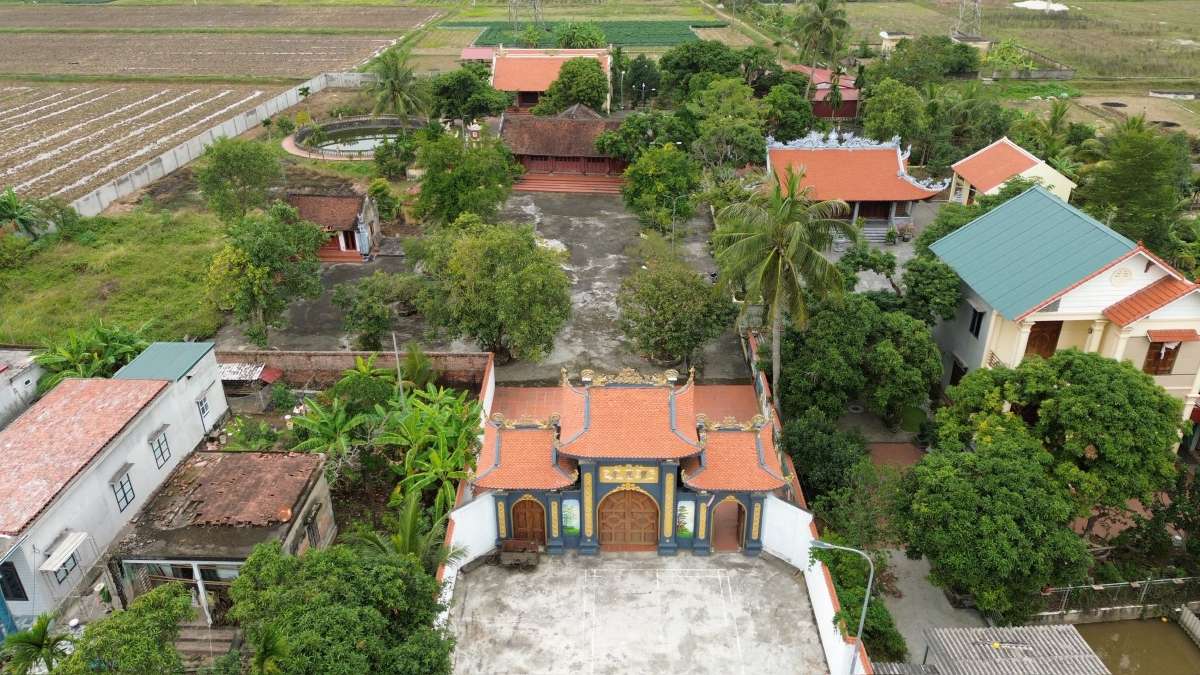
Relic associated with famous mandarin Pham Viet Kinh
Dong Quan communal house is a religious architectural work, the traditional cultural center of the Dong Quan village community, Dung Tien commune, Vinh Bao district (old), this is Vinh Thuan commune, Hai Phong.
The name Dong Quan communal house is associated with the renaming of Dong Quan village. Around the mid-16th century, Dong Quan village was named Gian Quan. After Mr. Pham Viet Kinh became an official of the Mac Dynasty, and was granted the title of Ky Quan Cong, he brought blessings to build a pagoda, divided equally among the people in the village to enjoy together. From then on, the village changed its name to Dong Quan - meaning to enjoy the blessings of mandarins together.
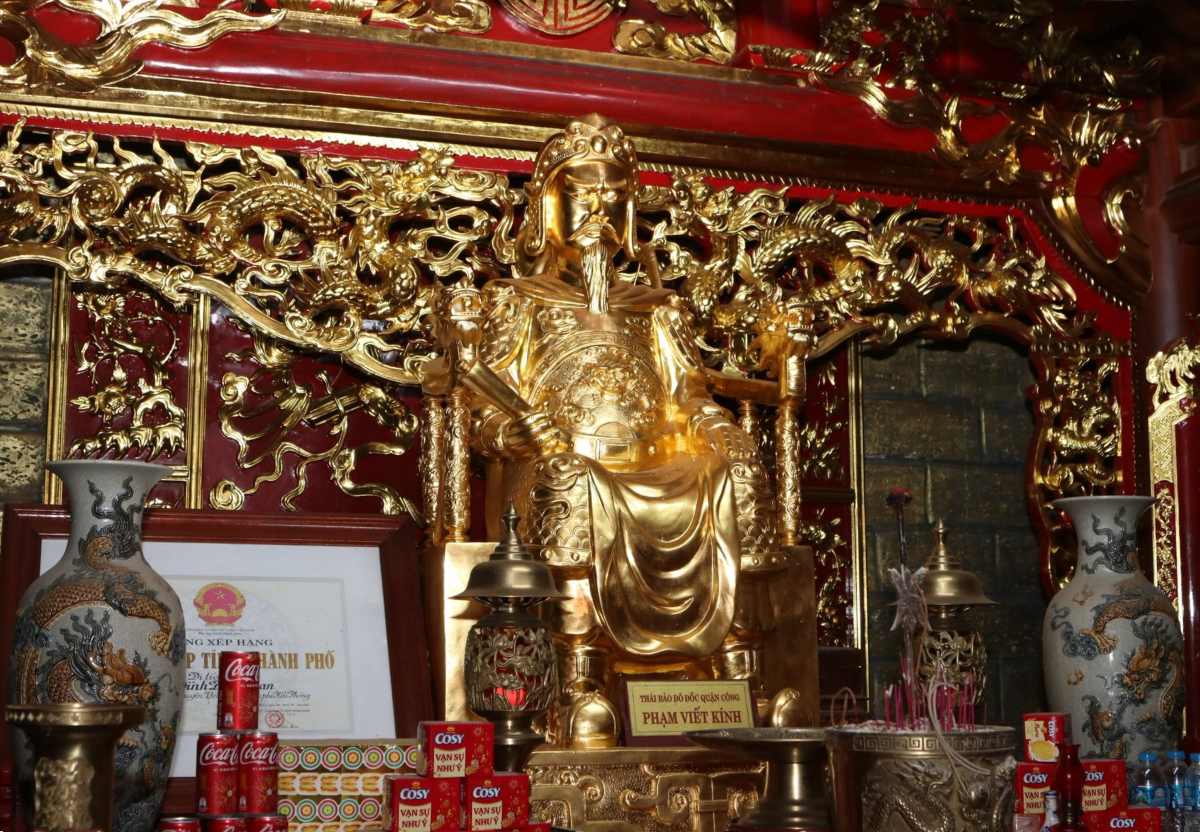
Dong Quan communal house worships two gods, Thai Bao Dong Quan Cong Pham Phu Quan (alias Mr. Pham Viet Kinh, a local, who served as an official in the Mac and Le Trung Hung dynasties) and Trinh Khiet Thuan Can Linh Ung Phu Nhan. Currently, in the communal house, in the front hall, there is also an altar for Luong Quan Cong Pham Viet Trung (son of Mr. Pham Viet Kinh).
According to historical documents, Mr. Pham Viet Kinh was a local who used to be an official of the Mac dynasty and was granted the title of Ky Quan Cong, then became an official of the Le dynasty and was granted the title of Dong Quan Cong. With his hometown village, he contributed to repairing and casting the bell of Dong Quan Pagoda (Bao Quang Tu) during the Mac Dynasty.
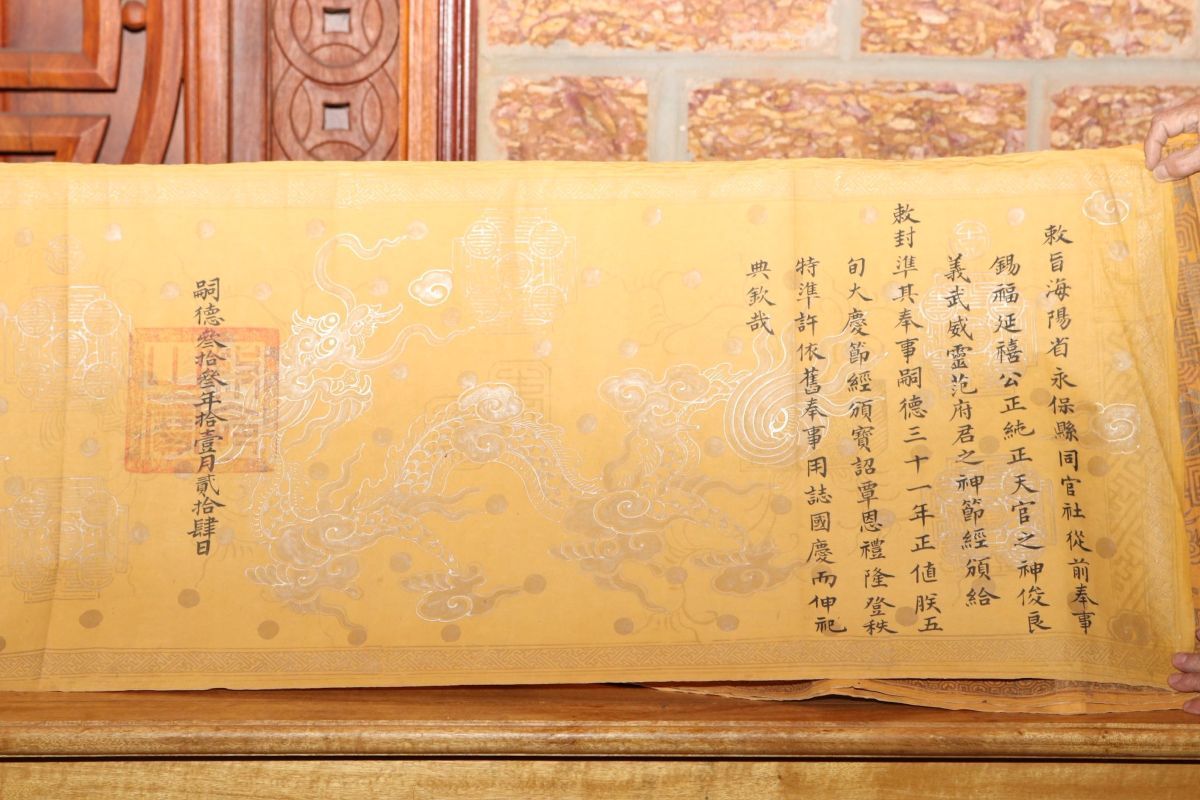
Throughout the Vietnamese feudal dynasties, the king awarded imperial decrees allowing local people to burn incense and worship him. Currently, the communal house still preserves many imperial decrees such as: Decree dated Tu Duc 6th year (1853); Decree dated Tu Duc 33rd year (1880); Decree dated Dong Khanh 2nd year (1887); Decree dated Duy Tan 3rd year (1909); Decree dated Khai Dinh 9th year (1924).
Legend has it that Dong Quan communal house was started right after the death of Mr. Pham Viet Kinh (that is, around the late 16th and early 17th centuries). By 1945, due to the ups and downs of history, the original communal house was no longer there.
In 1997, the government and local people together with the Pham family built a new communal house. In 2020, the communal house deteriorated seriously, so it was contributed by the government, local people and children far from home to renovate the communal house with the current architectural scale.
Unique architecture by the Luoc River
Located to the west of Dong Quan village, on a high, clear land with beautiful scenery, Dong Quan communal house is located in the arc-shaped curve of the Luoc River, considered a land formation of "water accumulation - happiness accumulation". On December 14, 2021, Hai Phong City People's Committee issued Decision No. 3640/QD-UBND recognizing Dong Quan communal house, Dung Tien commune, Vinh Bao district, Hai Phong city as a City-level Historical Relic.
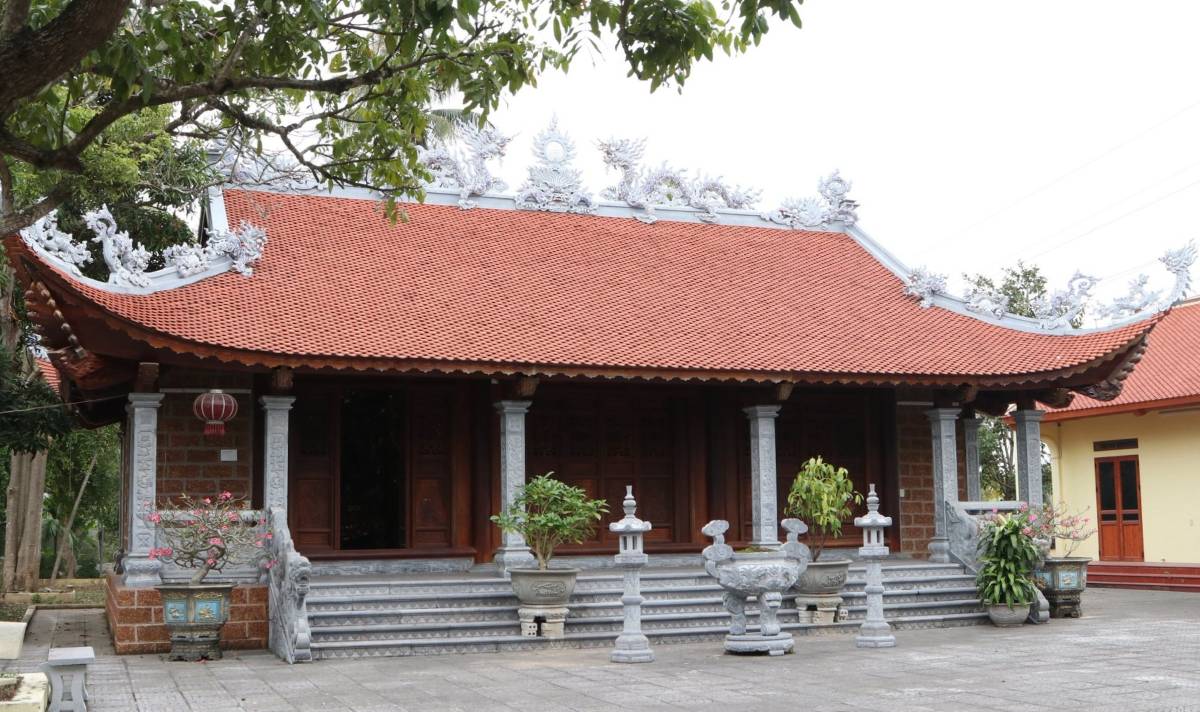
The communal house is built on the basis of traditional architecture with main materials being ironwood, blue stone, laterite stone. The art of sculpture and decoration on architectural components at Dong Quan communal house is imbued with traditional artistic value. Dong Quan communal house currently still preserves some artifacts and antiques such as: Stone steles; Pillar supports; Coffins for imperial decrees and especially 7 imperial decrees.
Dong Quan communal house is also a sacred space where the community organizes traditional festivals of the locality. In the festival, besides preserving and maintaining traditional rituals such as palanquin processions and ceremonies, folk games such as cockfighting, human chess, to tom diem, bridge, blindfolded duck catching, pot smashing are still maintained, practiced and promoted by people. Folk games create joy and excitement for the people; recreate traditional cultural spaces, increase community solidarity for local people, and at the same time foster love and pride in the good traditional values of the homeland for generations of people, especially the young generation of Dong Quan today.
In the grounds on the left side of the communal house is Dong Quan Pagoda, a national-level architectural and artistic relic in 1992, making this place a cluster of religious and belief relics of the locality.