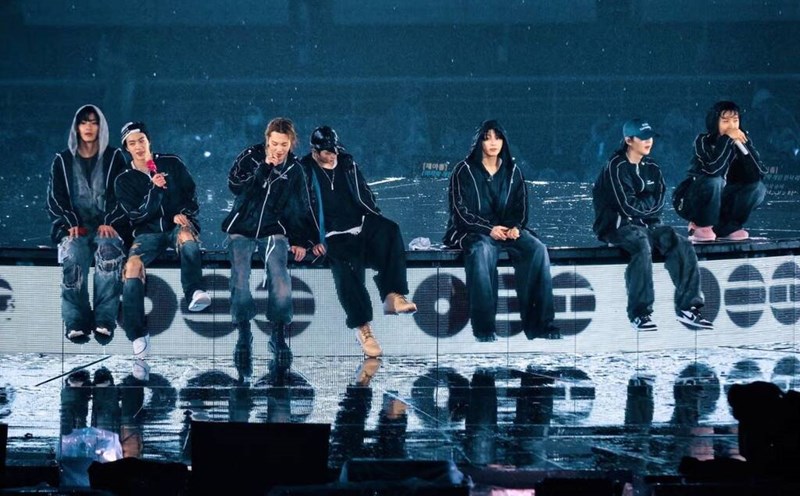
BTS's concert creates momentum for Busan tourism, contributing to bringing the Korean port city closer to the record milestone of international visitors in 2026.
Not only attracting hundreds of thousands of tourists to the event venue, the performance also strongly promoted spending activities, affirming the impact of large-scale cultural events on the local economy.
It is known that during the week of BTS's world tour concert in June, the area around Busan Asiad Stadium recorded about 730,000 foreign visitors staying within a 3 km radius, an increase of more than 340% compared to the previous week.
Revenue from credit cards of international visitors in this area also increased by nearly 115%, reflecting the strong spread of the event to the tourism and trade industries.
The effect from BTS's concert contributed to helping Busan maintain an impressive growth momentum in tourism. According to city authorities, from January to the end of June 2026, Busan welcomed 2.42 million international visitors, an increase of 43.9% compared to the same period last year and completed more than 60% of the target of welcoming 4 million visitors for the whole year. Previously, in 2025, the city for the first time surpassed the milestone of 3 million international visitors with 3.64 million visitors.
June alone recorded nearly 484,100 international visitors - the highest level since the beginning of the year. If this trend continues, Busan is expected to complete its target of welcoming 5 million international visitors in 2028 sooner than expected.
Regarding the tourist market, Taiwan leads with nearly 470,000 arrivals, followed by China, Japan and the US. Notably, the number of Chinese tourists increased by 90.7% thanks to the recovery of cruise tourism routes, while the markets of the US, France, Australia and the UK also recorded positive growth, showing that Busan's international visitor source is increasingly diverse.
In parallel with the sharp increase in the number of visitors, total credit card spending by international tourists in Busan in the first half of the year reached more than 591 billion won, an increase of 63% compared to the same period last year and higher than the average growth rate across South Korea.
Shopping activities are also gradually spreading to many areas instead of just focusing on familiar tourist destinations, contributing to promoting the recovery of local commercial areas.
Busan officials assessed that the above results show that the competitiveness of the city's tourism industry is constantly being improved. In the coming time, the locality will continue to develop new cultural events and tourism products to extend length of stay, encourage spending and aim for sustainable growth.