
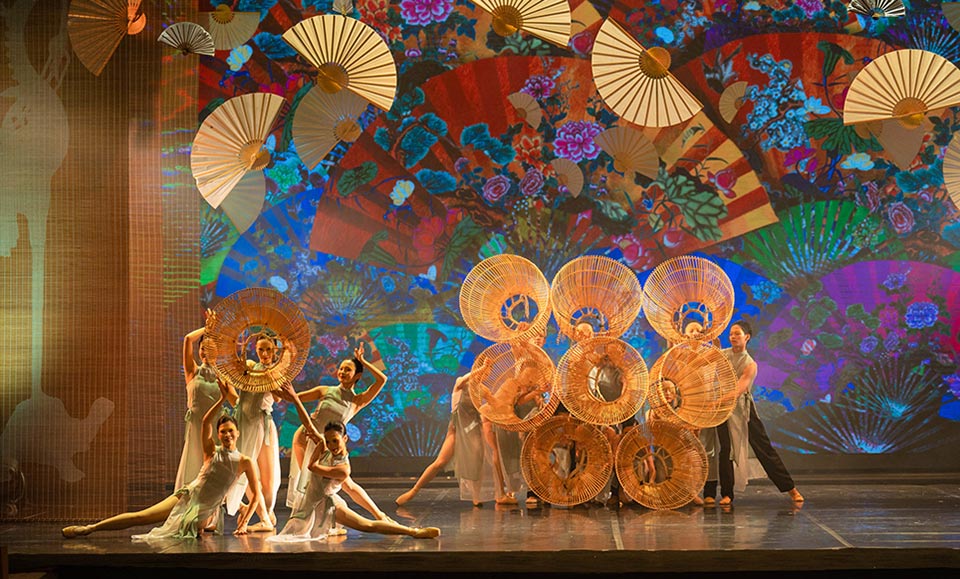
On the evening of March 29, at the Ho Guom Theater, the contemporary ballet "Do" officially returned after two years, continuing its journey to conquer audiences who love academic art with an emotional performance space.
The music of the play uses a contemporary adaptation of Antonio Vivaldi's "Four Seasons" by Max Richter, bringing a new nuance when Western classical music blends with Vietnamese cultural material.
Do" impresses with its creative approach when exploiting elements imbued with Vietnamese folk colors such as nets, paper fans, flower mats, Do paper... to create a new ballet language. Ballet artists will perform movements such as throwing nets, placing nets, carrying water, transplanting rice... which belong to the daily life of farmers.
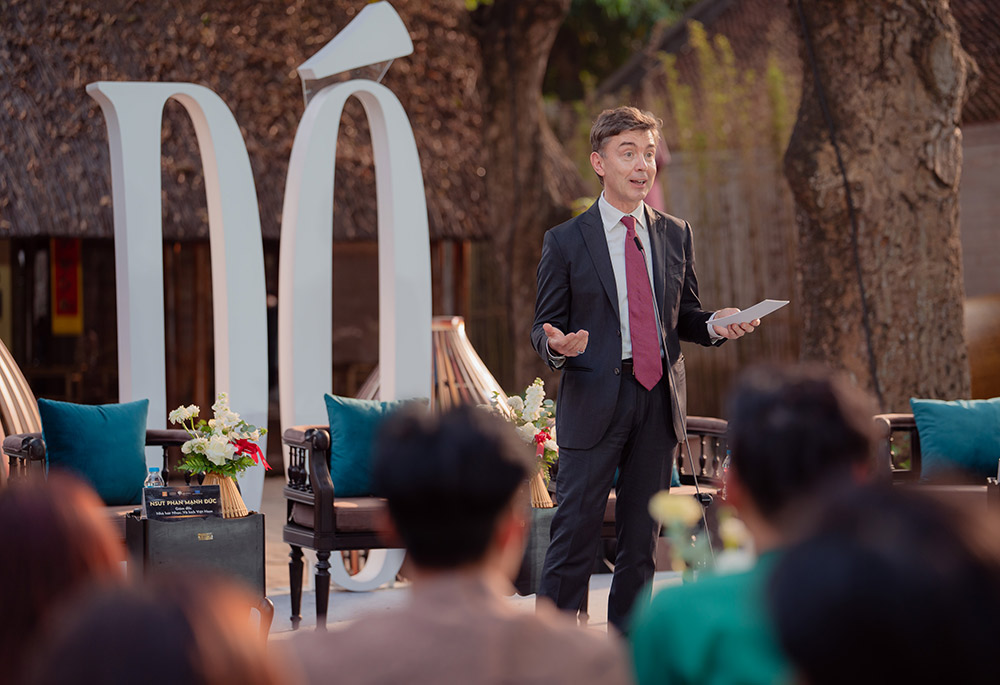
Speaking at the event introducing the ballet "Dó" in Hanoi, European Union Ambassador to Vietnam Julien Guerrier expressed his impression of the creative team, when the ballet transformed music and moved into a poetic dialogue between two cultures.
According to him, "Dó" not only recreates the rhythm of the four seasons, but also conveys emotional depth and Vietnamese cultural symbols through dance language and creative stage.
The Ambassador emphasized that the work is a clear proof of the power of culture in crossing borders, renewing European classical values with the imagination of Vietnamese artists.
In the context that relations between Vietnam and the European Union have just been upgraded to a Comprehensive Strategic Partnership at the beginning of this year, art projects like "Dó" show a different dimension of cooperation - where people, emotions and creativity become bridges.
Having enjoyed the play in 2024, the EU Ambassador to Vietnam expressed his expectation that the public will continue to receive it strongly when the play returns.
Sharing about the creative idea, General Director Huong Na Tran said that "Dó" originated from love for the country, people and layers of national cultural sediment. From familiar images such as chú Tễu, chiếc nơm, thần Nông or chiếu hoa, the crew has selected and transformed them into a highly expressive dance language.
The goal of the play is to create an academic work of art but imbued with Vietnamese identity, so that audiences can feel the beauty of national culture in a way that is both close and new.
Meanwhile, choreographer Vu Ngoc Khai emphasized the "Vietnameseization" approach of ballet. The play retains the strict technical foundation of Western classical ballet, but restructures the language of expression based on indigenous cultural perception. He revealed that he will include Mother Goddess Worship - a UNESCO-recognized heritage - in the play.
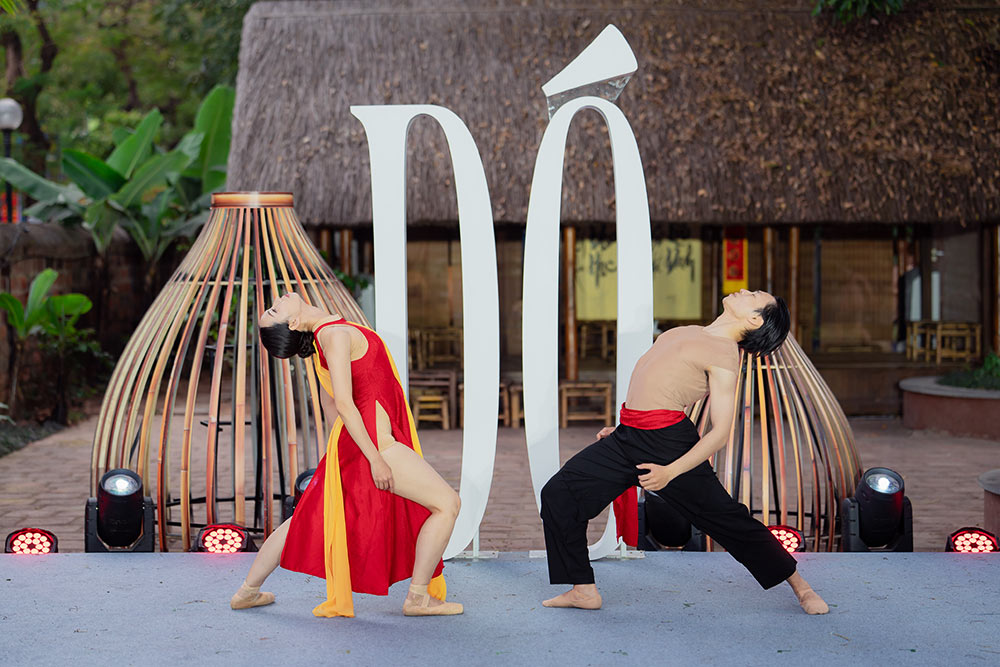
The ballet opens up an artistic journey leading the audience through the cycle of four seasons - symbols of movement, rebirth and creative freedom. The four parts include: Winter, Autumn, Summer and Spring, corresponding to chapters named Wind-attached, Silent Wind, Seasonal Wind and Drunk Wind.
If "Buoc Gio" is an inner journey to find meaning in the harsh winter sky, dialogue with nature, then "Lang Gio" evokes a relaxing step under the open autumn sky. "Summer" depicts the most turbulent and experiential period of a person's life. The play closes with "Gio Say" - the starting point of renaissance, where people let go of thought to blend into the rhythm of spring nature.
The play features the participation of 20 ballet artists from the Vietnam National Opera & Ballet Theatre, along with the participation of artists such as: Vu Ngoc Khai, Meritorious Artist Phan Luong and Ha Tu Thien. The actors will both stand on ballet stiff-toe shoes and move their upper bodies in a contemporary spirit - a combination that requires very high control and perception.


