
On March 7, a group of international tourists departed from the inner city of Hanoi to Ha Long (Quang Ninh) at 8 am. However, due to limited hours, the 45-seater car driver could only start moving to the pick-up point in the inner city from 9 am.
The group had to abandon the sightseeing spot along the way according to the original schedule, running straight on the highway to be on time to board the train for a night's rest. The lunch of the guests also had to be postponed to more than 1 pm.
Mr. Ngoc Long, a tour guide for the group, said: "Because the time is too tight, guests cannot rest comfortably. The group should have stopped for a 15-20 minute break, but now it has to be packed in 10 minutes, I have to urge guests to get out of the car immediately.
Changes do not only arise with journeys from Hanoi to neighboring provinces, even inner-city tour groups also face difficulties.
Ms. Nguyen Thao, tour operator of a travel agency in Hoan Kiem ward, recounted the case of a group of German tourists who ended their walking program at 5:30 pm and wanted to go for dinner immediately. However, the 45-seater driver could not be flexible to pick up guests during restricted hours.
Dinner at the people's house has been prepared and cannot be canceled, the hotel is too far away for the group to walk back to rest. We were forced to book two 16-seater cars urgently to take the guests to eat in time. After offsetting expenses, we borrowed an additional 1.4 million VND arising," Ms. Thao said.
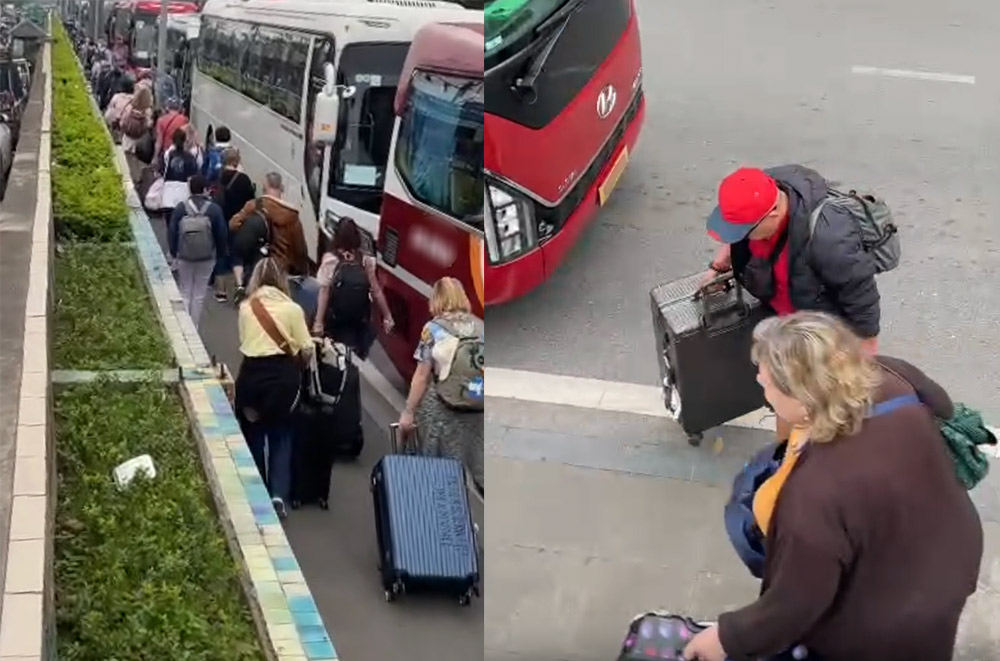
These disruptions arise when travel businesses and passenger transport business units under contracts adapt to new regulations according to Decision No. 01/2026/QD-UBND of the Hanoi City People's Committee.
Accordingly, the scope of restrictions on the operation of road vehicles is limited from inside the road encroaching onto the city center. In which, passenger transport business vehicles under contract (passenger cars with 28 seats or more excluding drivers) are only allowed to operate outside peak hours (peak hours from 6am - 9am and 4pm - 7:30pm daily).
The bottleneck lies in the fact that vehicles with 28 seats or more are the main means to serve international tourist groups. Currently, tourism businesses in Hanoi are facing many difficulties in operation when adapting to new regulations.
International visitors may encounter inconveniences from the first minutes of setting foot in Hanoi. European visitors often have to fly long distances to get to Hanoi. If landing early in the morning, visitors have to wait a few more hours to return to hotels in the city or to attractions.
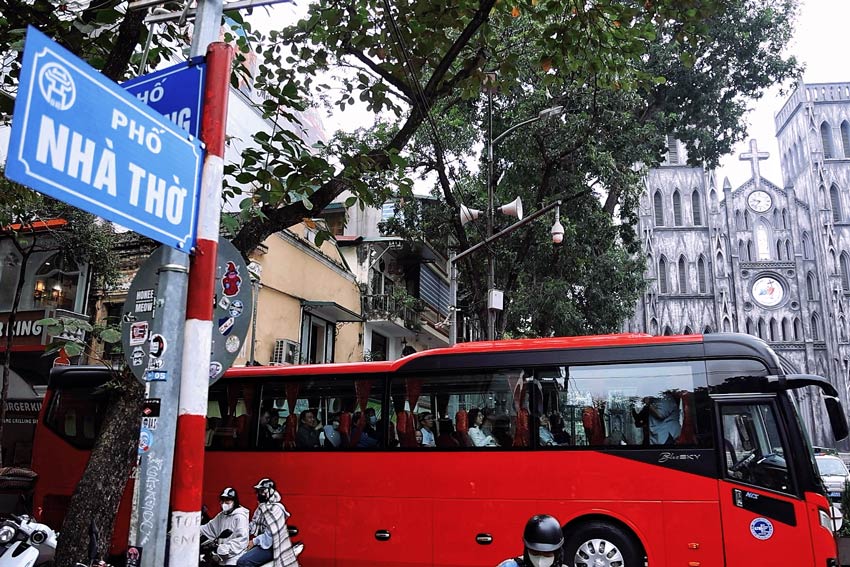
If the group is separated from 45-seater cars to 2-3 cars under 28 seats, the problem arises not only in transportation costs but also in calculating tour guides according to the group, luggage management personnel... , tour guide Ngoc Long analyzed.
To keep up with the daily program, instead of tours lasting from 8 am to 5 pm, the delegation has to stretch back the journey from 9 am to 9:30 am to 4 pm. Some delegations have to depart a few hours earlier, at least from 5:30 am, to leave the inner city before rush hour, ensuring that the schedule has enough activities according to the plan.
A representative of a travel business headquartered in Cau Giay ward, said that the lack of a flexible mechanism could turn Hanoi from a vital transit center for northern destinations such as Ha Long, Sa Pa, Ha Giang, Ninh Binh... into a bottleneck for tourism activities.
Hanoi tourism may lose revenue if tourist groups skip the journey in the inner city, moving directly from the airport to neighboring provinces and cities. This affects the tourism ecosystem, from restaurants, hotels to attractions, shopping, entertainment...", this person added.
In particular, some units are concerned that large MICE tourist groups - which have high service requirements - may not choose Hanoi to organize events, but switch to other provinces and cities such as Hai Phong, Da Nang, Ho Chi Minh City... With large-scale MICE tourist groups of hundreds or thousands of people - often traveling by 45-seater cars, businesses find it difficult to arrange large numbers of cars under 28 seats to pick up and drop off guests in the inner city, or ensure accurate schedules due to barriers in transportation.
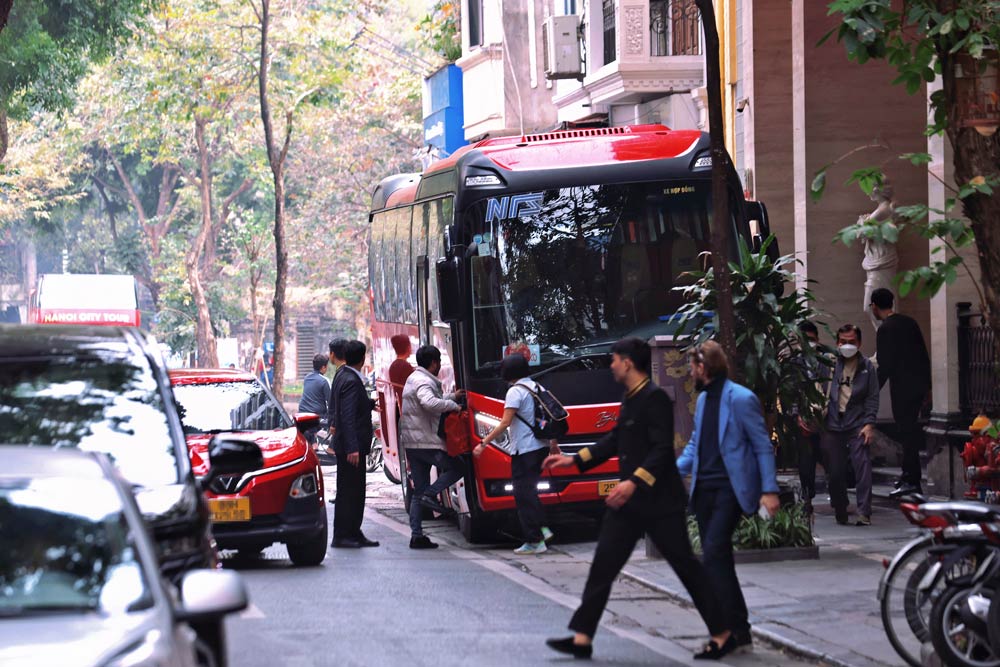
Answering Lao Dong Newspaper, many travel businesses affirmed that the policy of limiting the operation of large vehicles in the inner city during peak hours is completely correct from the perspective of urban management, contributing to reducing traffic pressure.
However, tourism - which is a spearhead economic sector with its own characteristics in terms of time and travel schedules of tourist groups - needs to have its own mechanism and timely solutions to remove obstacles, especially during the peak season of international tourists.
Some travel businesses propose that there should be a separate mechanism or adjust the prohibited hours to be shortened (from 7am-8:30 am and 5:30pm - 7pm) for large tourist vehicles, to ensure transportation activities are in line with the closed flight and sightseeing schedules of international delegations.
Long-term solutions include building a synchronous transition infrastructure system such as transfer points outside Ring Road 3; arranging electric vehicles or supporting transfer vehicles... or building traffic routes specifically for tourist vehicles; limiting the operation of large tourist vehicles at some traffic hotspots during peak hours.
If difficulties can be removed in a timely manner, travel businesses will have favorable conditions to operate, contributing to the goal of welcoming 8.6 million international visitors in 2026 of the Capital.
On January 4, Hanoi City People's Committee issued Decision No. 01/2026/QD-UBND regulating the operation of road vehicles in the city.
According to this decision, the scope of restrictions on the operation of road vehicles is limited from inside the road encroaching on the city center of the following roads: Pham Van Dong road → Cau Dien, Ho Tung Mau (section from Pham Van Dong - Pham Hung intersection to Cau Dien - Xuan Phuong intersection) → Xuan Phuong → road 70 → right-side road of Thang Long Avenue → An Khanh intersection → left-side road of Thang Long Avenue → Hoang Tung road (Belt Road 3.5) → Le Trong Tan road (Ha Dong district) → Van Khe → Phuc La → Cau Buou → Phan Trong Tue - Ngoc Hoi (section from Phan Trong Tue intersection to Phap Van intersection) → Belt Road 3 (section from Giai Phong - Phap Van intersection to Nguyen Van Linh road) → Nguyen Van Linh → overpass at the central intersection of Long Bien district → Ly Son road → Dong Tru bridge → Truong Sa → Hoang Sa → Vo Van Kiet (section from Hoang Sa road intersection to
Passenger transport business vehicles under contract (passenger cars with 28 seats or more excluding drivers), sleeper buses are only allowed to operate outside peak hours. Outside the above time frame, they must be approved in writing by the City Police.


