
Farmers get rich from tourism
Ea Knuec is one of the famous durian growing communes in Dak Lak. In 2025, the whole commune will have 5,153 hectares of durian with 2,530 hectares of output. Durian output is estimated at 55,660 tons/year. The commune currently has 9 export packaging facilities and 29 growing area codes granted for an area of over 1,133 hectares.
In addition to durian cultivation and trading activities, in recent years, the durian crop in Ea Knuoc commune has begun to bustle because domestic and foreign tourist groups have visited.
Visitors here can visit and learn about durian varieties, enjoy durian and agricultural products in the garden. Many products made from durian such as durian cake, sublimated dried durian... are also introduced and widely consumed. From there, the agricultural tourism model in this locality began to be shaped and developed.
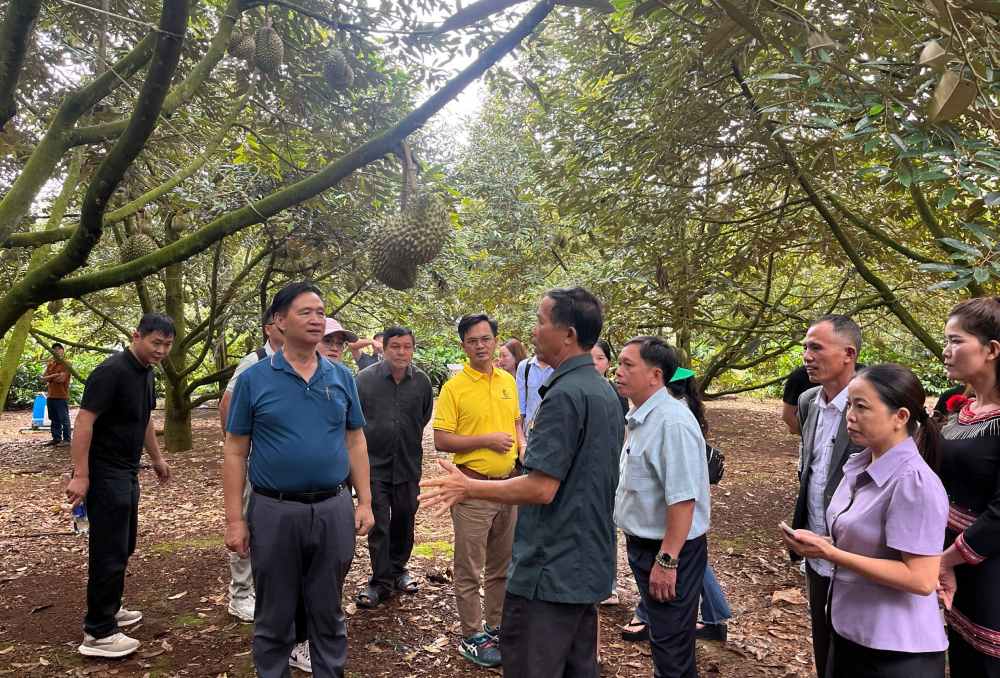
Mr. Mai Dinh Tho, Chairman of the Board of Directors of the Clean Agricultural Service Cooperative (Ea Knuc commune), said: "In recent years, the cooperative has shaped and focused on developing the agricultural tourism sector. Visitors here will learn about the technical processes for growing and caring for durian.
Visitors can also participate in many processes such as pumping off durian, watering, harvesting fruit and enjoying durian fruits that they care for and harvest with their own hands. The experiences of immersing themselves in the lives of local people make many tourists excited and highly appreciated".
Mr. Tho added that recently, the number of visitors coming to visit and experience the Cooperative has increased. The total number of visitors is about 10,000 people/year, mainly business visitors from Chinese enterprises.
In addition, the Cooperative also welcomed tourist groups and working groups from a number of universities in Australia to learn about the model, research on the operating process and durian care techniques. Many young people in the city also come here to relax, immerse themselves in nature and experience the life of local farmers.
From reality in Ea Knuc, it can be seen that when commodity agriculture reaches a certain scale, combining and expanding to experiential tourism becomes an inevitable direction. This trend has not only occurred in the Central Highlands but has also spread to the Northern mountainous region in recent years.
In that picture, Moc Chau (Son La) is an area that has soon formed agricultural tourism models associated with temperate fruit trees, attracting the attention of tourists.
For example, the Ly orange garden of Mr. Ha Van Chien - Ms. Ngo Thi Hoa (Van Son ward) became a famous check-in spot that many tourists visit when visiting Moc Chau. Tourists come here to admire the golden orange gardens, the fruit-laden orange fields, experience picking oranges in the garden and take beautiful photos as souvenirs.
Mr. Chien said that his orange garden started to open in the 10th lunar month. He shared: "Previously, my family also grew oranges but only for agricultural trade. Since opening to visitors, the orange garden has attracted many visitors to visit and experience. These days, the number of visitors is increasingly crowded, including both group visitors and individual visitors and foreign visitors".
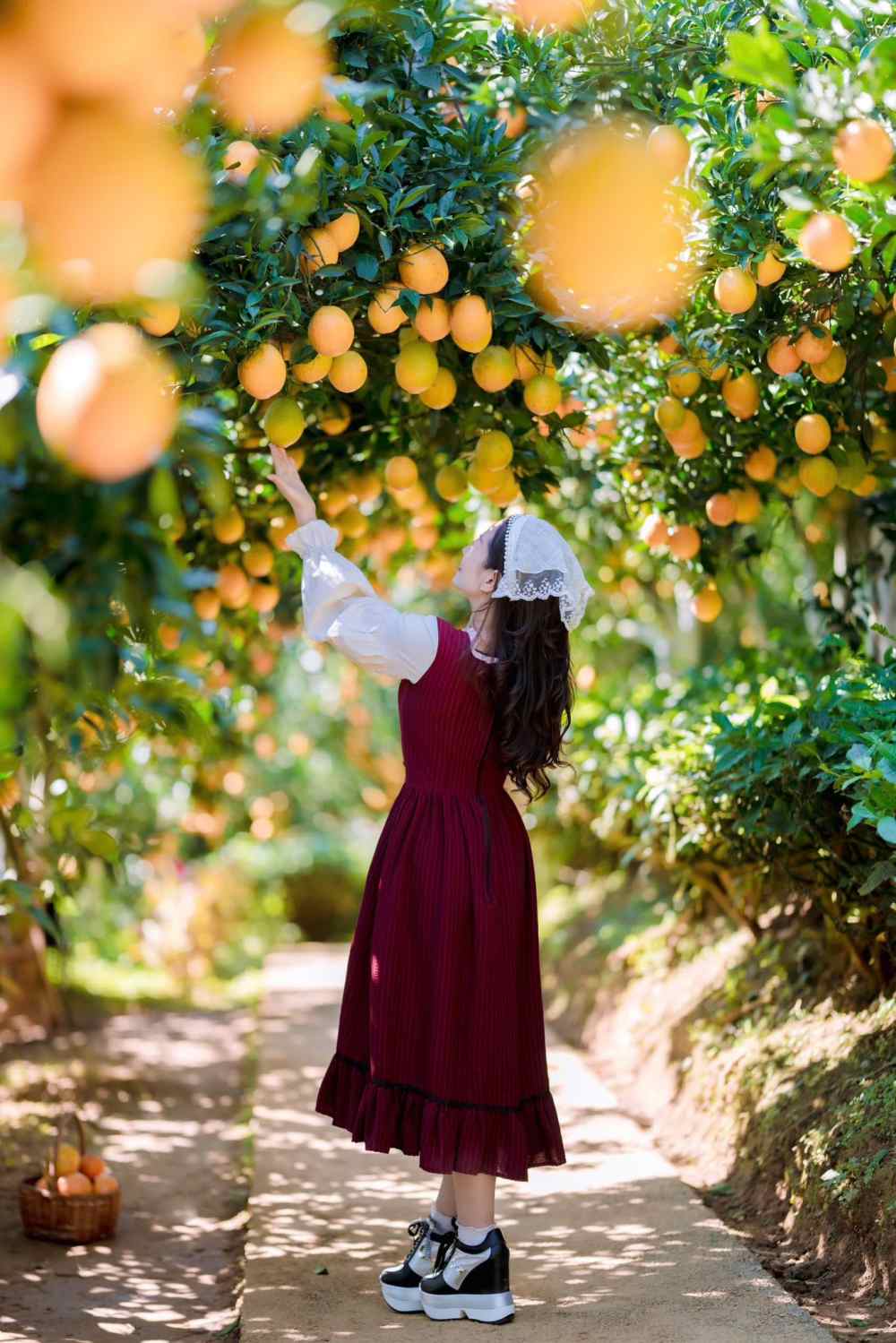
Currently, his orange garden sells tickets for 40,000 VND/adult and 10,000 VND/child. Visitors can comfortably walk, take "virtual life" photos and visit the orange care process. In addition, the farm also sells oranges in the garden along with some Northwest specialties such as dried plums, dried bamboo shoots, cross-brushed ham... bringing a large source of income for the family.
Mr. Chien shared: "In addition to visiting gardens and farms, visitors can also enjoy cuisine from local restaurants and eateries. Some households in the area also open homestays and motels to serve tourists who want to sleep overnight. All of this creates a fairly closed and complete ecosystem to serve tourists".
However, Mr. Chien and Mr. Mai Dinh Tho both admitted that tourism models in Ea Knue commune and Van Son ward are mainly done by local people and are still spontaneous. In the coming time, people hope to receive support from the State, local authorities and travel businesses to make the model more invested in a systematic way, thereby attracting more tourists to visit and shop.
From specific models in Ea Knuc and Moc Chau, it can be seen that agricultural tourism is opening up opportunities to increase the value of agricultural production, but most of them are still spontaneous, lacking proper investment and professional linkages.
Sustainable development strategy
Clearly recognizing the potential from practice, according to the Department of Culture, Sports and Tourism of Son La, in recent years, Moc Chau has identified developing the agricultural economy associated with tourism and services as one of the strengths of the locality. This model helps farmers convert from traditional agriculture to agriculture combined with tourism, bringing high efficiency to the fields of agriculture, services and tourism.
In particular, green agriculture with organic production methods, high-tech agricultural development, clean and safe products for consumers according to VietGAP and GlobalGAP standards are factors that attract the attention of tourists. Since then, eco-tourism products - environmentally friendly experiences have been formed, helping Moc Chau Tourism develop in a green and sustainable direction.
Moc Chau has been encouraging and supporting farming households to build models to serve tourism development such as: visiting farms, animal husbandry; traveling to experience planting, caring for, harvesting fruit trees, vegetables...
Every year, the locality maintains festival events associated with agriculture, to honor members of high-quality farmers and agricultural products, serving the needs of tourists with interesting activities such as: Plum harvesting festival, "Miss" Dairy cow contest; Agricultural product trade fair...
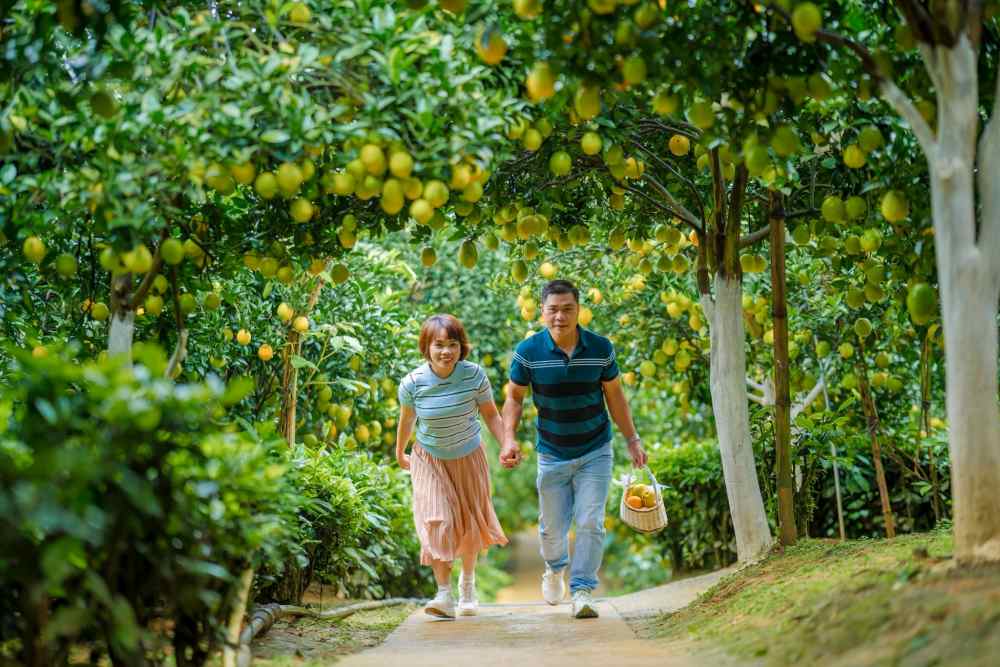
In Dak Lak, the province aims to welcome 1.8 million tourists in 2025. To achieve this figure, Dak Lak focuses on promoting agricultural tourism, identifying this as a strength in developing community tourism and creating a foundation for realizing policies, strategies, and tourism development projects in the community and ethnic minority communities.
Since March 2023, Dak Lak province has issued Decision No. 484 to implement the rural tourism development program in new rural construction, period 2021-2025.
Accordingly, the locality assigned the agricultural and cultural - tourism sectors to coordinate research and promote the development of rural tourism in a sustainable direction, on the basis of effective use, while preserving and promoting traditional cultural values, agricultural production activities, craft villages and ecological landscapes.
The province also focuses on mobilizing social resources, especially promoting the role of the people in investing, organizing and operating diverse and effective rural tourism models.
According to the leader of the Department of Culture, Sports and Tourism of Dak Lak province, from this policy, the cultural - tourism sector and the local agricultural sector have clearly defined a roadmap with 6 steps to implement the development of agricultural tourism. The focus is on perfecting the system of documents and plans to the district and commune levels to unify direction; building and replicating agricultural tourism models associated with community tourism, forming destinations in the direction of green, responsible and sustainable tourism.
At the same time, grassroots levels are trained, raise awareness, proactively choose models suitable for production advantages in the area; at the same time, promote digital transformation, apply technology in management, promotion, organization of festivals, forums connecting supply and demand, contributing to bringing agricultural tourism closer to the public.
In the Vietnam Tourism Development Strategy to 2030, the goal of striving for tourism to truly be a spearhead economic sector and sustainable development has been set out, making Vietnam in the group of 30 countries with the world's leading tourism competitiveness, fully meeting the requirements and goals of sustainable development.
The strategy for sustainable agricultural and rural development to 2030, with a vision to 2045, has determined the orientation of diversifying the new rural construction program in accordance with regional advantages, circumstances, and development opportunities of the locality. One of the important orientations is to "develop local specialties, craft villages, develop service economy, rural tourism on the basis of preserving and promoting local culture".


