
On April 14, information from Khanh Hoa General Hospital said that the Department of Hematology - Blood Transfusion had just organized health education propaganda about thalassemia.
Currently, Khanh Hoa General Hospital is managing and treating about 60 Thalassemia patients. To date, the Department of Hematology - Blood Transfusion has established the "Thalassemia Patients" Group, helping patients receive treatment regimen advice, psychological support and access to information about prevention for future generations.
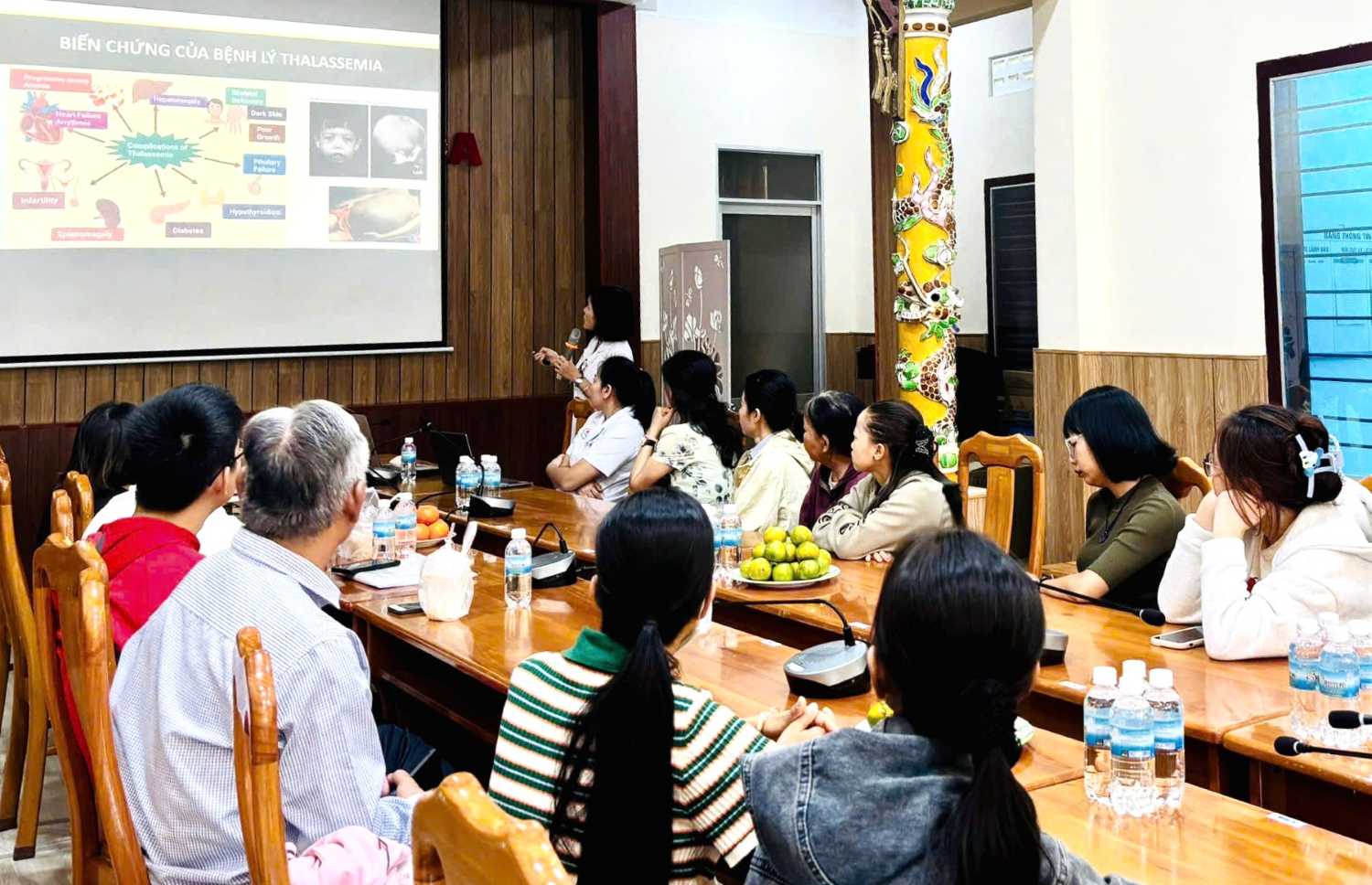
At the program, doctors provided a lot of practical information, and at the same time answered in detail issues related to treatment regimens, genetic mechanisms and screening methods.
Thalassemia is a common genetic hematology disease, causing chronic anemia due to globin production disorders, making red blood cells less durable and easily broken. This is a recessive genetic disease on normal chromosomes, which can occur in both men and women.
According to experts, if both parents carry the disease gene, the probability of inheritance for the child is as follows: 25% suffer from severe disease, 50% carry the disease gene and 25% are completely normal.
Worryingly, severe Thalassemia if not treated promptly can cause many serious complications such as severe anemia, jaundice, enlarged spleen, bone deformities, heart failure, liver failure.
In Vietnam, it is estimated that there are about 13 million people carrying the disease gene (accounting for about 13% of the population), each year there are about 8,000 newborns with the disease and more than 20,000 patients who have to be treated and transfused blood for life.
Not only affecting health, having children with Thalassemia also creates a long-term burden for families and society. However, this disease can be effectively prevented through early detection and genetic counseling.
In the context of thalassemia becoming increasingly common in Vietnam, pre-marital screening is becoming a necessary trend to protect future generations.
Experts recommend that pre-marital screening is a simple but effective solution to reduce the risk of having children with the disease.
With just basic blood tests such as a general analysis of blood cells and hemoglobin electrophoresis, people can know if they carry the disease gene or not.
In case both husband and wife carry the disease gene, doctors will advise on prenatal diagnosis methods or genetic techniques to limit the risk of giving birth to a child with Thalassemia.
In the coming time, Khanh Hoa General Hospital will promote communication at universities and the youth community, aiming to raise awareness and change behavior, considering pre-marital screening as a necessary preparation before getting married.


