
Hope the road to class is less arduous
At 5 am, when the mist was still covering the Mau Son slopes (Lang Son), many students in remote villages had to leave their homes to go to class.
For them, the road to school is not only measured in kilometers, but also in slippery slopes, rising streams and cold mornings.
Teacher Dinh Thi Nga, a teacher at Mau Son Primary and Secondary Boarding School, said that in the past, many students lived in villages 3-4 km from the school. Without pick-up and drop-off, they had to go to school themselves from 5-6 am, crossing steep slopes submerged in mist.
On heavy rainy days, the stream water rises, travel is difficult, and students' studies are also often interrupted," Ms. Nga said.
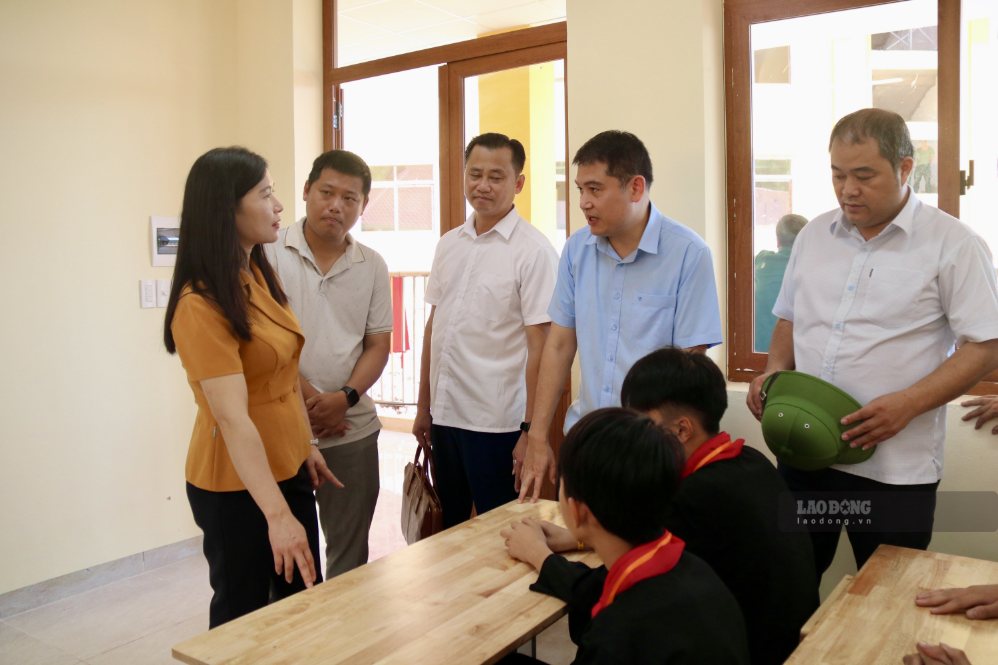
According to Ms. Dao Thi Mai Huong, Vice Chairwoman of Mau Son Commune People's Committee, before arranging the school network, the locality had 8 educational institutions with a total of 26 school sites scattered in many villages and hamlets. Some classes only have 5-7 students.
The division of the teaching staff between many school sites affects professional activities and innovation of teaching methods. Some places still lack computer rooms, laboratories, and libraries that are just small bookshelves.
In Khuat Xa, some students are still alive 26 km from school.
From the problem of long distances, remote school sites and distributed resources, inter-level boarding schools open up a more suitable teaching organization for the specific characteristics of the border region.
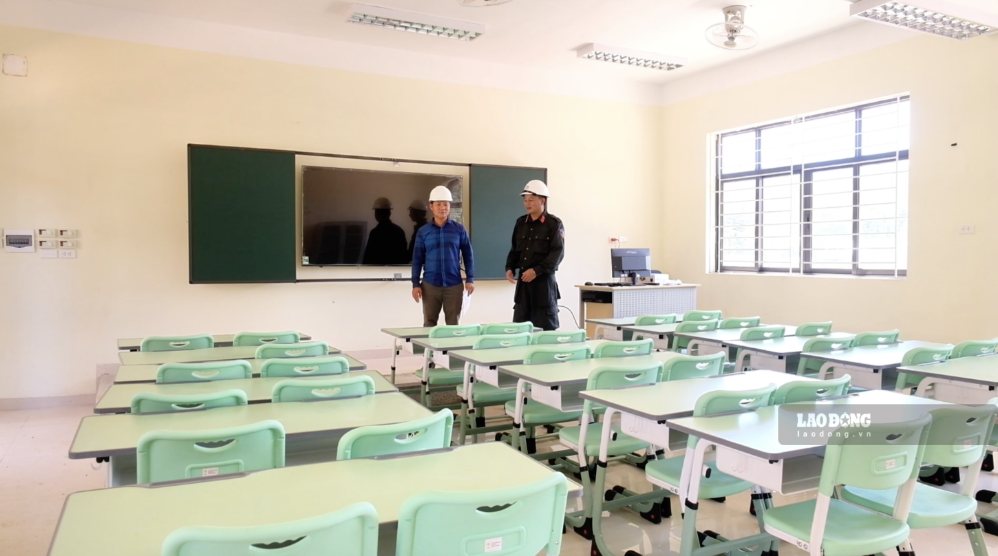
According to the design, the schools have a standardized classroom system along with computer science, foreign language, music, fine arts, and natural science rooms; libraries, multi-purpose buildings, sports areas, dining rooms and dormitories. Swimming pools, production expansion areas, and creative experience spaces are also arranged on campus.
Cultivating "living milestones" in border areas
In the last days before the inauguration, at Mau Son Primary and Secondary Boarding School, hundreds of workers, along with officers, soldiers, teachers and parents, were still urgently completing and cleaning the classroom.
Ms. Ly Thi Noi, residing in Tra Ky village, has two children preparing to study in grades 1 and 4 at school. The house is about 13 km from school, so in the past, her children going to school always worried her, especially on bad weather days.
The children are studying and staying in boarding houses, the family is very reassured. We came to clean up the classroom, hoping the school will be completed soon to welcome students," Ms. Noi shared.
At the construction site, 50 officers and soldiers of the Mobile Police of Lang Son Provincial Police also directly supported many tasks.
Teacher Dinh Thi Nga said that teachers and parents take turns shoveling sand and moving bricks to the floors, cleaning classrooms to support workers.
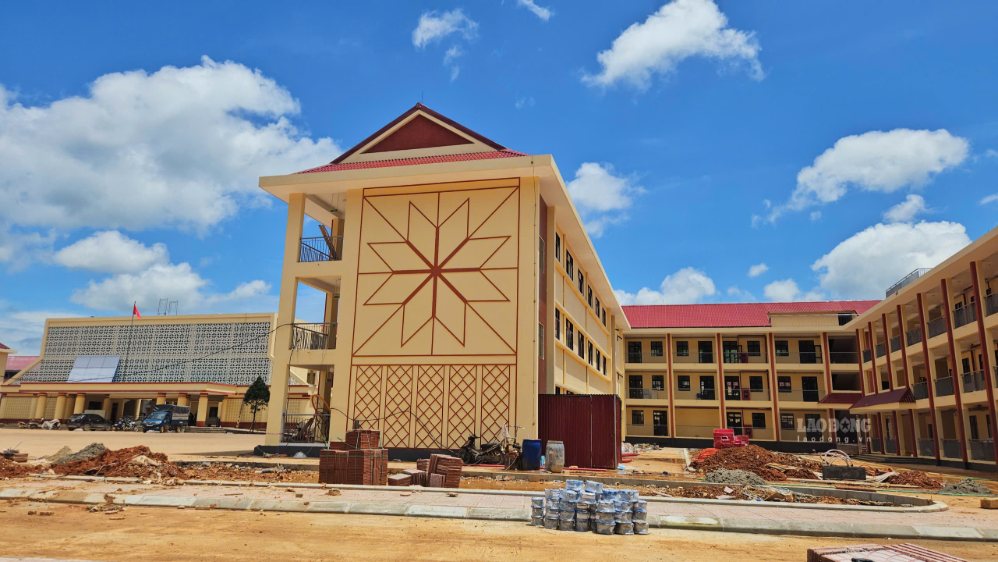
The atmosphere of racing against time also takes place at Khuat Xa Primary and Secondary Boarding School. The project has a total investment of 265.5 billion VND, a scale of 36 classes, meeting the learning needs of 1,281 students.
In recent days, engineers and workers have maintained "3 shifts, 4 teams" construction. Mr. Hoang Van Hoi, a local worker, said that everyone is working continuously day and night. Although tired, everyone is happy because the children in the village will study at this school.
According to Mr. Hoang Quoc Tuan, Director of the Department of Education and Training of Lang Son province, the 4 new schools will help students in remote, isolated, and border areas have better conditions for learning, living, and training.
The inter-level boarding model also facilitates the arrangement of small school sites, concentrating teachers, equipment and improving the quality of education.
Mr. Loc Van Do, Vice Chairman of Khuat Xa Commune People's Committee, said that stone markers define the border, while the vitality of the border is nurtured by communities that have been attached to the homeland for a long time.
A child today enters the Informatics room, library or Natural Science room, tomorrow can become a teacher, doctor, official or intellectual worker, returning to build villages.
From new schools, generations of students in border areas will grow up, becoming "living milestones" on their homeland.


