
According to the Department of Agriculture and Environment of Can Tho City, the locality has registered to participate in the Project to improve the value chain of Vietnamese tilapia and promote trade in high-quality soy products for aquaculture supported by the United States for a period of 5 years.
The goal is to form a synchronous linkage chain from seed production, commercial farming, processing to export, meeting the requirements of high-standard markets.
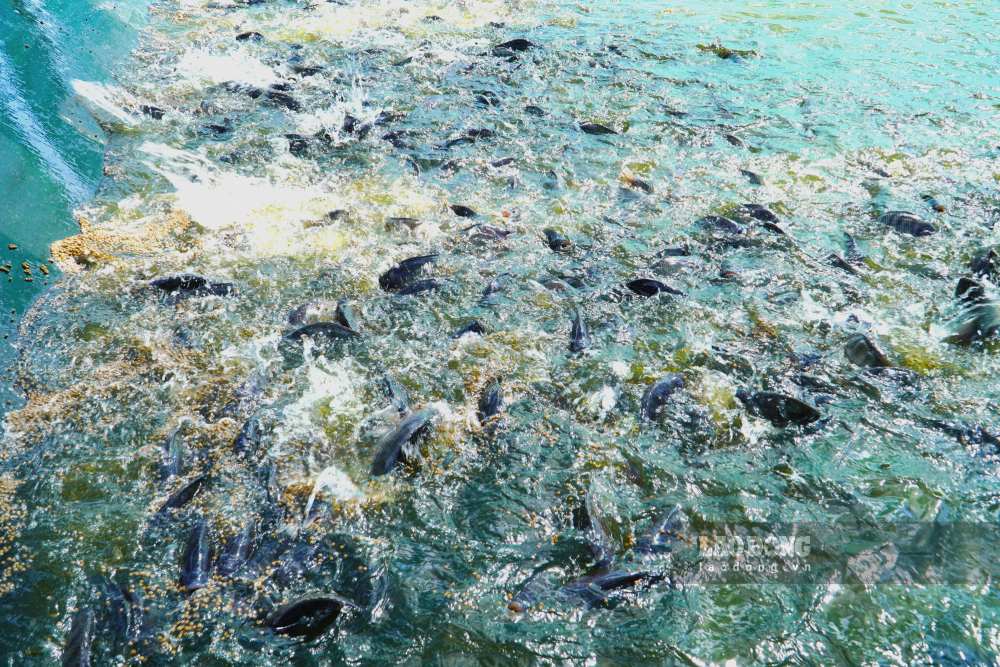
Exchanging at a working session with the International Cooperation Center for Sustainable Aquaculture and Exploitation (ICAFIS), Ms. Quach Thi Thanh Binh - Deputy Director of the Department of Agriculture and Environment of Can Tho City said that the city has experience in developing tilapia because this species has been raised for a long time in brackish water shrimp farming areas.
Participation in the project is expected to create more motivation to expand production scale and improve product value.
By the end of 2025, Can Tho has 604ha of tilapia farming, while the area with potential for development is up to about 96,500ha. If intensive farming, the average yield reaches about 35 tons/ha, while the cage farming model reaches 7-8 tons per cage.
Can Tho's advantage also comes from the processing system. Currently, the city has two large-scale factories specializing in processing tilapia. Among them, Tai Kim Anh Co., Ltd. has a capacity of about 200 tons/day with fillet and whole fish products. Vietnam Clean Seafood Joint Stock Company is the first unit in the country to bring tilapia fillet products to the Japanese market, serving sashimi and sushi processing.
Despite having a lot of potential, the consumption problem is still a major concern for farmers. According to ICAFIS, the production cost of tilapia is currently around 26,000 VND/kg. If there are no businesses participating in consumption and processing for export, farmers will face many risks when market prices fall deeply.
Mr. Ngo Cong Luan - Director of Nong Ngu 14/10 Cooperative said that at one point the price of tilapia was only about 22,000 VND/kg, causing many households to be almost unprofitable. Therefore, to expand the farming area, it is necessary to build a close linkage chain between seed production facilities, material supply enterprises, farming areas, processing plants and export units to ensure stable output.
According to a representative of Nhat Tam Commercial Production Cooperative, the quality of breeds is also a decisive factor in the competitiveness of the industry. The control of residue of banned substances must be implemented right from the breeding stage. At the same time, it is necessary to prioritize breeds with high fillet ratios to improve processing efficiency and increase product value.
Currently, Can Tho supplies more than 30 million tilapia seeds each year, meeting about 60% of the local demand.


