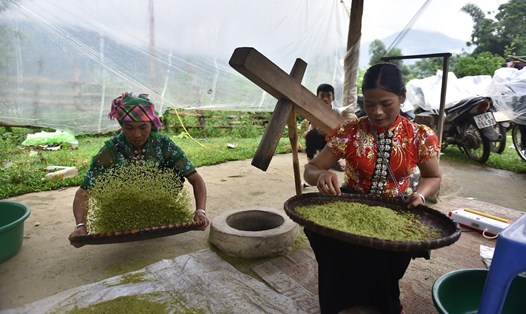
From a handful of field sticky rice, fresh bamboo tubes and a pink fireplace, that rustic dish has gone with the Northwest people through difficult days, and has become a specialty imbued with the "breath" of mountains and forests, retaining tourists.
A hasty meal in the fields
My grandfather - a person who has been attached to mountains, forests, and fields for a lifetime - once recounted that in the past, mountainous people lived on the forest, thanks to the forest, overcoming many famine seasons. When going to the fields, going into the forest to farm, the luggage brought with them was only machetes, water bottles, a little sticky rice grown at home and matchboxes. Without pots and pans, meals were prepared right next to the temporary fire in the middle of the forest.
At mealtime, they pick up dry firewood and set it on fire, put rice in fresh bamboo tubes, add a little water and place it on charcoal. When the outer shell is scorched, the aroma of bamboo blends with the sticky rice flavor spreads, it is also the time when lunch is hastily ready to return to work. That simple meal is warm enough, enough strength for a long day of labor in the mountains and forests.
From that simple cooking method, com lam was born as a natural adaptation of mountainous people to poor living conditions. Over the years, as life gradually improved, com lam was no longer a meal to fight hunger, but that com nuong ong lam dish was still preserved and cherished as a memory of a difficult time, about the strong bond between people and the vast mountains and forests.
Simple but requires ingenuity
Coriander rice is not fussy about ingredients. Just delicious field sticky rice, usually round, shredded sticky rice, chewy and fragrant, soaked in water for about 2-3 hours. Then put the rice in coriander tubes, bamboo tubes, giang tubes or fresh bamboo tubes, add enough water and grill over low heat.
However, to have a delicious grilled rice tube, patience and experience are required. The griller must rotate it evenly, stirring the fire just enough to let the rice cook evenly from inside out, without sticking the core or burning. With large bamboo tubes, the crafter often adds wild banana leaves and dong leaves to prevent the rice from sticking and maintain a beautiful round shape. With small bamboo tubes, you must choose the thickest, thickest piece of cake; when peeling off the scorched skin on the outside, the thin ivory white membrane is still intact, embracing the crispy and fragrant rice body.
Five-color rice in Thai ethnic culture
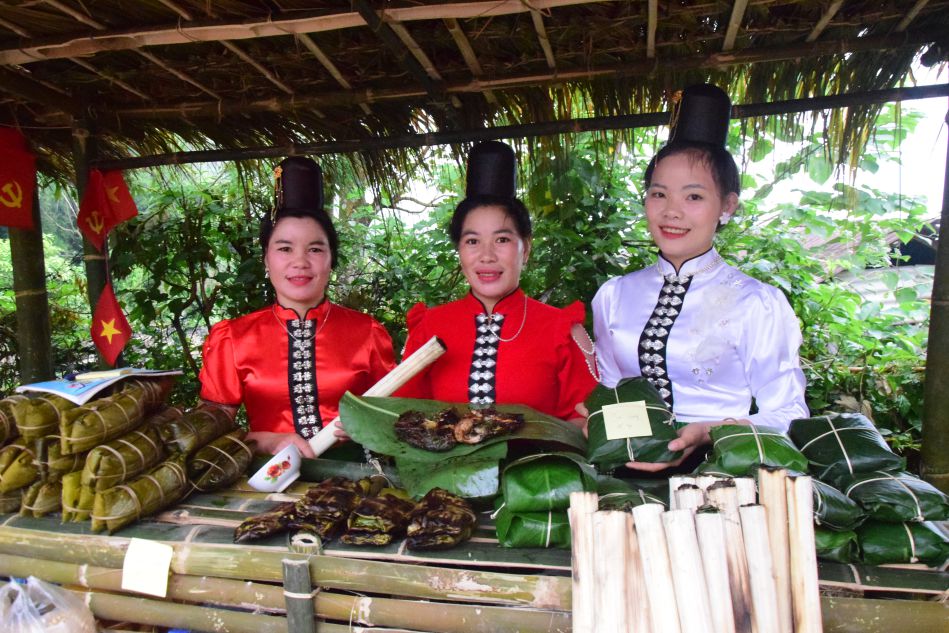
In the Northwest, com lam appears in the lives of many ethnic groups, but the Thai people are considered the community that has elevated this dish from a rushed meal in the mountains and forests to a unique culinary cultural value. In offerings, offerings or important occasions of the village, com lam is always present as an indispensable part.
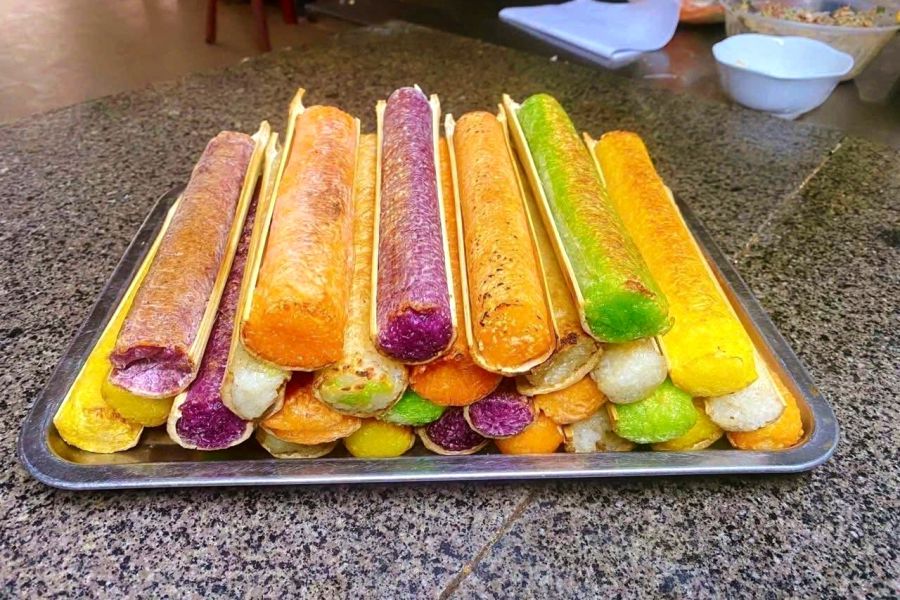
Especially, on holidays and Tet, celebrating new rice, celebrating new houses, Thai people often make five-color brown rice. Rice consists of 5 colors: White, blue, yellow, red and purple, symbolizing the five elements, for harmony between people and heaven, mountains and forests.
The white color is kept from pure upland sticky rice grains. The green and purple colors are created from broiled water of forest leaves. The yellow color is taken from bo fong flowers or wild turmeric, while the red color is dyed from water of To Moc or ripe gac fruit. After soaking the color, the rice is put in a tube with soaking water, then grilled until cooked on charcoal. When splitting the tubes, the rice segments appear brightly colored, soft and flexible while still retaining the natural sweetness of sticky rice.
Not only beautiful, five-colored com lam also shows the ingenuity and meticulousness of Thai ethnic women. Each color is a sending of wishes for a prosperous life and favorable harvests. Therefore, com lam is not just a dish, but has become a culinary cultural symbol of the Northwest highlands.
Specialty attracts tourists
Today, brown rice is not only present in the kitchen of stilt houses but has also become a familiar dish in the menus of many restaurants and eateries serving tourism. Along roads, markets or tourist spots, the image of smoky brown rice tubes next to charcoal stoves has become familiar.
Ms. Lo Hai Yen, Na Si village, Chieng Mung commune, said that from her family's familiar dish, she is attached to making rice lam to earn a living. Each tube of rice lam is sold for from 15,000 to 20,000 VND, suitable for consumer tastes.
“Every day I make from 100 to 300 tubes of rice lam to sell at the market and supply to wholesalers. In the tourist season, the output is even higher,” Ms. Yen shared.
In Ta Xua - a famous tourist destination of Son La, almost every eatery and roadside eatery sells "com lam". Many vacuum packaging establishments for tourists to buy and bring back as gifts. When eating on the spot, "com lam" is grilled on a charcoal stove, served with sesame salt, roasted meat or dried meat, creating a complete culinary experience amidst the cloudy mountain space and the characteristic cold of the highlands.
Ms. Giang Thi Phuong, owner of an ethnic specialty restaurant in the Dinh Gio area, Ta Xua commune, said that every day she sells tourists from 50 - 100 packs of plain rice with sesame peanuts dipped in it. Many customers also buy braised pork as gifts, from the business of plain rice, braised pork and Northwest specialties, it has brought a considerable income to the family.
Ms. Vu Nhat Phuong Anh, a tourist from Hanoi, shared: "Every time I go to Ta Xua, I enjoy lam rice and buy it to bring back to relatives. The chewy aroma of upland sticky rice is very characteristic, like bringing the scent of mountains and forests back to the city.
From hasty meals in the fields to tourist specialties, com lam is a vivid proof of the creativity and adaptability of mountain people. Each tube of com lam is not only a dish, but also a story about life, culture and people of the Northwest - a rustic flavor that anyone who has ever tasted it will hardly forget.
It's a bit of a bit of a bit of a bit of a bit of a bit.
It's a bit of a bit of a bit of a bit of a bit of a bit.