
Starting from the difficulties in daily life of people with disabilities and patients in need of special care, a group of students from FPT University has implemented the "Care and Comfort" project - a line of adaptive clothing to support wearing and undressing clothes to become more convenient and less painful for users.
The implementation team includes students Dang Van Dat, Ta Thuc Anh, Dang Mai Linh, Tran Thi Bich Hanh and Vu Van Tuyen (K17 majoring in Digital Marketing), under the guidance of lecturer Nguyen Huong Ly. The project is implemented within the framework of the graduation project, focusing on applying design to solve a social problem that is less concerned in the fashion field.

The project's idea originated from the personal experience of a member of the group when directly caring for a loved one who is seriously ill, has limited mobility and has to use a wheelchair. Changing clothes becomes a big challenge, not only for patients - due to pain when moving - but also for caregivers, because many common clothes have complex designs, stiff materials or are difficult to operate. According to the group's sharing, these difficulties directly affect the comfort, psychology and sense of self-reliance of patients in daily life.
After the idea formation phase, the group conducted field surveys at rehabilitation centers and medical care facilities, interviewed people with disabilities about habits and difficulties when wearing clothes. The main opinions recorded were related to complex wear-undress operations, discomfort when exercising and limited choice of suitable clothes. This information was used by the group as a basis for the design process.
Em Dang Van Dat - Head of the project group - shared: "Reaching out to groups of people with disabilities requires patience, subtlety and empathy, because this is not only a technical survey but also related to the emotions and personal experiences of participants".
Based on the research results, the student group proposed design solutions such as using magnifying locks instead of buttons or zippers; adding flexible openings in the hands, shoulders and hips to support paralyzed people, wheelchair users or those undergoing medical treatment. Fabric materials are selected according to the criteria of softness, elasticity, breathability and limiting skin irritation.
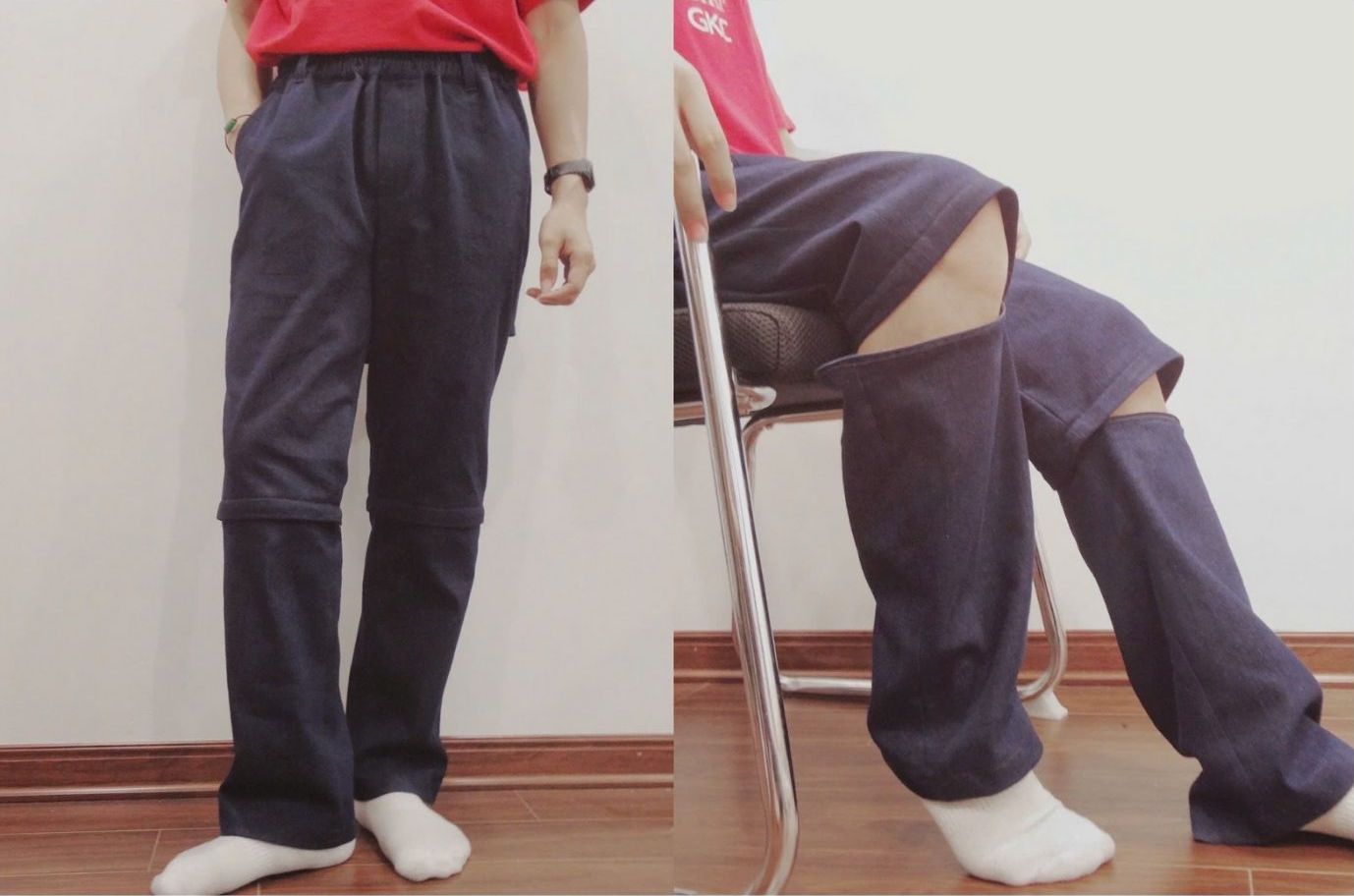
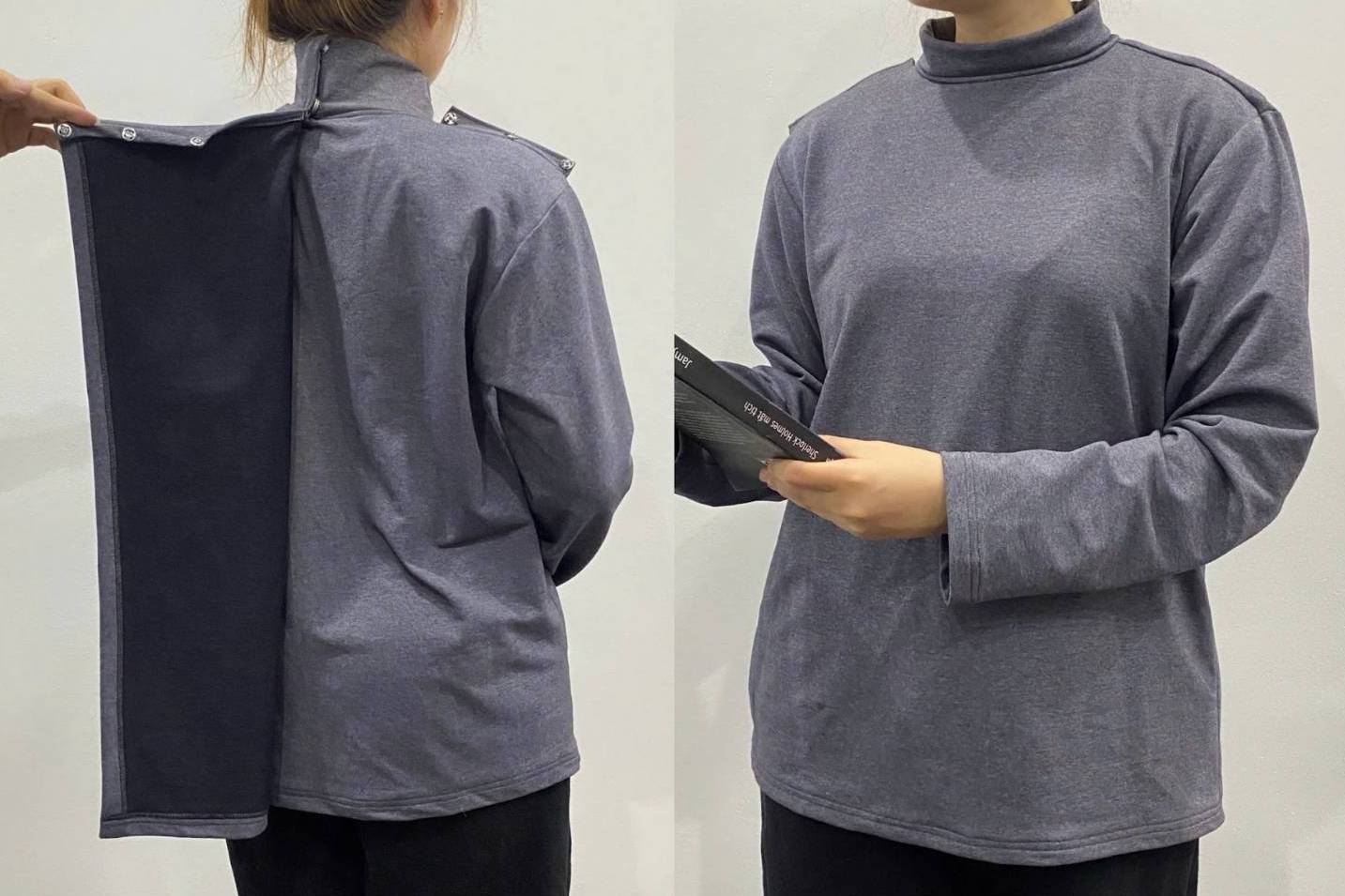
Besides the convenience factor, users also expressed their desire for aesthetics. According to the research group, people with disabilities not only need to "wear it" but also want clothes to express personal style. From there, designs are developed in a youthful, modern direction but still ensure the function of supporting daily life.
Van Dat added that the group is currently cooperating with some domestic garment factories to process experimental products, and at the same time continue to complete the design based on actual feedback. "Not stopping at the academic scope, the group orients the commercialization of products after completing the project, with a plan to distribute through online channels and cooperate with organizations, medical facilities, and centers to support people with disabilities" - Van Dat expressed.


