
No one can forget the scared eyes of the women and children who have just been rescued from human trafficking. They return but are no longer intact - causing physical damage, psychological trauma, and obsession that lasts for months, even years.
Behind each victim is a broken story, an unfinished dream, a life that needs support. And to support them, no individual or agency can do it alone. Only when the cross-sectoral connection is operated smoothly will victims have the opportunity to truly recover.
According to Associate Professor, Dr. Bui Hoai Son - Standing Member of the Committee for Culture and Education, it is from this practice that the Law on Prevention and Combat of Human Trafficking has set a fundamental requirement: "Preventing and combating human trafficking cannot be the task of a specialized agency, but must be the common responsibility of the entire political system, the community and society."
Only when the cross-sectoral connection is operated smoothly will victims have the opportunity to truly recover.
reality shows that victims of human trafficking do not only need to be rescued from detention or exploitation. They need to be examined and treated medically, psychological therapy, legal advice, reissued identification documents, protected from the risk of revenge, learn culture or a trade to start their lives.
Each need is associated with a different industry, and if only one link is missing, the entire support process can break down. This is the reason why the cross-sectoral coordination model is considered a mandatory standard in helping victims of human trafficking.
In that model, the police take on the role of receiving, verifying and ensuring safety; the health sector is responsible for assessing the needs and connecting services, health care and therapy; the education sector supports children to return to school; the Women's Union and grassroots authorities accompany the community; while non-governmental organizations supplement resources and specialized services that the locality lacks.
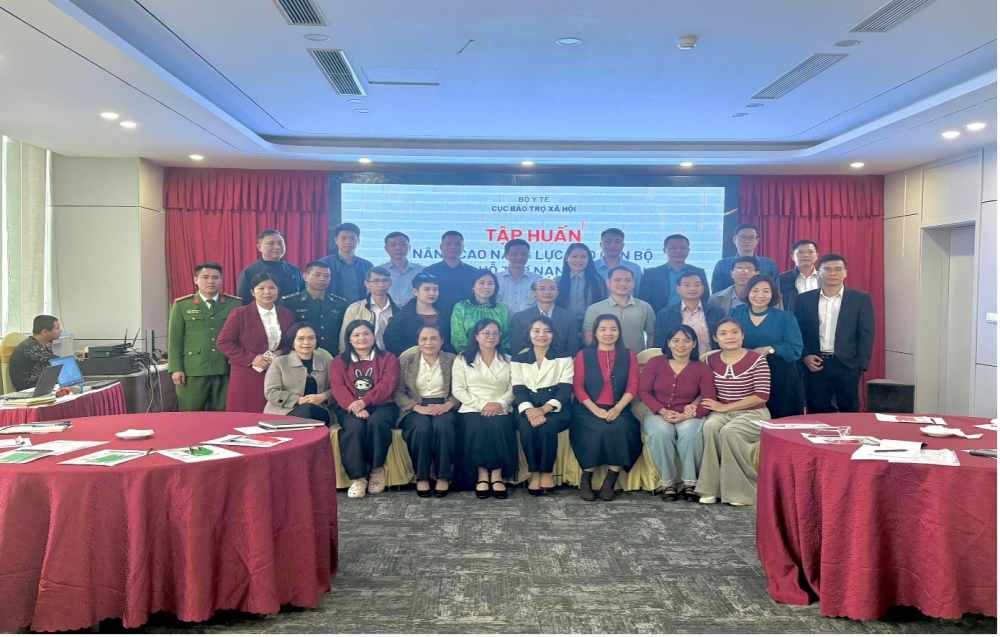
The process of supporting a victim often begins with receiving initial information and emergency protection. In the first hours, the coordination between the police, border guards and local authorities had survivalent meaning, because with just a delay, the victim could fall into a state of panic or be threatened again.
When safety has been guaranteed, social workers conduct an assessment of the level of psychological and physical damage and the risk of being bought and sold again. This is a period that requires high expertise, because many victims are still scared, have difficulty sharing or cannot identify their own needs.
From the assessment results, the interdisciplinary group agreed on a support plan: people in need of medical treatment were immediately transferred to a medical facility; people in need of serious injuries were given psychological counseling services; those who did not have documents were supported to re-work; children were sent back to class; adults were advised on vocational training or finding a job. This process not only ensures seamlessness but also helps victims avoid falling into information space and feeling abandoned.
In recent years, the multi-sectoral coordination mechanism has had many positive innovations. Many localities have implemented an interconnection process, helping agencies connect information more quickly and avoiding the situation of shirking responsibility. Building a data sharing system between the police, health care and organizations contributes to limiting victim omission and increasing transparency. Interdisciplinary working groups meet periodically to review each case, update progress and adjust support when necessary.
Along with that, the capacity of cadres at the grassroots level is improved through training courses on victim identification, listening skills, psychological support and handling sensitive situations. Thanks to these innovations, the speed of case handling has been significantly improved, service quality has been more stable and the victim's trust in the support system has also been strengthened.
In addition to the efforts of authorities, families, communities and non-governmental organizations play an irreplaceable role. The family helps the victim regain the feeling of love and acceptance, the community does not discriminate to support them in integrating, while non-governmental organizations provide long-term support packages from psychotherapy, cultural learning, vocational training, creating livelihoods to legality, and filling the gaps in the public system.
The effectiveness of the multi-sector model is assessed based on the synchronous, transparent coordination, capacity and ethics of the staff, along with the ability to ensure long-term finances, to help victims not only escape immediate dangers but also rebuild their lives, have jobs, life skills and hope, avoid falling back into the spiral of human trafficking.
cross-sectoral connectivity is not only a professional requirement but also demonstrates a humane system where all agencies, organizations and communities join hands to protect the disadvantaged. However, many localities still have difficulties in terms of resources, facilities, social prejudices and not-so-ough inter-sectoral coordination.


