
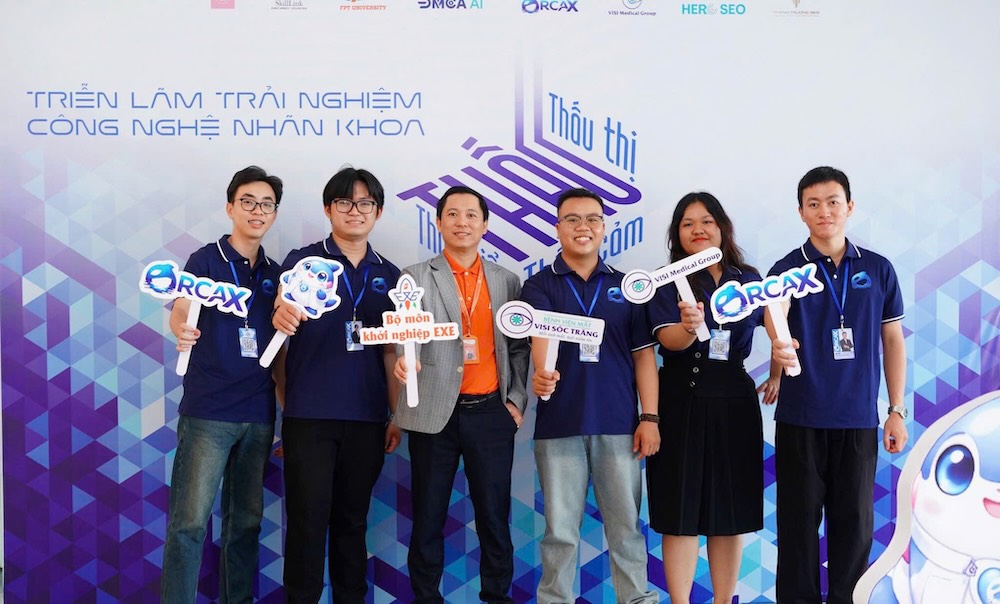
The project is developed by a group of students from FPT University Can Tho (in coordination with other units) focusing on solving practical needs in the field of ophthalmology - one of the majors under rapidly increasing pressure in Vietnam.
According to current statistics, refractive error is the most common eye disease with more than 14 million people affected, of which the rate in urban students can reach 50 - 75%. Cataracts are the leading cause of blindness, accounting for about 74% of blindness cases with about 150,000 new cases each year.
Meanwhile, glaucoma, the second leading cause of blindness, is particularly dangerous when about 90% of patients are not detected at an early stage.
The above figures reflect an alarming increase in eye diseases, affected by population aging and modern lifestyles.
In that context, the development student group has built the OrcaX project as a comprehensive digital experience ecosystem, connecting technology with the journey of proactively learning and taking care of the community's vision.
The implementation team includes students Nguyen Thanh Truong, Le Ba Hai Truong, Nguyen Hoang Ngoc Ngan, Luu Nguyen Khang Hy and Nguyen Duc Thang. The project received professional guidance from Mr. Nguyen Trong Luan, Head of the Department of Entrepreneurship, FPT University and Mr. Nguyen Tien Duc.
The group conducted a field survey at VISI Soc Trang Eye Hospital and the VISI Medical Group system.
According to shares, the highlight of "360-degree Hospital in the digital age" lies in the ability to integrate diverse experiences on a single platform. Users can visit the hospital space through 360-degree technology with detailed audio instructions, thereby clearly visualizing the facilities and functional areas before directly coming for examination.
This system also integrates basic vision testing tools such as artificial intelligence refractive measurement modules and color blindness tests, supporting initial screening and early identification of some abnormal signs.

The platform also develops interactive content such as mini-games about vision nutrition and an eye knowledge library. This approach helps medical information become close, concise, accessible and suitable for the habit of using digital content, especially in young users.
Student Thanh Truong said that in the coming period, the group will continue to improve the content, optimize the user experience and expand the platform's interaction capabilities.
With a consistent orientation of putting patients at the center, the "360-degree hospital of the digital age" is expected to become a typical model for the trend of digital health transformation, being intuitive, friendly and accessible in communication and community vision health care.


