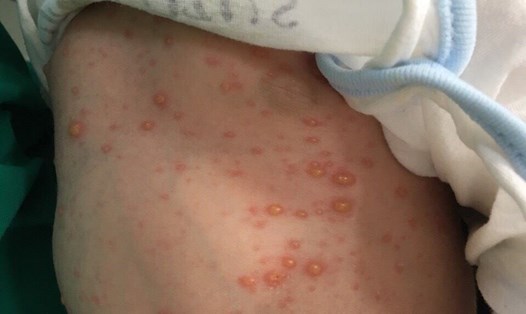
A 6-year-old boy in Lai Chau is being actively treated at the National Hospital for Tropical Diseases in critical condition after contracting chickenpox. From water blisters that seemed normal, the disease progressed rapidly to severe respiratory failure, pneumococcal sepsis and serious blood clotting disorders.
According to doctors, the child started the disease about 6 days before being admitted to the hospital with symptoms of continuous high fever, blisters all over the body. The family took the child to a local medical facility for treatment for 2 days, but the condition did not improve. The blisters appeared densely, bleeding in many locations, bleeding with signs of respiratory failure.
When transferred to the National Hospital for Tropical Diseases, the child was in a state of respiratory failure and had to be supported with oxygen breathing. However, the clinical progression worsened very quickly. Only about 2 hours after admission, the child no longer responded to normal oxygen breathing, and was forced to switch to non-invasive ventilation.
At about 3 am the next morning, the child was very agitated, breathing rapidly, SpO2 dropped, phlegm accumulated, so doctors had to perform endotracheal intubation and switch to invasive mechanical ventilation. In less than half a day, from a chickenpox case with respiratory complications, the child fell into a critically serious respiratory failure.
Dr. Nguyen Thanh Le, Deputy Head of the Department of Pediatrics, said that the child was hospitalized with a series of serious complications such as bleeding in blisters, nosebleeds, gastrointestinal bleeding, severe blood clotting disorders and rapid blood loss.
Tests showed very severe inflammation, in which the Procalcitonin index increased by over 100, thousands of times higher than the normal level below 0.05. Blood culture results determined that the child had pneumococcal sepsis on the background of chickenpox.
After 2 days of intensive treatment with antiviral drugs combined with high-dose antibiotics, the bleeding situation was initially controlled, blood clotting indicators gradually improved and the inflammatory index tended to decrease. However, the patient still had a continuous high fever and was assessed as very severe.
By the 4th day of treatment, the child continued to have a high fever, inflammatory indicators increased again, showing that the disease was developing complicatedly and needed close monitoring.
According to Dr. Le, many parents still think chickenpox is just a skin disease with a few simple blisters. In fact, if skin lesions are not properly cared for, bacteria can invade and cause superinfection, leading to sepsis, pneumonia, blood clotting disorders and severe respiratory failure.
In this case, chickenpox progresses severely at the same time as pneumococcal sepsis, making the child's condition particularly critical," Dr. Le emphasized.
Doctors recommend that when children have symptoms of fever and blister blisters suspected of chickenpox, families need to take them to the doctor early for diagnosis and timely treatment. Proper skin care, keeping blisters clean, avoiding scratching and avoiding breakage play an important role in preventing superinfection.
In addition, chickenpox is a disease that can be prevented with vaccines. Children should be vaccinated against chickenpox from 12 months of age to reduce the risk of disease and limit severe complications.