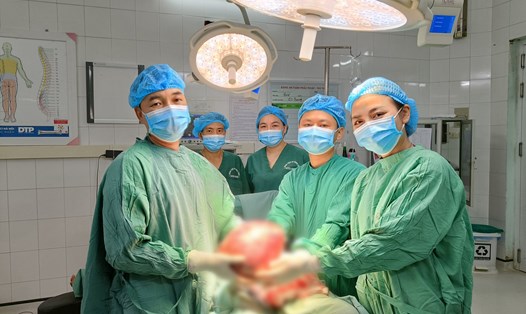
According to information from the family, patient N.T. D (13 months old, residing in Phu Tho) began to experience swelling in the left scrotum about 2-3 weeks before being admitted to the hospital. When touched, it was a solid, solid mass, but the child did not have a fever, did not cry abnormally, so the family continued to monitor at home.
After examination at a local medical facility, the child was diagnosed with a left testicular cyst. However, in just one week recently, the scrotum area swelled abnormally quickly, causing the family to worry and take the child to the National Hospital for Tropical Diseases for examination.
BSCKII Tran Thuong Viet - Head of Urology and Andrology Department, Central Tropical Diseases Hospital said that at the time of admission, the patient had a swollen mass in the left inguinal region, which could be pushed up. Ultrasound results recorded that the edge of the left testicle had a mass of about 2 x 3 cm in size, firm density, and painless pressure. Based on clinical and paraclinical manifestations, the child was diagnosed with left testicular wart cyst and indicated for surgery.
However, the unexpected situation occurred right after the surgery. As soon as it opened, we noticed that the patient's left testicle was abnormally large, about 3 times the normal size and had a strange color. Recognizing that it was likely malignant damage, the surgical team immediately performed a biopsy.
Rapid biopsy results showed images of carcinoma - a form of cancer originating from epithelial cells, with strong invasive potential. Right in the operating room, doctors urgently consulted and decided to completely remove the left testicle to prevent the risk of metastasis to the remaining testicle and other organs.
After more than an hour of surgery, the surgery was successful. One day after surgery, the patient was awake, breastfed well, the surgical wound was dry and progressed stably.
Test results determined that the patient had malignant germ cell tumors. This is a type of tumor originating from reproductive cells, which can spread to many organs if not detected and treated promptly.
Currently, the child patient is gradually recovering and continues to be closely monitored to develop a suitable supplementary treatment regimen to ensure long-term development.