
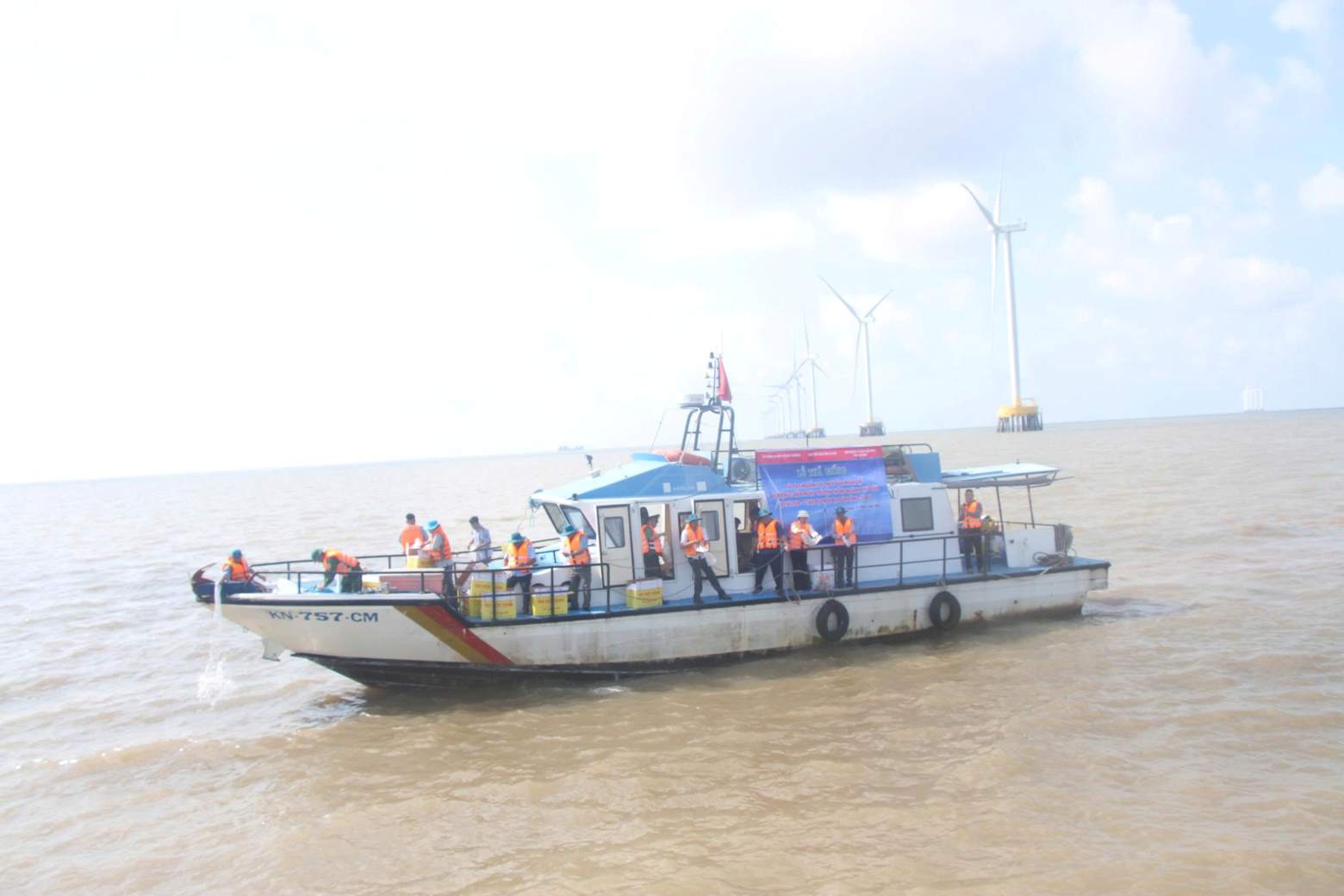
On March 31, at Ganh Hao estuary, the Department of Agriculture and Environment of Ca Mau province coordinated with the People's Committee of Ganh Hao commune to organize the release of seedlings to regenerate aquatic resources in water areas.
At the ceremony, representatives of units, businesses and youth union members released more than 2 million crab shrimp seeds into the Ganh Hao estuary area. The seed source was mobilized from businesses, seed production facilities and aquaculture feed inside and outside the province for support.
According to Mr. Pham Van Muoi - Deputy Director of the Department of Agriculture and Environment of Ca Mau province, the activity aims to propagate and raise awareness and responsibility of organizations and individuals, especially the fishing community in protecting, regenerating and developing aquatic resources; contributing to the implementation of the goal of sustainable fisheries industry development.
Along with activities at Ganh Hao, the 2026 seed release program will also be held in the sea area of Hon Da Bac National Historical Relic Area (Da Bac commune) on April 1st, with an expected additional release of more than 1.2 million black tiger shrimp seeds.
The Department of Agriculture and Environment requires the release of seeds to comply with technical procedures and select suitable subjects for each water area. Localities need to mobilize people not to exploit aquatic products in the released area for a certain period of time to create conditions for seedlings to grow and develop.
Ca Mau is a locality with a diverse ecosystem and abundant aquatic resources. However, in the past, this resource has been under a lot of pressure due to overexploitation, the use of destructive fishing gear, environmental pollution and climate change.
Faced with that situation, the province has implemented many solutions, including the implementation of Directive No. 17-CT/TU of the Provincial Party Committee Standing Committee on strengthening leadership in preventing destructive seafood exploitation. Functional sectors also strengthened handling of violations, promoted propaganda and mobilized people not to use electric shock, explosives, and toxic substances in exploitation.
Thanks to that, the work of protecting aquatic resources in the area has achieved many positive results. People's awareness has been raised, the situation of destructive exploitation has decreased significantly; aquatic resources have been gradually restored, contributing to protecting the ecosystem, sustainable economic development and stabilizing livelihoods for coastal people.
