
On March 28, the Department of Agriculture and Environment of Lam Dong province organized a ceremony to release seedlings to regenerate aquatic resources.
The working delegation released 1.1 million seedlings at Hon Cau Marine Protected Area (Vinh Hao commune) and 300,000 seedlings at Ta Dung National Park. These are all areas of important significance in biodiversity conservation and aquatic ecosystem restoration.
The funding source comes from mobilizing socialization of associations, unions, and seafood enterprises in the province.
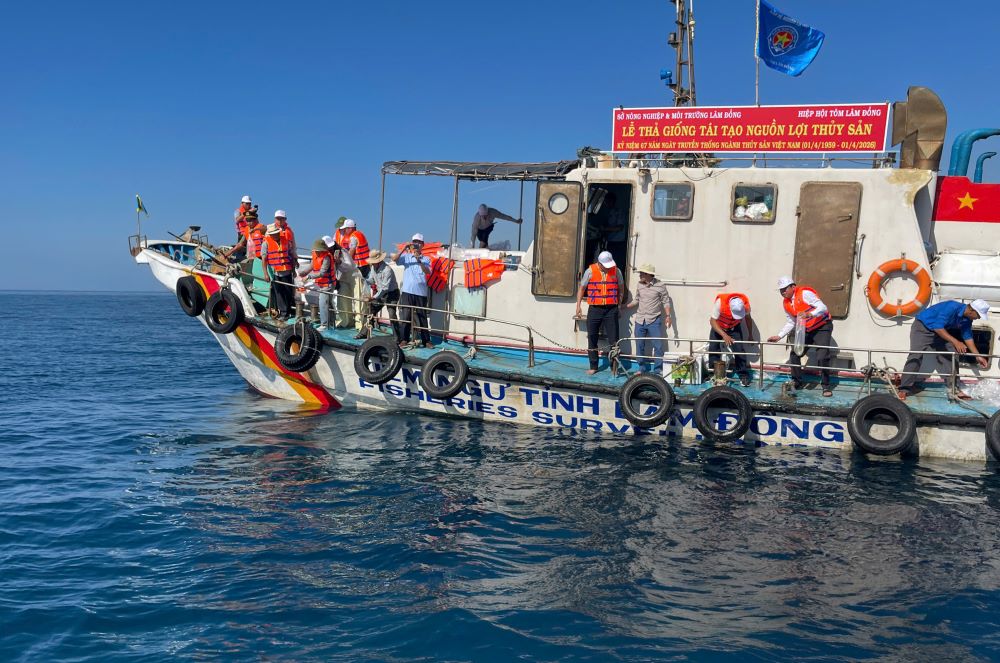
The released seeds are high-value aquatic species, suitable for the natural environmental conditions of each water basin. Supplementing seed sources contributes to regenerating the population, increasing natural reproductive capacity, thereby increasing future exploitation reserves.
Seed release activities are maintained annually by the Department of Agriculture and Environment, not only meaning restoring aquatic resources but also contributing to raising community awareness about protecting the ecological environment.
Through this, people, especially fishermen, gradually change their exploitation habits towards sustainability.
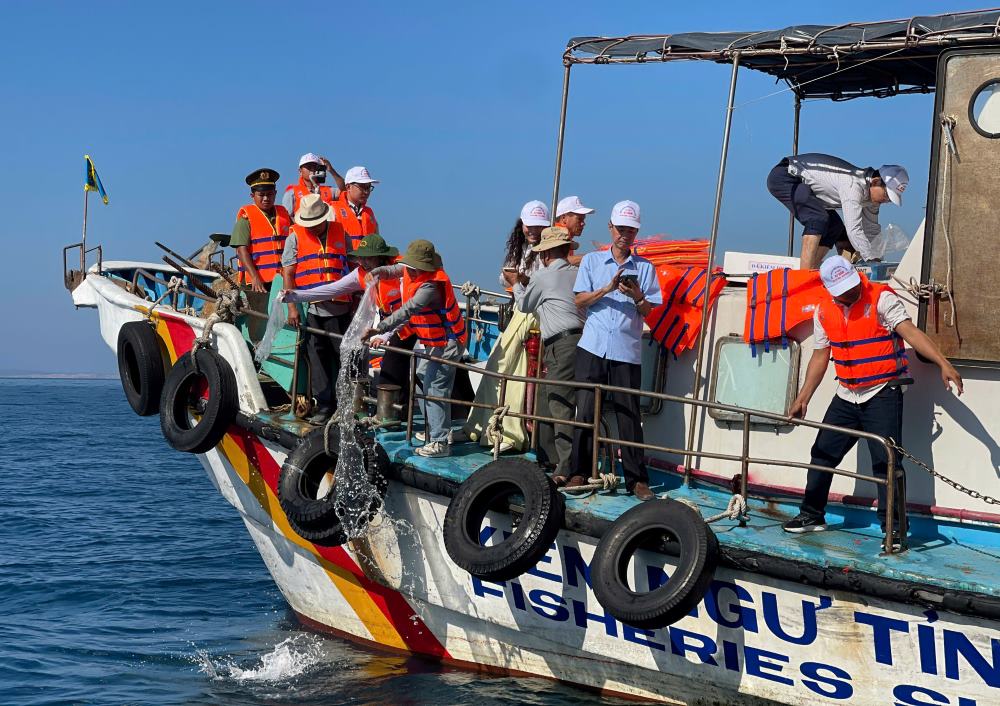
According to the Department of Agriculture and Environment of Lam Dong province, the whole province currently has 14 communes, wards, coastal special zones and 24 communes, wards, special zones with fishing boats, with over 8,000 fishing boats and more than 40,000 fishermen directly participating in seafood exploitation. Fishing continues to play an important role in the development of the local marine economy.
In 2025, the province's seafood exploitation output reached 252,530 tons, aquaculture output reached 28,727 tons, and export turnover reached 250.46 million USD. These figures show the great potential of the industry, but also pose urgent requirements for protecting and regenerating resources for sustainable development.
At the ceremony, leaders of the Department of Agriculture and Environment of Lam Dong province said that in the past time, the department has coordinated with functional sectors and local authorities to strengthen the management and protection of aquatic resources.
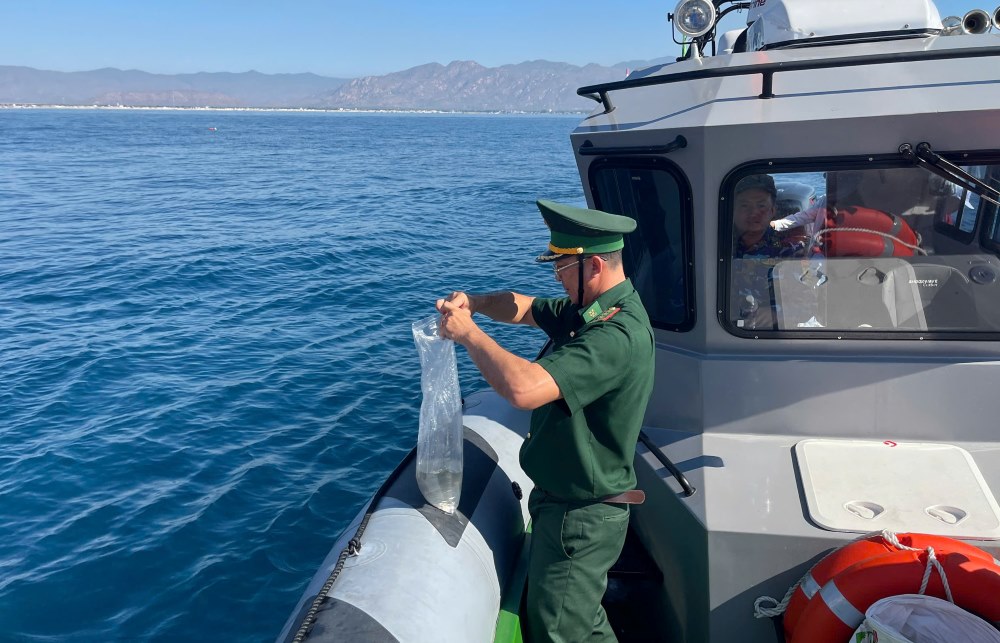
Many synchronous solutions have been implemented such as controlling exploitation activities, strictly handling violations, and promoting ecosystem restoration models such as artificial reef release, and supplementing seed sources in natural water areas.
In addition, propaganda work is focused on to raise people's awareness of law compliance in seafood exploitation. Fishermen are encouraged not to use destructive exploitation methods such as explosives, electric shock, toxic substances or prohibited fishing gear.


