
With the goal of controlling emissions at source and reducing environmental pollution, Hanoi is promoting the development of green transportation, considering this as an important solution to improve the quality of life and build a civilized and modern Capital.
Public transport plays a core role
Rapid urbanization makes Hanoi face many environmental challenges, especially air pollution. Many studies show that transportation is one of the main sources of emissions, creating PM2.5 fine dust, NOx, CO and greenhouse gases.
With millions of vehicles circulating every day, especially in areas that are frequently congested, emissions from motor vehicles not only reduce air quality but also directly affect people's health. Faced with this situation, controlling emissions right from the source is identified as a fundamental and sustainable solution.
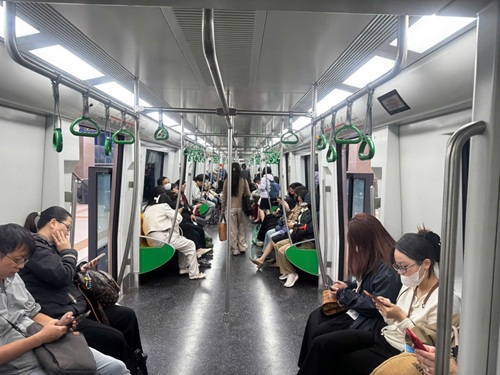
Identifying public transport as the pillar of the urban transport system, in recent years Hanoi has focused on investing in developing a modern and multimodal public passenger transport network.
The commissioning of urban railway lines has created an important shift for Hanoi's traffic. The Metro not only contributes to reducing pressure on ground traffic but also helps cut greenhouse gas emissions. An electric train can transport a number of passengers equivalent to thousands of motorbikes, contributing to energy saving and reducing environmental pollution.
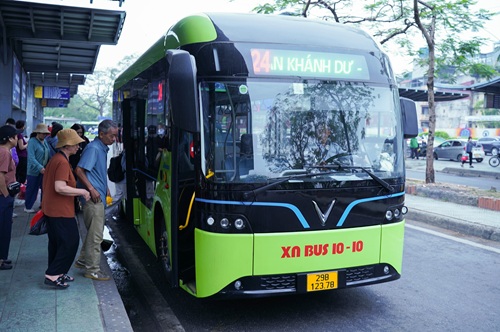
In addition, the bus network is also gradually shifting to using clean energy. Many electric bus routes have been put into operation, gradually replacing vehicles using fossil fuels.
Hanoi is also researching and implementing low-emission zones to limit polluting vehicles and encourage people to use environmentally friendly modes of transportation.
According to Dr. Hoang Duong Tung, Chairman of the Vietnam Clean Air Association, to gradually reduce people's dependence on personal vehicles, the city needs to synchronously invest in charging stations, battery exchange points, transit parking lots and have appropriate support policies.
Support policies create motivation for transformation
On the morning of June 2nd, within the framework of discussions on the development of the Capital, the draft Resolution stipulating policies to support the conversion of vehicles to clean energy received much attention.
According to the draft, the city plans to allocate about 6,423 billion VND from the budget to support people and businesses to convert vehicles.
Residents permanently or temporarily residing for two years or more in the Ring Road 1 area and policy beneficiaries when switching to using electric vehicles will be supported with 20% of the vehicle value, up to 5 million VND.
For poor and near-poor households, the support level is up to 100% of the vehicle value (maximum 20 million VND) and 80% of the vehicle value (maximum 15 million VND) respectively. In addition, people are also supported from 50-100% of the fee for issuing registration certificates and license plates when converting to green vehicles.
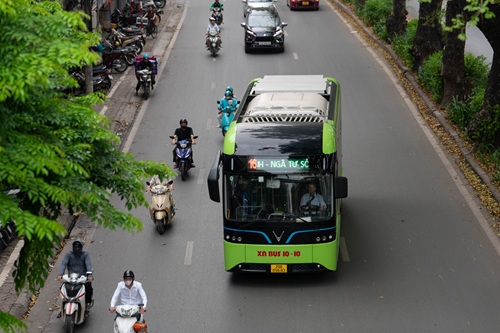
Transport businesses will also enjoy support mechanisms to implement the vehicle conversion roadmap and invest in appropriate technical infrastructure.
Experts believe that the green transportation transition process needs synchronization between infrastructure, policies and changing community awareness. When the public transportation system is convenient, safe and has reasonable costs, people will have more motivation to choose sustainable transportation methods.
Solving the traffic problem not only aims to reduce congestion but also contributes to improving the quality of the living environment, reducing urban noise and protecting community health. With drastic steps, Hanoi is gradually realizing the goal of building a green city and sustainable development in the future.


