
On December 19, the Vietnam Association of Vocational Education and Social Work held a Congress of Delegates for the 4th term (2025 - 2030).
Speaking at the opening of the congress, Dr. Phan Sy Nghia - Chairman of the Vietnam Association of Vocational Education and Social Work - affirmed that the 2020-2025 term is a turning point with an important mark for the Association, typically the change of organization name.
Repositioning the brand is not only a change in title, but a strong commitment to taking vocational education as the core focus.
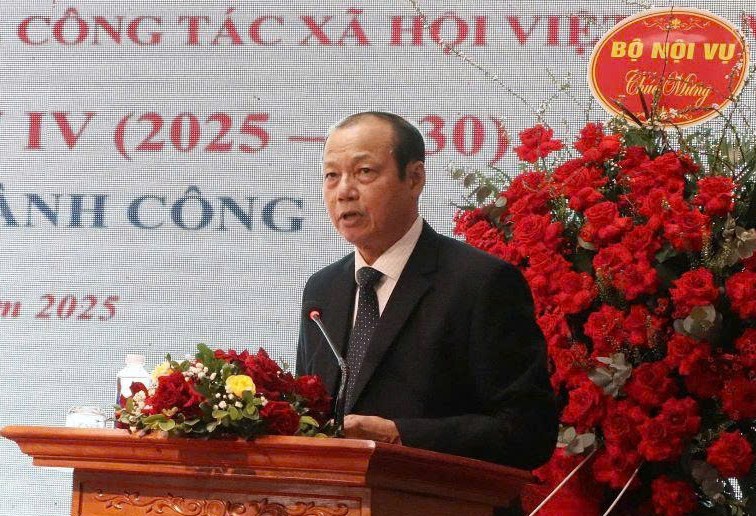
Regarding the direction and tasks for the fourth term (2025-2030), Dr. Phan Sy Nghia emphasized: "The Association aims to become a solid strategic bridge between the State - Schools - Enterprises; focus on standardizing international training and digital transformation to provide high-quality human resources in the new context".
Presenting a speech at the Congress, Mr. To Xuan Giao - Head of the Cooperation Connection Committee, Deputy Head of the Association Representative Office in Ho Chi Minh City - commented: In the context of the digital economic era, the education sector and social work are facing unprecedented challenges.
From the above situation, Mr. To Xuan Giao proposed a group of practical solutions to improve the Association's operational capacity. In particular, the focus is on the development strategy of the research and innovation center system.
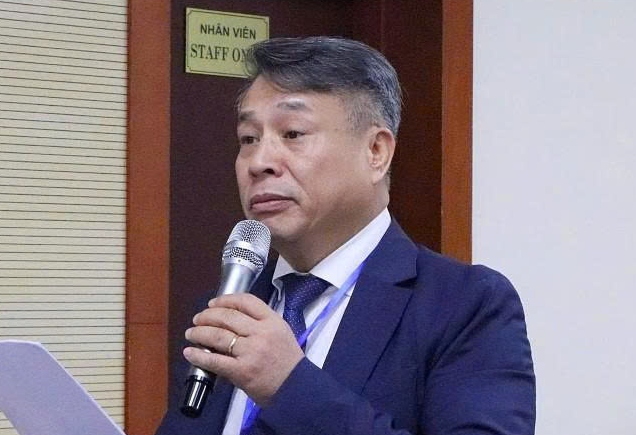
Mr. To Xuan Giao emphasized that in the coming time, it is necessary to prioritize the construction of centers for industry simulation, analysis of labor market data and support for startups.
In particular, the integration of AI Lab rooms, virtual reality (VR) and augmented reality (AR) is an urgent step.
"This system not only modernizes infrastructure but is also a lever to improve the interaction and effectiveness of practical training, helping learners immediately adapt to the digital working environment" - he said.
Also at the conference, Associate Professor, Dr. Bui The Dung - vocational education expert - affirmed: Developing vocational education is one of the four core pillars, contributing to improving the quality of human resources, serving industrialization - modernization, socio-economic development, closely linked with the National Labor Strategy.
At the same time, he proposed to build a flexible interconnection system between primary levels and different vocational training programs.
Experts emphasized the model of organic linkage between schools and businesses. This is considered a prerequisite to ensure the quality of human output, while ensuring the rule of law in the implementation of the Law on Vocational Education.
