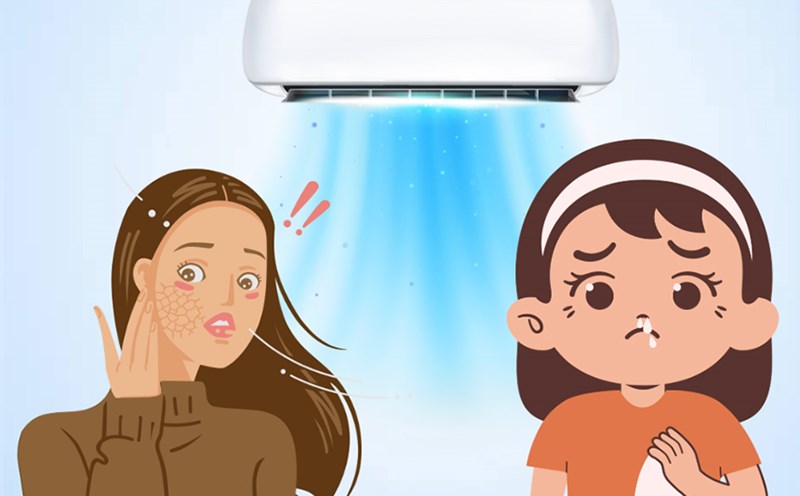
Nasal bleeding is often thought by many to only occur in winter due to dry weather or colds. However, this condition can also appear in summer, especially in people who are often sitting in air-conditioned rooms. Cold and dry air from air conditioners can cause the nasal mucosa to lose moisture, thereby increasing the risk of nasal bleeding.
Dr. Manish Munjal, an ENT doctor at Fortis Hospital (Ludhiana, India) said that air conditioning works by reducing humidity in the air, making the environment in the room drier and easily affecting the nasal mucosa.
Inside the nasal mucosa, there are many small blood vessels located close to the surface. When exposed for a long time to dry air from the air conditioner, the nasal mucosa can become dehydrated, dry, and with small cracks. Effects such as rubbing your nose or blowing your nose hard at this time can break blood vessels and cause nosebleeds.
Young children, people with allergic rhinitis or sinus disease are more likely to experience this condition. In addition, sitting in air conditioning continuously for a long time or keeping the temperature too low also makes the nasal mucosa easily irritated.
To limit the risk of nosebleeds when using air conditioning, you should maintain a moderate temperature instead of keeping it too cold. Users can also use a humidifier to add moisture to the air, especially at night or when you have to stay in an air-conditioned room for a long time.
In addition, nasal physiological saline spray can help moisturize the nasal mucosa and reduce dryness. In some cases, a thin layer of vaseline or suitable moisturizer can be applied inside the nose to limit mucosal cracking.
If you have a nosebleed, the patient should sit up straight, slightly bow their head forward and gently squeeze the soft tissue of the nose for about 10 minutes to stop the bleeding. Do not tilt your head back because blood may flow back into your throat.
According to Dr. Manish Munjal, most cases of nasal bleeding due to air conditioning are not serious and can improve on their own. However, if this condition occurs frequently, lasting more than 20 minutes or accompanied by other abnormal signs, patients should see a doctor to check for potential causes such as hypertension, blood clotting disorders or nasal sinus disease.