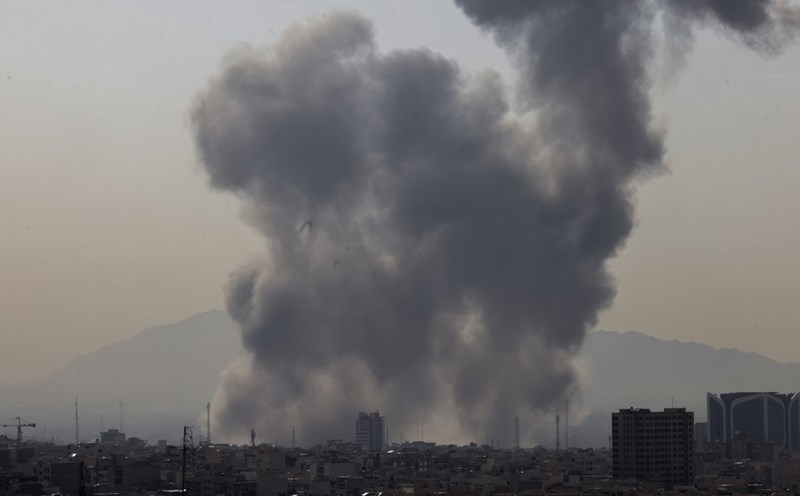
According to international news agencies, Iran's telecommunications network has been completely paralyzed after large explosions that shook the capital's center. International network surveillance organizations recorded a nearly 100% decrease in Internet traffic in Iran, causing widespread disruptions to calls, texting and data access.
Widespread signal loss occurred instantly in Tehran, Isfahan and Shiraz, coinciding with the time the missile hit key areas, including the area near the office of Supreme Leader Ayatollah Ali Khamenei. Security experts believe that the collapse of the communication system is a key part of the "preemptive strike" tactic.
The campaign took place immediately after US President Donald Trump appeared in a video, confirming that the US had begun a "major operation in Iran". Mr. Trump affirmed that this was a necessary action to prevent Tehran from developing long-range missiles capable of reaching US territory.
On the US side, this air strike was deployed with the participation of F-35 interceptor fighter squadrons and warships of the fleet stationed in the area. The targets targeted by the US include the S-300 air defense system, ballistic missile depots and nuclear command infrastructure.
The US Department of Defense said the operation aims to "demilitarize" energy sources that directly threaten the security of the US and its allies. Black smoke rising from military bases around Tehran has confirmed the intensity of attacks from the US Air Force.
At the scene, phone signal loss is causing great chaos as people cannot contact relatives or update rescue information. Emergency coordination systems, online banking and essential applications are all out of operation. Main roads in Tehran have been blocked by security forces, while neighboring Iraq has also announced the closure of its airspace to avoid risks.
The combination of physical attacks and communication paralysis has pushed Tehran into a completely passive position. Currently, the Iranian government has not been able to issue an official response due to network disruption, while the Israeli and US militaries continue to maintain military pressure on the ground.
This is considered the largest telecommunications disruption and military attack in the Middle East since the beginning of 2026, putting the region at risk of a full-scale conflict outbreak.