The first time revealing the mystery of the "Thanh Cat Tu Han" wall

Song Minh |

A group of Israeli researchers have shed light on the mysterious wall of "Thanh Cat Tu Han", often considered a part of the Imperial Academy.

Research on the structure of this wall was first published in the academic journal Antiquity on June 8.

Located in the center of the vast plains of Mongolia's steppe, the 737 km long training camp that was previously believed by archaeologists to have been built to protect local people from the city of Cat Tu Han - a Mongolian province and founder of the Mongolian empire after unifying the tribes in northeastern Asia in 1206.

However, Professor Gideon Shelach-Lavi, Israel Israel Israel University Jerusalem, explained to the Jerusalem Post that the construction of the wall dates back to before the 13th century and some other factors suggest that the structure of the city may not have been a military fortress.

"China's Great Wall actually consists of many walls," Shelach-Lavi said. The wall that we consider in this very specific case is for many reasons. It is located further north, deep into a residential area and is not connected in any way with other parts of the Imperial Academy. Moreover, it is only briefly mentioned in historical records and no dynasty has assigned construction. The question we ask is who built it and why," said the professor.

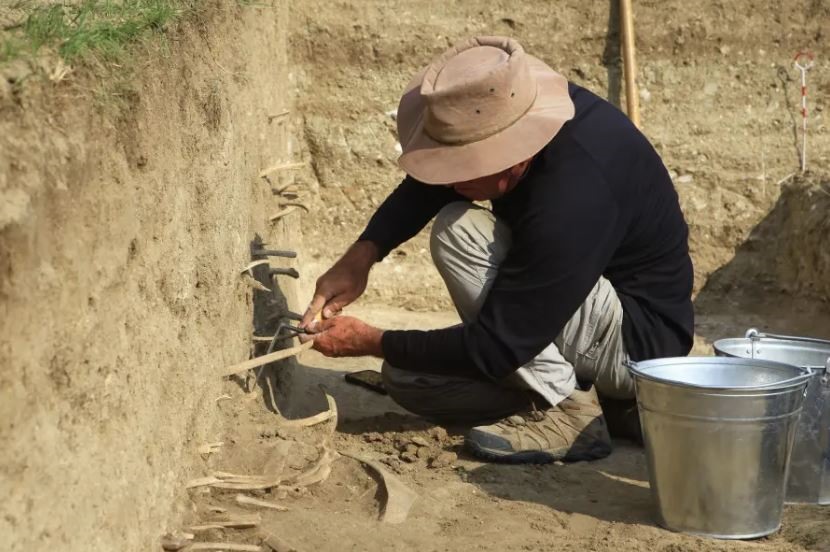
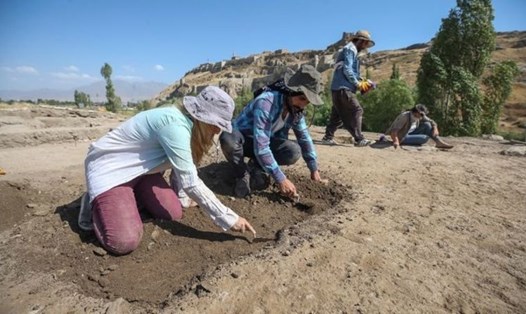
Shelach-Lavi has worked in archaeological excavations in China since the 1990s. Since 2018, he and other experts from the University of Israel, as well as some Mongolian and American colleagues, have focused on this project, combining satellite imaging analysis and non-photo with ground work.

The research team was able to determine that the structure could have been built by the Liu Dynasty, also known as the Qian Dan - a feudal dynasty founded by the Qian Dan in Chinese history, ruled the area from the mid-10th to the 12th centuries, hence earlier than the Imperial Citadel of Qianxi.

scholars have previously thought that the wall was built to prevent the invasion of outside troops. "The wall is probably about two meters high. Furthermore, we have discovered dozens of connected structures at lower altitudes. Therefore, this system does not seem suitable for defensive purposes. Instead, it is probably used to control people and livestock, preventing them from wandering to other areas," the professor pointed out.

Along the wall about 1m above ground - where some of the best preserved parts are today - researchers also discovered metal artifacts and pottery, but in very scarce quantity.

"For this reason, we believe that the construction of the above-mentioned citadel section could only take about 2-5 years, with about 200,000 workers" - the professor said.

Although researchers will not be able to return to the area for a new mining season in 2020 due to the COVID-19 pandemic, they have recently received a grant to ensure research for at least 5 years.

Song Minh
RELATED NEWS

Ho Chi Minh City fines many unlicensed medical examination and treatment facilities

|

On March 9, the Ho Chi Minh City Department of Health said that it had sanctioned many establishments operating in the health sector for detecting a series of violations during inspections.

Hotline at gas stations and the story of market transparency

|

Da Nang Market Management Department has posted notices of hotline phone numbers at all gasoline and oil business stores in the city.

Poisoning case in Vung Tau: 28/51 specimens positive for Salmonella bacteria

|

Ho Chi Minh City - The results of analyzing samples related to the suspected banh mi poisoning case in Vung Tau, show that 28/51 samples tested positive for Salmonella bacteria.

Waste incinerators stop operating, garbage accumulates every day in 3 island communes in Vinh Long

|

Vinh Long - Dong Hai waste incinerator stops operating, waste from three island communes rushes to the collection site, risk of overload with a capacity of about 28,000m3.

The situation of 4-legged trucks queuing to pour diesel oil for storage has appeared

|

According to the Energy Security Working Group, in some provinces, there is a phenomenon of 4-legged trucks queuing to fill up diesel oil at Petrolimex plants for storage.

US will focus on attacking to clear the Strait of Hormuz, reducing gasoline prices

|

Tensions in the Middle East disrupt energy transportation, forcing the US to prepare for strong actions to restore oil circulation.

Phát hiện khảo cổ kinh ngạc hài cốt 2.800 năm tuổi

Song Minh |

Các nhà khảo cổ học Pháp đã tìm thấy hài cốt 2.800 năm tuổi của một phụ nữ được phủ hạt thủy tinh xanh và đeo khóa thắt lưng bằng đồng.

Tổng thống Mông Cổ bị cách ly 14 ngày sau chuyến thăm Trung Quốc

Hải Anh |

Truyền thông nhà nước Mông Cổ đưa tin, Tổng thống Battulga Khaltmaa và các quan chức chính phủ khác đã được cách ly 14 ngày khi trở về nhà sau chuyến thăm Trung Quốc.

Chánh án tòa án Mông Cổ nộp phạt "khủng" vì sàm sỡ tiếp viên hàng không

Thanh Hà |

Chánh án Tòa án Hiến pháp Mông Cổ được thả sau khi nộp phạt vì sàm sỡ một nữ tiếp viên hàng không Hàn Quốc hồi tháng trước.