
In the early morning of January 15, the Middle East sky witnessed unprecedented chaos when Iran suddenly issued a flight restriction order.
According to a statement from the US Federal Aviation Administration (FAA), Iranian airspace has been closed to most international flights for many hours. Although the ban was later partially eased, data from FlightRadar still recorded the scene of a series of commercial aircraft having to fly around, drawing strange flight paths on maps to avoid entering dangerous areas.
However, behind the chaos of the civil aviation industry are worrying military movements.
Sources confirm that the US has begun to withdraw personnel from some military bases in the Middle East region. This move was made immediately after Iran warned it would retaliate against US positions if Washington intervened militarily in Iran's internal situation. The personnel evacuation shows that the Pentagon is preparing for the worst-case scenarios, despite external diplomatic statements.
International observers noted inconsistent signals from the US side. In the context of the US military raising its defense level, US President Donald Trump again took steps to ease the situation in his speech on the evening of January 14. He confirmed that the suppression of protesters in Iran has ended, and affirmed that he will prioritize closely monitoring the actual developments instead of immediately deploying military measures as previously threatened.
The inconsistency between US political statements and military moves makes the regional situation unpredictable. In that context, international airlines are forced to put safety criteria first.
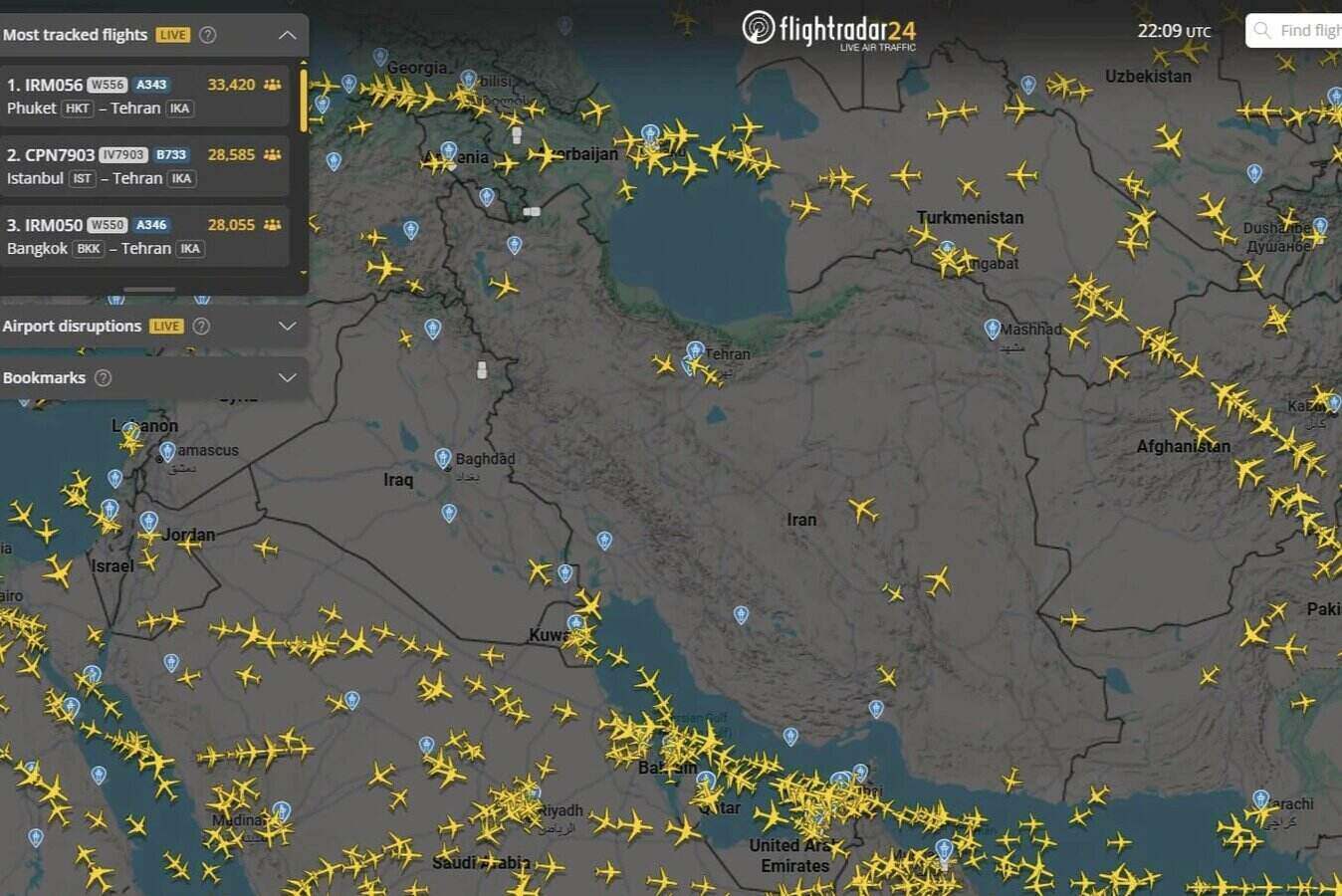
German corporation Lufthansa announced a temporary suspension of flights over Iran and Iraq indefinitely. Similarly, India's largest airline IndiGo and major regional airlines such as Emirates, Qatar Airways and Turkish Airlines also simultaneously canceled flights or adjusted routes, accepting to bear additional fuel costs to ensure passenger security.
The source of the current tension stems from the strong crackdown of the Iranian government on the wave of domestic protests, with estimated casualties of more than 2,500 people. Although there has been no direct armed conflict, Iran's airspace blockade combined with the US personnel evacuation move is seen by analysts as worrying signs of the risk of escalating instability.
Currently, Washington still maintains a ban on all US commercial aircraft operating in Iranian airspace.


