
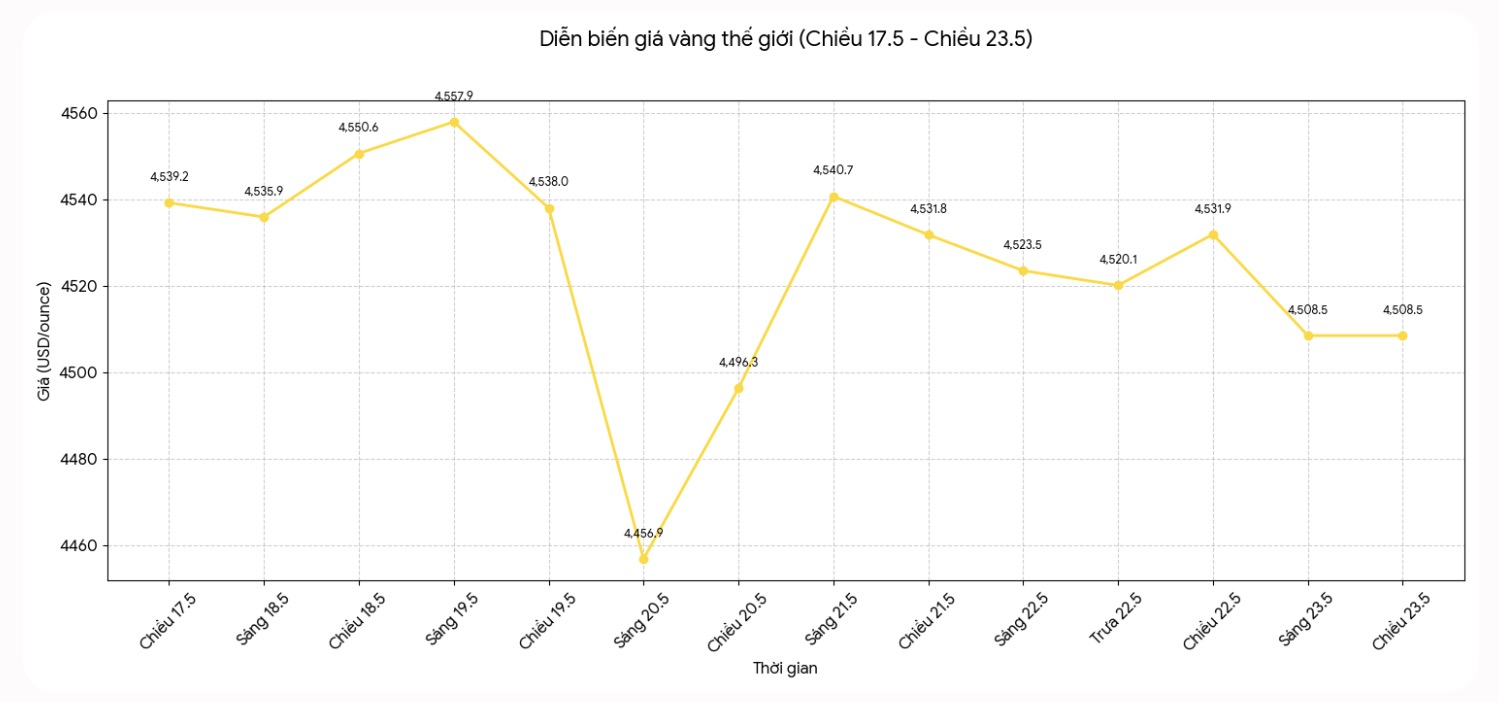
Gold and silver prices are undergoing a volatile accumulation phase as the global financial market faces pressure from strong US bond yields.
According to analysts, real yield growth is becoming the biggest barrier to precious metals. Currently, the yield of 30-year US Treasury bonds is maintained above 5%, while the yield of 10-year bonds is exceeding 4.5%. This development has significantly increased the opportunity cost of holding non-performing assets such as gold and silver.
The market is also starting to consider the possibility that the US Federal Reserve (Fed) will maintain a tight monetary policy for a longer time, even not excluding the possibility of continuing to raise interest rates.
However, analysts believe that the current picture is becoming more complicated. Increased bond yields not only reflect persistent inflationary pressure but could also be a signal that confidence in government bonds is weakening.
In the event that investors begin to doubt the "safety asset" role of bonds, gold and silver may regain their appeal thanks to their risk-free partnership characteristics.
Many experts warn that increased borrowing costs, prolonged inflation, high energy prices and worsening fiscal situation are pushing the market closer to systemic risks.
The sell-off in the bond market is still under control, but investor sentiment may change rapidly if yields continue to escalate.
For gold, analysts assess that the long-term outlook is still positive even though this precious metal may continue to be under adjustment pressure in the short term if the USD strengthens and real yields continue to increase.
Large banks are also increasingly mentioning the decline in efficiency of the traditional 60/40 asset allocation model. Instead, the trend of diversification according to the 60/20/20 model with a larger proportion for solid assets is being noticed.

Meanwhile, silver is assessed to have higher volatility but also possesses greater growth potential thanks to its dual role as both a currency and an industrial raw material.
If tensions in the bond market spread and weaken confidence in stocks as well as credit, silver may benefit similarly to gold, while being further supported by industrial demand and limited supply.
Analysts believe that although increased real yields are still the biggest obstacle to the precious metals market in the short term, these factors may become the driving force to boost safe-haven demand for gold and silver in the long term.


