
The Ministry of Education and Training is drafting a Decree on investment and operation conditions in the fields of vocational education, higher education and education quality accreditation, with many new points on university governance in the context of digital transformation and AI.
Switching from "pre-inspection" to "post-inspection", expanding university autonomy
Assoc. Prof. Dr. Nguyen Thanh Tung - Rector of CMC University said that the biggest breakthrough of the draft is not only in simplifying administrative procedures, but also in changing the thinking of higher education management. Accordingly, the management model is gradually shifting from "pre-inspection" to "post-inspection", governance based on data, risk level and accountability of educational institutions.
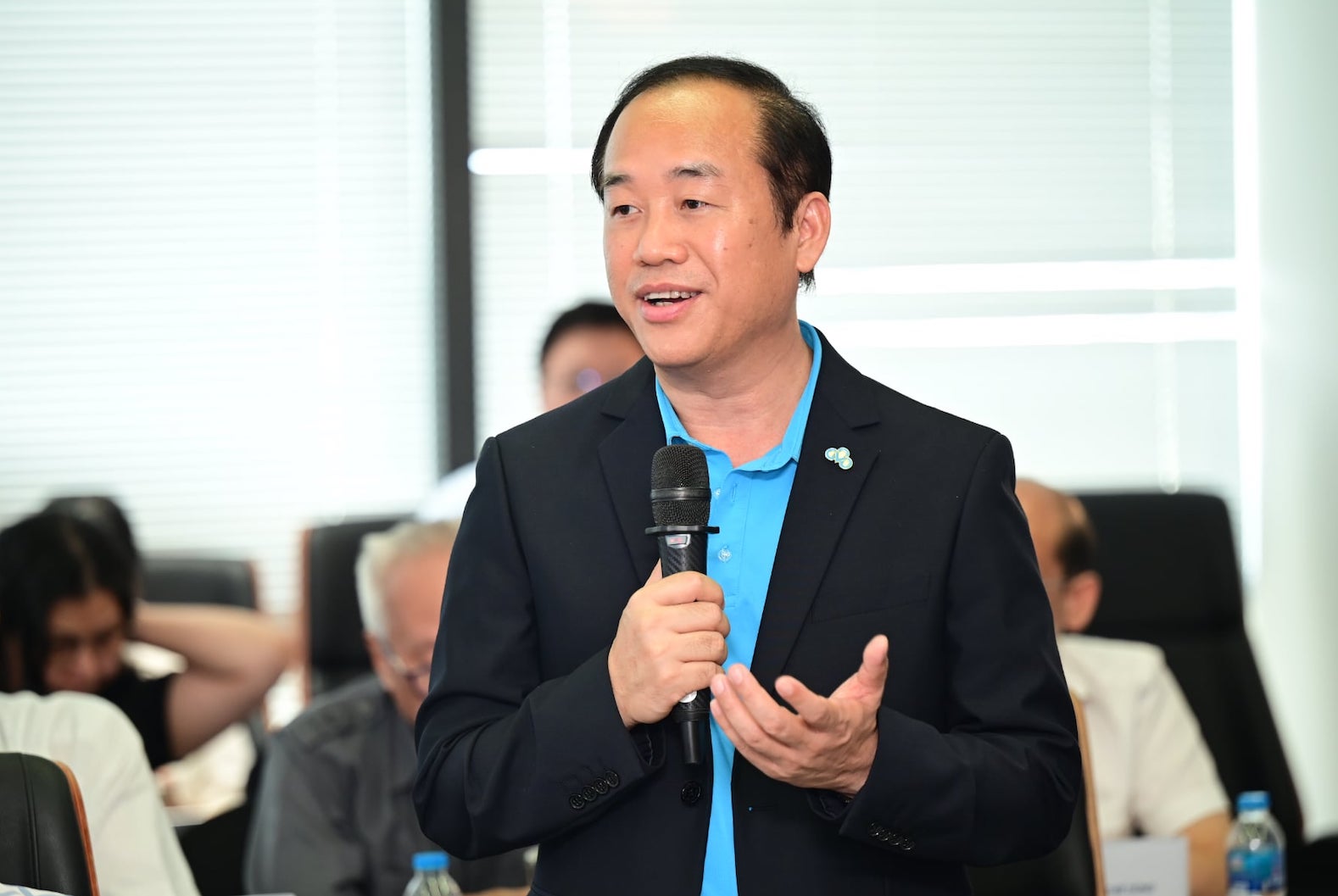
Mr. Tung analyzed that Article 3 of the draft clearly shows this orientation by reducing procedures for application and initial appraisal, creating conditions for schools to proactively implement flexible training models. In the context of AI and digital technology rapidly changing higher education, if management continues according to the traditional pre-inspection thinking, models such as digital universities, multi-campus universities or deep cooperation with businesses will find it difficult to develop because the speed of technological innovation is always faster than administrative procedures.
The shift to post-inspection shows that the Ministry of Education and Training is gradually shifting from controlling the operating process to quality management, associated with creating space for schools to be autonomous with the requirement to improve the accountability of higher education institutions" - Mr. Tung emphasized.
Opening up a new development space for higher education in Vietnam
Assessing the impact of the draft, Assoc. Prof. Dr. Nguyen Thanh Tung said that this Draft Decree opens up a "new development space" for higher education in Vietnam in the digital age and AI. A noteworthy point is that the draft no longer sees universities simply as traditional training institutions, but gradually approaches them as a knowledge, innovation and technology connection ecosystem.
That spirit is reflected in modern governance principles such as strengthening decentralization and delegation of power; not requiring the provision of digitized data; resolving administrative procedures in the electronic environment; only appraising reality in necessary cases or at high risk levels.
This is a very progressive approach, showing that higher education is being managed by data, by quality standards and by accountability, instead of focusing on administrative procedures" - Mr. Tung emphasized.

Another highly appreciated content is the regulation on training locations outside the headquarters and branches. The draft requires these locations to be subject to the unified management of higher education institutions, ensuring facilities, lecturers and quality corresponding to the training program.
According to Mr. Tung, this is an important legal foundation for the multi-space, multi-location university model but still ensures quality consistency. From there, schools can develop towards digital universities, multi-campus universities, linking businesses and the innovation ecosystem.
He said that in the future, the competitiveness of a university will not only lie in the scale of facilities but also in the ability to integrate technology, data management, business connection, learning personalization and the speed of curriculum innovation to adapt to AI and digital technology.
According to Assoc. Prof. Dr. Nguyen Thanh Tung, the greatest value of the draft is not only to amend management regulations, but also to reflect the innovation spirit of Resolution 71, creating an institutional foundation for Vietnamese higher education to move to a more modern, more open development stage and closely linked to science and technology, innovation as well as national competitiveness in the digital age.


