
According to precious metal analysts at Heraeus (a German technology and precious metals group), gold and silver prices may be under pressure in the medium term as tensions between the US and Iran show signs of cooling down, while the market adjusts in the face of a tougher monetary stance from the US Federal Reserve (Fed).
Precious metal prices started the week with a positive upward trend, but after the Fed decided to keep interest rates unchanged in the 3.5-3.75% range, the agency eliminated signals leaning towards easing in policy statements," experts Heraeus said.
According to the analysis group, this move takes place in the context of high inflation in the US. The consumer price index (CPI) in May increased to 4.2%, more than double the 2% target set by the Fed.
In addition, the latest Fed economic forecast also puts more pressure on the market. Half of the members of the US Federal Open Market Committee (FOMC) believe that interest rates are likely to increase in the near future. Among 18 officials, 9 predict interest rates will be higher by the end of 2026, while only one expects a decrease.
Heraeus assessed that Fed Chairman Kevin Warsh continued to emphasize his commitment to maintaining price stability - a factor that increased market expectations of a more cautious Fed in reducing interest rates.
In addition to monetary policy factors, geopolitical developments are also affecting gold prices. Heraeus believes that the US-Iran conflict is showing signs of cooling down after the two sides signed a memorandum of understanding in mid-June.
However, the process of bringing the energy market back to normal may take a long time. Clearing oil transportation through the Strait of Hormuz, ensuring safety for oil tankers and restoring energy reserves will make it difficult for oil prices to fall sharply immediately.
According to Heraeus, energy prices could remain high for longer, thereby continuing to affect the monetary policy of major central banks.
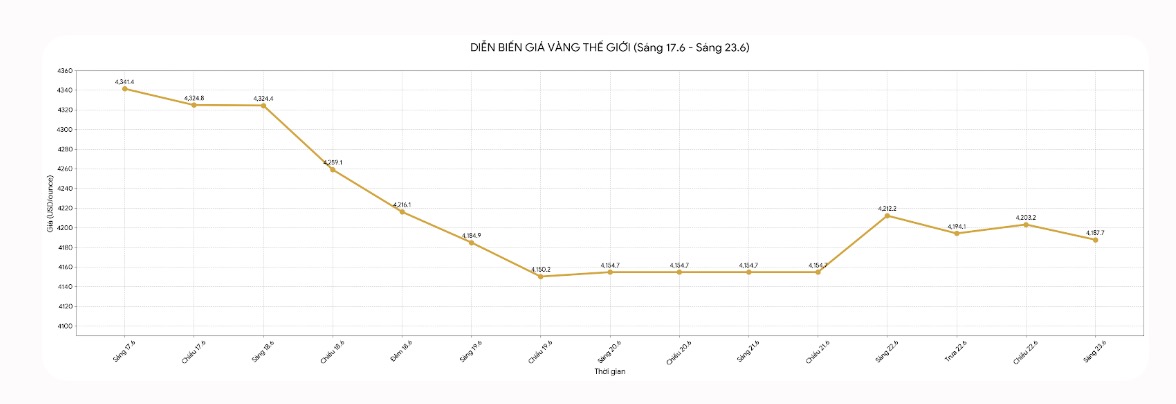
On the market, spot gold prices in the early morning of the week had a slight correction at one point after the previous increase, trading around 4,190 USD/ounce.
For silver, Heraeus said import demand in India - one of the largest consumer markets - has decreased sharply. In May, the country imported about 1 million ounces of silver, a significant decrease compared to the same period last year.
Experts believe that the recent increase in silver after the US-Iran agreement was blocked by a tougher signal from the Fed. Silver prices once exceeded 71 USD/ounce before the Fed meeting but then fell to the area of 63.3 USD/ounce.
Heraeus believes that silver may continue to be under pressure in the near future as the Fed maintains its inflation control stance, although energy prices are forecast to gradually cool down as geopolitical tensions subside.


