
Ao dai is not an exhibition heritage
The journey to bring Ao Dai, especially Ao Dai Ngu Than, back to life is being persistently implemented through research, practice and community dialogue. In which, artist and fine arts researcher Nguyen Duc Binh has made many persistent and consistent contributions.
Sharing with Lao Dong Newspaper, Mr. Nguyen Duc Binh said that the predestined relationship with the research and restoration of Vietnamese Ao Dai is the result of a long-term accumulation process, associated with the profession and the concerns of cultural and artistic workers.
I work in the field of fine arts and have studied traditional culture for many years. When approaching paintings and ancient photos, I realize that traditional costumes, especially male and female ao dai before the 20th century, are clearly present in historical documents but are almost absent or misunderstood in today's life," art researcher Nguyen Duc Binh shared.
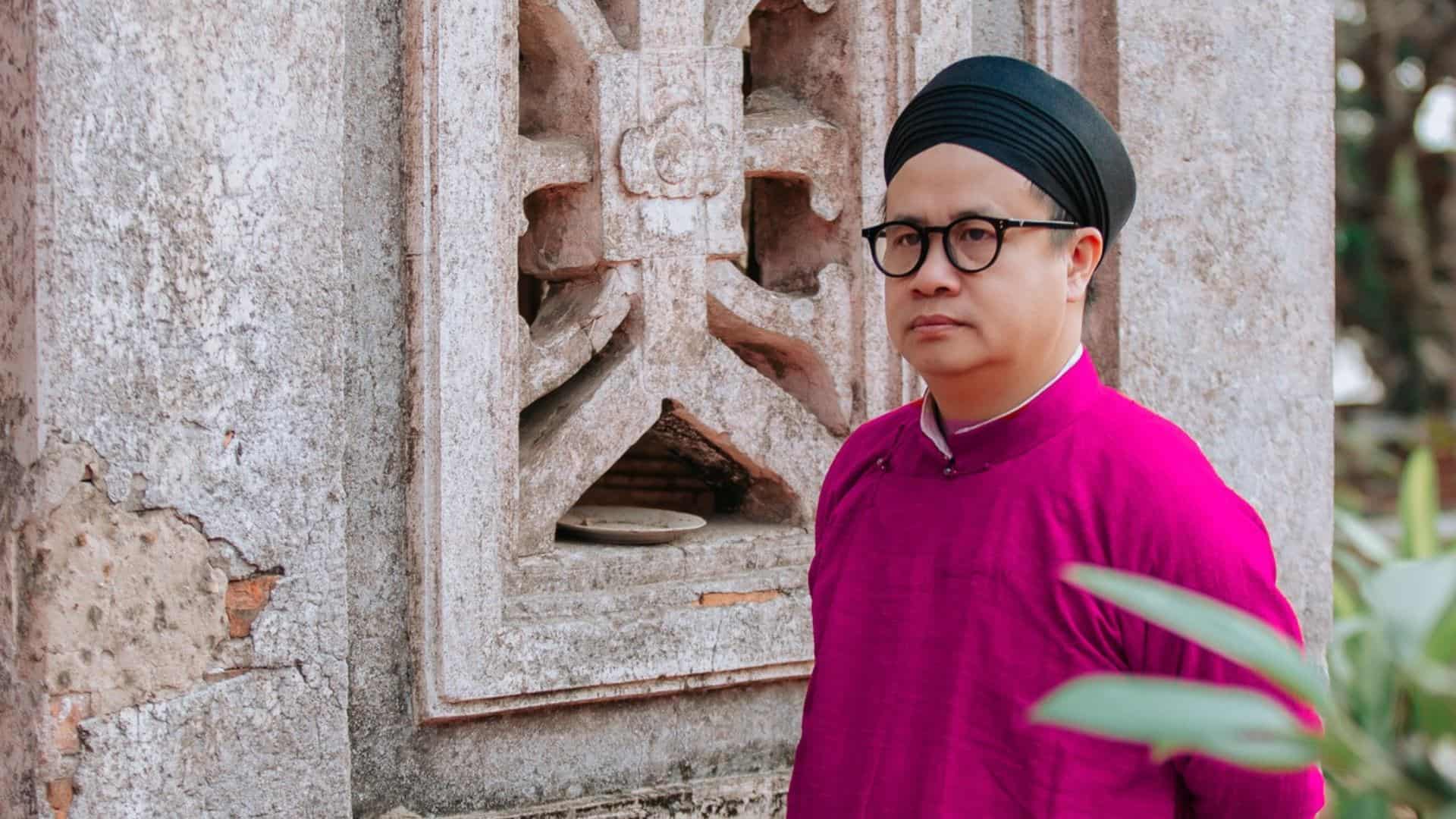
According to Mr. Binh, about 10 years ago, when going deep into researching costumes associated with village communal house rituals, ceremonies and traditional festivals, he paid special attention to Ao Dai Ngu Than - a form of costume that is a standard of Vietnamese society during the Nguyen Dynasty and previous periods.
What worries him is not only the form of the shirt, but also how people behave in the community.
Restoring ao dai cannot stop at aesthetic inspiration or personal creativity. It must be based on serious research: from ao dai structure, sewing technique, material, color, way of wearing, usage circumstances. If not clarified, wearing traditional ao dai is very likely to fall into formality, even offensive," Mr. Nguyen Duc Binh emphasized.
From spreading knowledge to practicing ao dai in community life
In parallel with personal research, the process of bringing ao dai, especially five-panel ao dai, back to life is also associated with the formation and operation of the Dinh Lang Viet Club.
The club was established on September 1, 2014, stemming from the concerns of fine arts researcher Nguyen Duc Binh about the risk of fading of the village communal house heritage - the central cultural space of Vietnamese people.
''The establishment and operation of the Dinh Lang Viet Club also contributes to promoting the journey of researching and restoring Vietnamese ao dai. Practicing ao dai in the space of village communal houses, festivals, and community activities gives me the opportunity to verify research through real life, dialogue with artisans, tailors, researchers, people and even young people'', art researcher Nguyen Duc Binh said.
From a small group of people who shared a love for traditional culture, to date, the Dinh Lang Viet Club has developed into a voluntary, non-profit community with more than 35,000 members at home and abroad.
Architect Pham Huu Duy - Founder of the Pham Gia Ao Dai brand - said: "Through the sharing of researcher Nguyen Duc Binh, I gradually understand more deeply about culture and national identity. The more I learn, the more clearly I feel the historical depth and cultural value of costumes.
The journey with the five-panel ao dai that fine arts researcher Nguyen Duc Binh and his companions pursue shows that heritage can only exist sustainably when it is returned to the correct cultural context, practiced with the understanding and responsibility of the community.


