
The companion of phum, sóc
Filtering, filtering...
When the sun was still lingering in the early morning mist at the foot of Nui Cam (Nui Cam commune, Tinh Bien district), horse-drawn carriages from the villages quietly moved towards the market. The sound of horse hooves mixed with the crackling sound on the Cha-rong rope around the neck of the "child horse" created a familiar sound, like the sound of a rooster announcing the morning in the life of Kinh people.
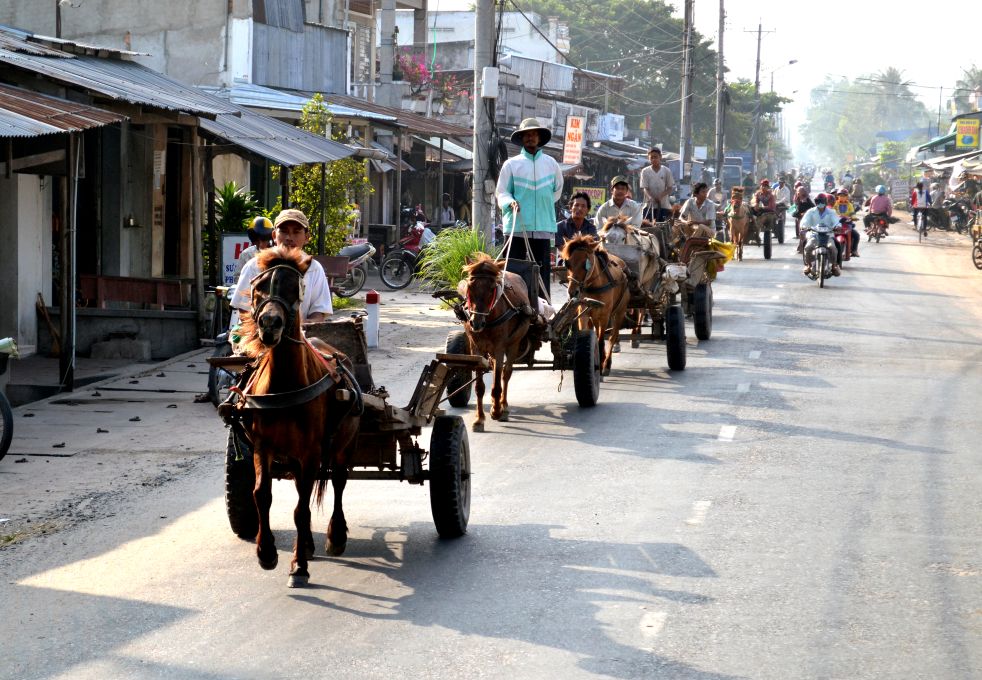
Mr. Chau Xinh - who has been attached to the horse-drawn carriage profession for 3 generations in An Cu commune - said: "Morning I transport agricultural products from the village to the market, then transport goods and necessities from the market back to the village to serve living and production.
In the not-too-distant memories of the Khmer people, horse-drawn carriages were once a popular means of transport, even considered modern at one time. But along with the development of science and technology, motorbikes and cars gradually replaced, many rudimentary vehicles retreated into the past. Horse-drawn carriages are also not outside that rule.
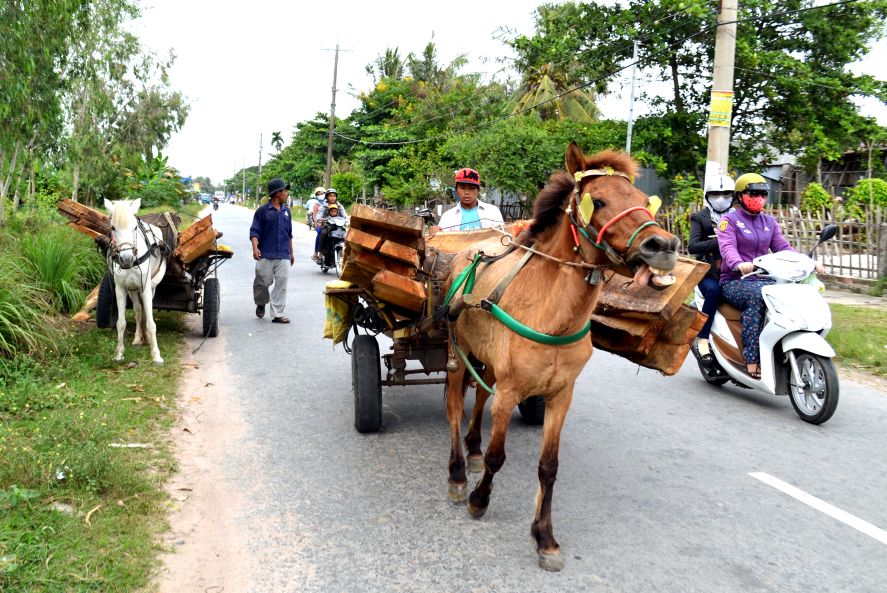
However, in the That Son region - where the terrain is semi-mountainous, roads are rugged, hills and mountains interspersed with sandy fields - "one horsepower" carts running on grass still have room to live. Horse carts continue to be maintained by Khmer people as an inseparable part of life and production.
From being a common means of transport for Kinh, Hoa, Khmer people, horse-drawn carriages have gradually become a unique "specialty" of the Khmer people of That Son region - associated with villages, pagodas and the rhythm of life in remote border areas.
Unique That Son horse
When the horse-drawn carriage (Nesk-bo-ses) driver Chau Xinh swung the Rum-pet (roof), the warhorse immediately accelerated, pulling the Ro-tes-ses (horse-drawn carriage) to rush forward on route 948 towards Doi Tuc Dup. The speed increased rapidly and then spread evenly, making riders surprised by the pulling power of the horse breed with a rather modest figure.
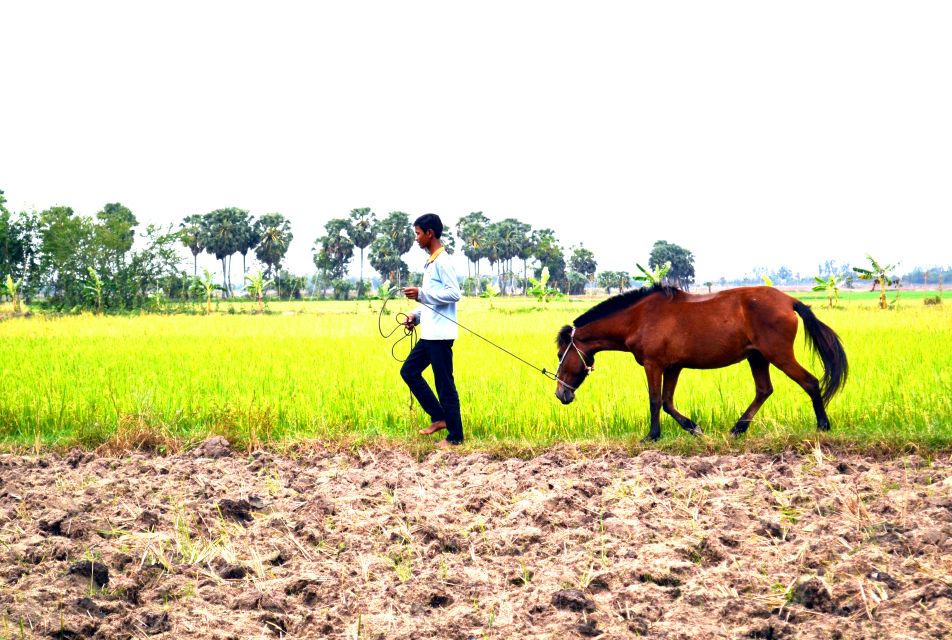
According to researcher Chau Soc Kha Mo Ni (Tri Ton - An Giang), this is the unique feature of the unique horse breed of That Son region. The horses here are small, compact, short, without bulging muscles, but have good bounce and are very resilient - similar to the famous bull race breed in the Sen Dolta Bull Racing Festival (worshiping ancestors) every year.
That Son horses can accelerate very quickly after commands, travel all day tirelessly, easily conquer slopes and many different types of terrain," Mr. Soc Kha said. Horses have many colors of fur such as: So (white), Khmau (black), Pro phes (gray), Tnot (brown)... with thick skin to help withstand the harsh heat of the rocky mountains.
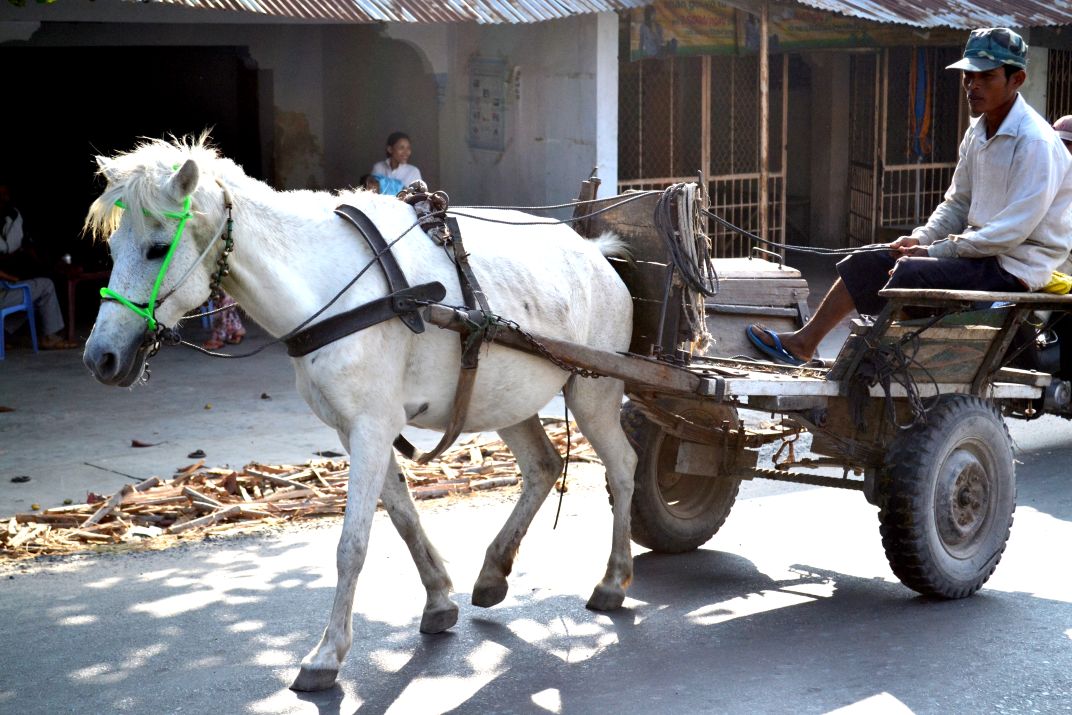
Not only horses, That Son horse-drawn carriages also have their own style. Unlike horse-drawn carriages serving tourism in My Tho or Da Lat, horse-drawn carriages here are mainly for carrying goods and serving essential travel. The design is therefore quite simple: convertible, no handrails, seats are just temporary wooden bars placed on both sides of the car trunk walls... Not fussy, not eye-catchingly decorated, but each carriage is full of livelihood rhythms. Each carriage trip is a life story, the breath of the semi-mountainous region that is moving and adapting every day.
In the middle of the Binh Ngo Spring season, when tourists from all over flock to An Giang to visit Ba Chua Xu Temple in Sam Mountain, then up to Nui Cam mountain to admire the Maitreya statue reflected on the surface of Thuy Liem Lake... they will surely have the opportunity to touch the sound of horse hooves echoing in the early morning mist... It is not only the sound of hard work of the Khmer people in remote border areas, but also the greeting of the past - the rhythm of Southern culture continuing to blend into the modern flow.


