
In recent days, many propaganda clips of the Traffic Police Department (CSGT) of Hanoi City Police have appeared on social networks and attracted a large number of viewers.
Many people are surprised when the seemingly dry regulations of the Road Traffic Law are conveyed by close situations, witty and easy-to-reach narratives.
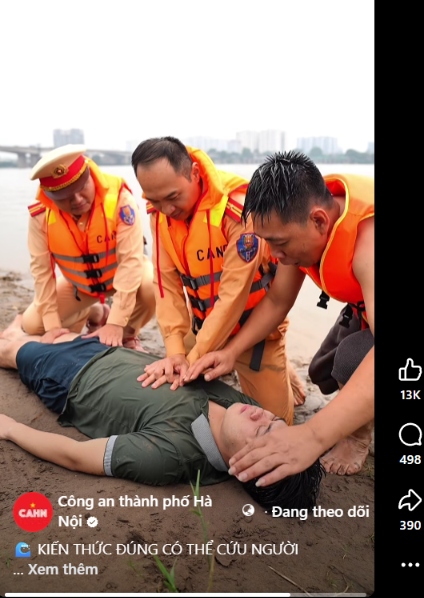
However, behind those video clips that only last a few minutes is the story of traffic police officers who have been attached to ensuring traffic order and safety for many years and are always concerned about how to truly change people's perceptions.
More than 20 years attached to the Traffic Police Department of Hanoi City Police, Lieutenant Colonel Nguyen Ngoc Tien - officer of the Propaganda Team, investigating and resolving traffic accidents, also a familiar face in many propaganda clips - said that when he first took office, he used to think that his job was mainly to regulate traffic, handle violations or participate in resolving cases on the road.
However, the reality of work has brought him many different thoughts.
The times he was present at the scene of traffic accidents, witnessing the pain of those left behind, the tears of the victim's relatives or the prolonged consequences after each incident made him feel remorseful.
Many families are broken after just one overtaking. Tragedies originate from alcohol and beer, from subjectivity. As law enforcement forces, if violations are only handled when the incident has already occurred, is it enough or not, how to raise awareness, so that people consciously comply with the law" - Lieutenant Colonel Nguyen Ngoc Tien shared.
According to Lieutenant Colonel Tien, propaganda work is always identified by the Hanoi Traffic Police Department as one of the key tasks. However, traditional forms of propaganda such as distributing leaflets, disseminating laws in the hall or specialized talks sometimes face limitations in terms of time, space, interaction...
This is the reason why the Hanoi Traffic Police Department has made efforts to change the propaganda method recently. Clips that reached millions of views on social networks in just a few hours of posting have been born one after another.
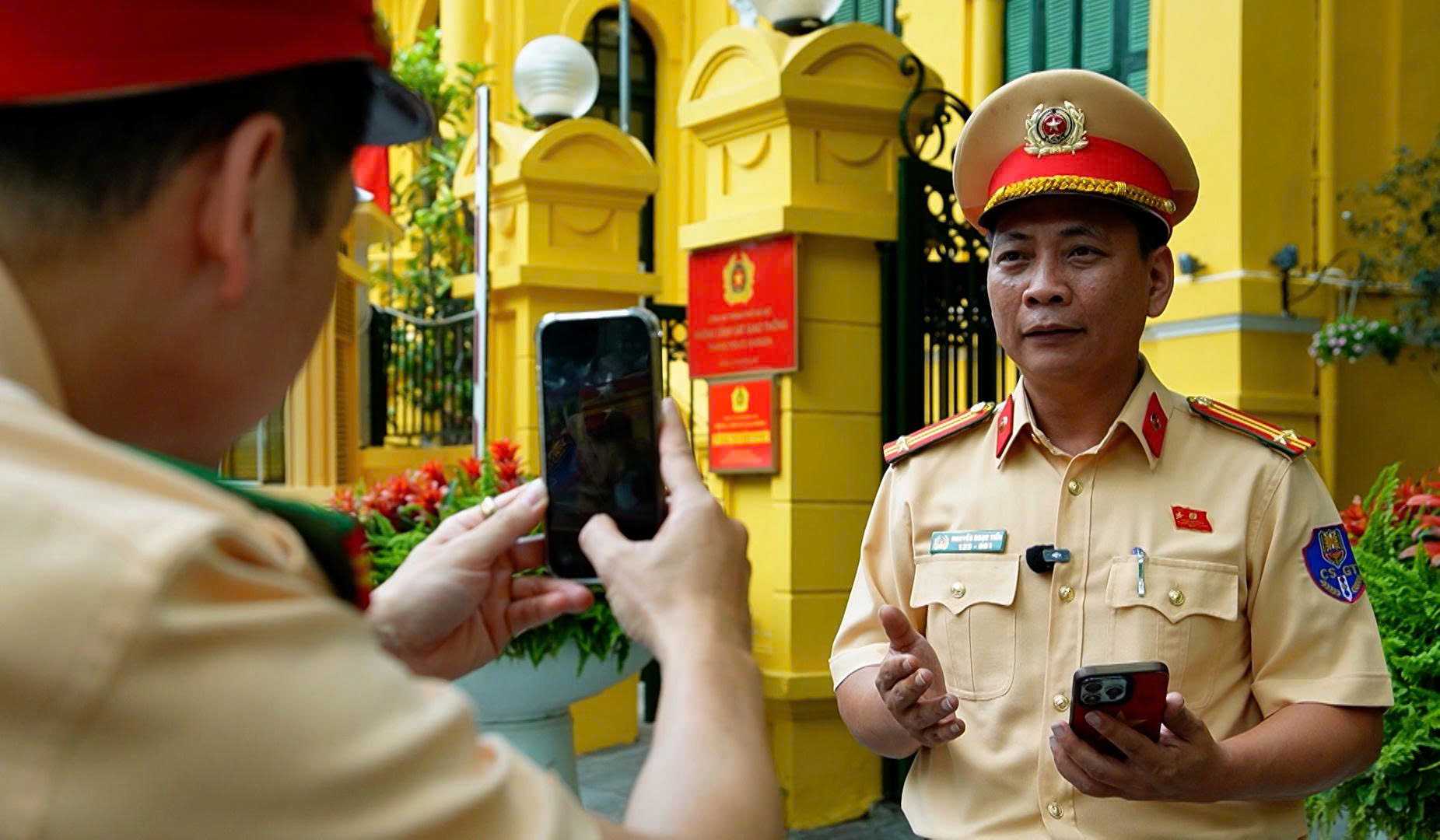

In the digital age, especially for young people, information appears continuously on the phone every second. If you want them to listen, you must find a way to convey it appropriately for them. From an official who had never been trained in journalism or communication, I started learning to write news, learn to film, and create clips to serve propaganda work," Lieutenant Colonel Tien said.
However, according to him, this is not an easy task. Propaganda products must both ensure accuracy and standards of the police force, and be attractive enough to attract viewers without falling into sensational and view-baiting methods.
After many experiments, adjustments and learning, the Traffic Accident Prevention and Investigation Team has chosen a direction that focuses on real-life situations. Familiar stories, visual images and emotional storytelling make the message about traffic safety easier to receive.
When reading positive comments, seeing people sharing clips or reminding each other to comply with traffic laws, we know we are going in the right direction. We will continue to innovate and create to make propaganda work more effective, contributing to maintaining peace on each route," Lieutenant Colonel Nguyen Ngoc Tien emphasized.
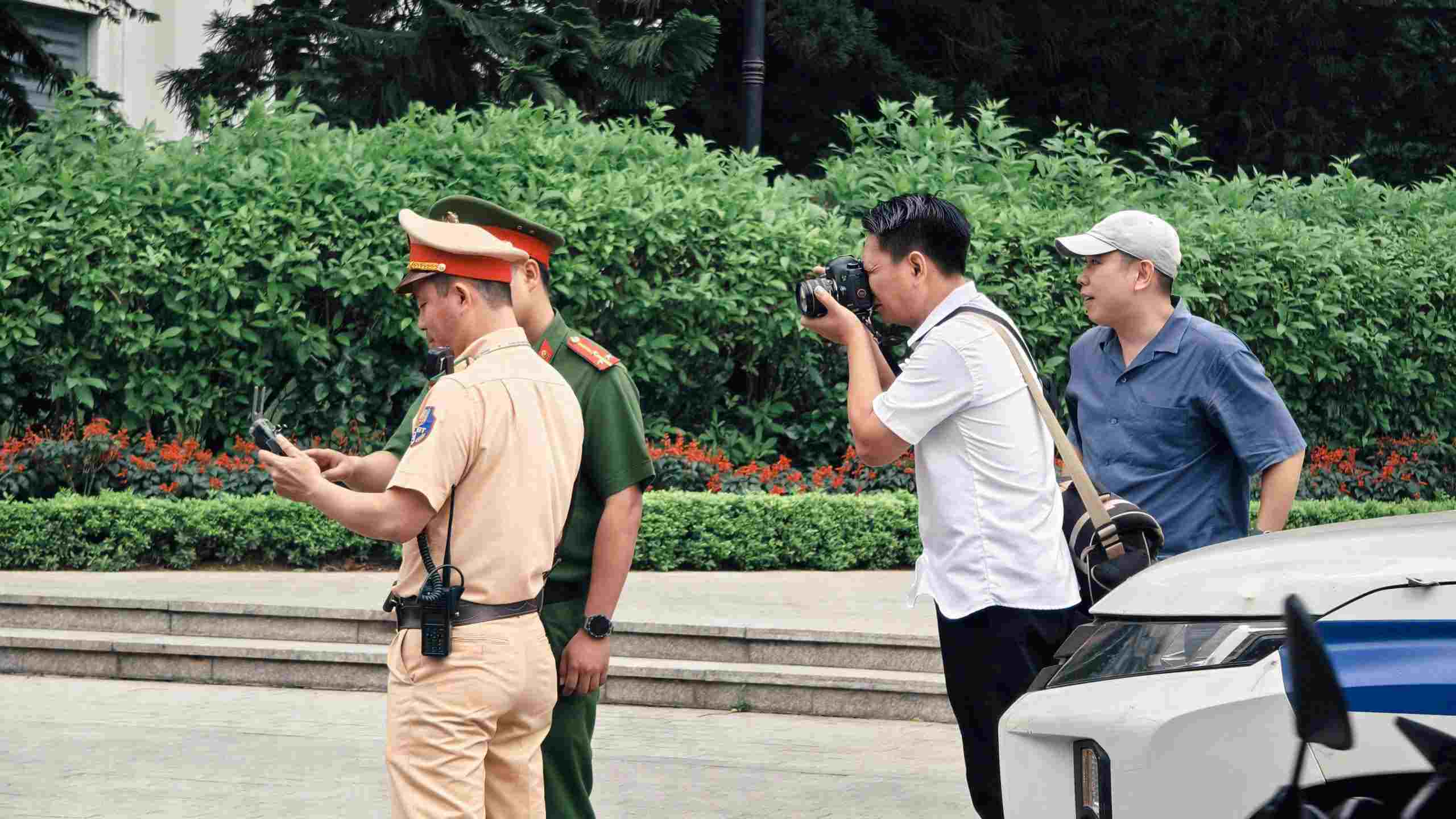
It can be seen that behind each video lasting only a few minutes are many days of brainstorming, filming and editing by traffic police officers. For them, it is not only a task of propagating the law but also a way to spread awareness, responsibility and traffic culture to the community, so that each citizen protects themselves and those around them when participating in traffic.


