
According to Decision No. 213/QD-UBND, approving the Project to develop traditional craft villages into cultural and tourism products in the period 2026-2030. Specific goals for the period 2026-2030, the province recognizes 13 craft villages, 4 traditional craft villages; develops 13 craft villages into cultural and tourism products; and at the same time preserves 7 craft villages associated with tourism exploitation.
Some craft villages oriented to become cultural and tourism products include: Dam Ha radish processing craft village (Quang Tan); Binh Lieu vermicelli; Van Don traditional fish sauce; Duong Hoa tea; Ba Che medicinal herbs; Cai Duoc mesh weaving (Quang Ha); Yen Tu yellow apricot blossom; Dong Che flower; Van Don orange; Cua Van fishing village; Khe Phuong community tourism village...
Crafts and craft villages that need to be preserved in combination with cultural and tourism development include: Phong Coc banh gio; Hiep Hoa vermicelli; Dong Trieu pottery; Hung Hoc fishing gear weaving; coal carving; Cong Muong wooden shipbuilding...
According to the project, craft villages will be reorganized according to the production - display - experience model, associated with festivals, cuisine and local landscapes.
The province will build a tourism identity for craft villages including logos, slogans, digital maps; strengthen its presence on websites, Google Maps and e-commerce platforms, and gradually position craft villages on the tourism map.
The goal is to increase the number of visitors to craft villages by 10–15% each year; about 60–80 artisans, skilled workers and local people are trained in tourism skills. The average income of rural occupation workers is expected to increase 2.5–3 times compared to 2020; the rate of trained workers reaches 80%.
The total cost of implementing the project is 124.5 billion VND, of which the state budget accounts for 25%, the rest is mobilized from non-budget sources and other legal sources.
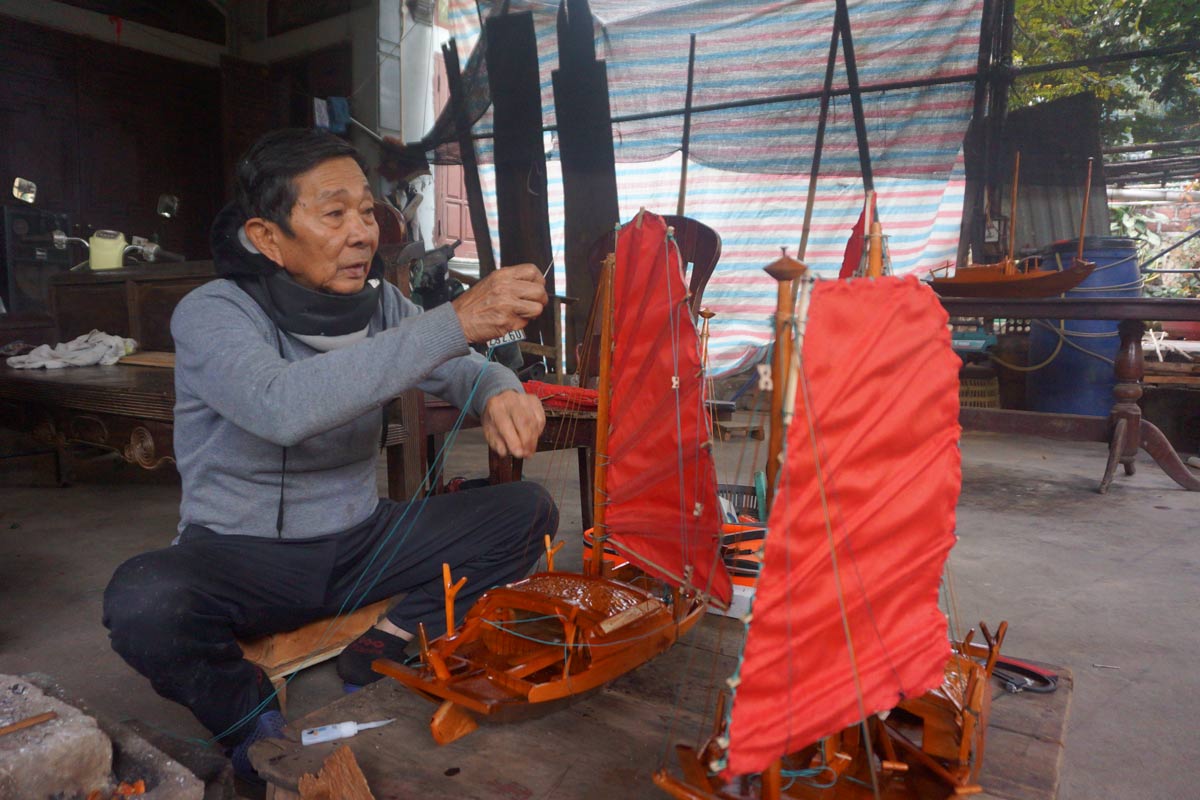
Cong Muong craft village has a hundred-year tradition, formed around 1434, when 17 pioneers from Thang Long Citadel came to reclaim land, establish villages and develop shipbuilding and boatbuilding to serve fishing and maritime trade.
Over the centuries, shipbuilding in Cong Muong has become a typical craft village in Quang Ninh and the coastal region of the North, famous for the "batwing" sailing technique - a type of ship that can go against the wind and against the water.
People's Artisan Le Duc Chan, Cong Muong wooden shipbuilding village (Lien Hoa ward), said that the project's approval opens up new expectations for sustainable development of traditional craft villages.
Previously, some tourism businesses had proposed to coordinate with workers' huts here to build sightseeing and stopover points to serve tourists. With this project, the implementation will be more convenient, with a basis to turn ideas into specific tourism products," Mr. Chan said.
According to Mr. Chan, the wooden-hulled shipbuilding industry is currently facing the risk of fading due to changes in vehicles and market demand. "The project shows the province's concern for preserving the craft village. We are very happy and also hope that after promulgation, there will be specific implementation steps to preserve the profession and develop the craft village," he shared.


