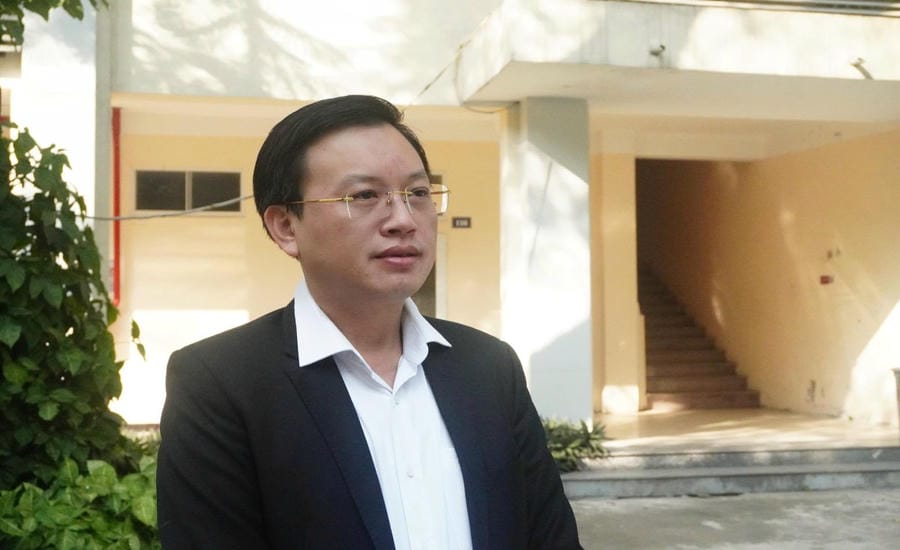
For many years, in Hanoi, the situation of resettlement housing and student housing being abandoned and wasted, while the supply of social housing and affordable commercial housing for people is still lacking, has caused public outrage.
The National Assembly has passed the revised Capital Law consisting of 9 chapters and 36 articles, effective from July 1, 2026. Notably, the city is allowed to flexibly switch between commercial housing, social housing and resettlement housing to suit actual needs, contributing to handling the situation of many resettlement areas being vacant, degraded, causing waste.
Resettlement houses are originally arranged for people whose land is recovered and relocated to serve projects. However, in reality, many quality projects do not meet the requirements, and many resettlement apartments are abandoned and uninhabited.
At Den Lu III residential area (Hoang Mai ward), including 3 17-story resettlement apartment buildings, completed in 2017, which were once abandoned for a long time, becoming a hotspot for environmental pollution and loss of security and order.
Recently, people in this area have been excited when the Den Lu III project is gradually changing. Instead of the previously messy situation, 3 buildings are being repaired and renovated to be handed over to households to live in. Records show that the buildings have been repainted; many items such as railings and windows have been replaced; peeling walls have been treated; the surrounding area has also been cleaned up, significantly improving the appearance.
It is known that households subject to relocation after site clearance and low-income people who need to rent houses will be prioritized. The conversion of the function of unused resettlement houses to social housing is a correct policy, ensuring a dual goal: Avoiding waste of public assets and increasing the social housing fund.
Mr. Nguyen Van Hai (Vinh Hung ward) said that these buildings have been abandoned for nearly 10 years, causing great waste in the context of increasing housing demand. According to him, if put into use or converted into social housing, it will be effective, especially when the project is located in a favorable location.
Similarly, the student housing area in Phap Van - Tu Hiep urban area is also converted by Hanoi City into social housing. The project is invested by the Hanoi City Civil Works Construction Investment Project Management Board at blocks A2, A3, A4 belonging to land plot III. 13. 1 (20% land fund) of Phap Van - Tu Hiep New Urban Area. It is expected that the renovation and upgrade of buildings A2, A3 will be completed in 2026, building A4 will be completed at the latest in 2027.
After nearly 10 years of not being effective, Hanoi City has decided to convert Phap Van - Tu Hiep dormitory into a social housing area for rent with a cost of more than 220 billion VND, in order to renovate buildings A2, A3 and complete building A4, serving the housing needs of people.
These are just two of many works and projects with thousands of resettlement apartments and houses serving the relocation of people in the Old Quarter that are being abandoned, causing waste of resources. People want the city to continue to invest in completing and promoting the conversion of resettlement housing areas into social housing and commercial housing, thereby limiting waste of resources and improving housing conditions for people.
Bringing housing funds closer to actual needs
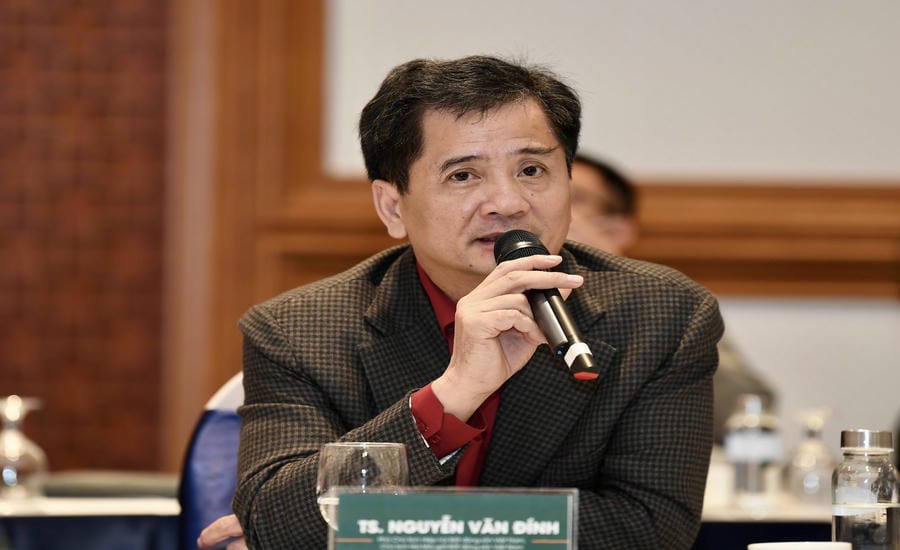
Mr. Nguyen Van Dinh - Vice Chairman of the Vietnam Real Estate Association: The rigid application of housing types in the past has revealed many inadequacies, reducing the efficiency of resource use. Flexible conversion between housing types is necessary, helping Hanoi to be more proactive in development. In the context of many infrastructure and urban projects being implemented, the demand for housing funds, especially for population reduction and resettlement, is very large. Adjustment and removal of obstacles help increase flexibility, bring housing funds closer to actual needs and limit waste due to previous institutional barriers.
Lawyer Pham Thanh Tuan - Hanoi Bar Association: To avoid rampant conversion, causing waste, there need to be accompanying control mechanisms. The provisions of the new Capital Law are only necessary conditions, and for effective implementation, specific conditions need to be added.
First of all, the city needs to issue clear regulations on the order, procedures and conditions for adjusting between types of housing, as a basis for competent authorities to implement uniformly, and at the same time have an appropriate roadmap.
In addition, it is necessary to review and re-evaluate the existing housing fund, especially resettlement projects that are no longer needed. For degraded works, it is necessary to renovate and embellish them before converting functions; otherwise, even if converted, it is difficult to attract people.

Mr. Tran Xuan Luong - PhD in Real Estate - National Economics University: It is necessary to clearly distinguish between converting housing funds and converting land funds. The formation of housing land funds must go through a rigorous planning process, based on scientific calculations, comprehensive assessments of socio-economics, environment, national defense and security as well as the efficiency and benefits of the people. Therefore, when converting land funds between types such as social housing, commercial housing or resettlement, it is still necessary to ensure compliance with the principles of planning. In which, an important requirement is to ensure harmony of interests, publicity, transparency and fairness. The resettlement land fund is originally intended for people whose land is recovered on the spot; if converted to social housing without careful calculation, it may affect the rights of this group.
Handling and improving the quality of the unused resettlement housing fund is not easy. However, if done well, it will both effectively exploit land resources, reduce waste, and supplement the supply of social housing, contributing to ensuring social security and reducing the situation of abandoned houses.